
You’ll shape a home that feels curated, not staged, by balancing texture, patina, and restraint. Start with natural rugs and linen throws against velvet or boucle, layer in warm brass and matte black, and place timeworn ceramics where they catch the eye. Vary scale, repeat motifs, and preserve sightlines so each piece breathes—keep going and you’ll see how small edits turn rooms into a collected, lived-in whole.
Layer Natural Fibers With Smooth Surfaces
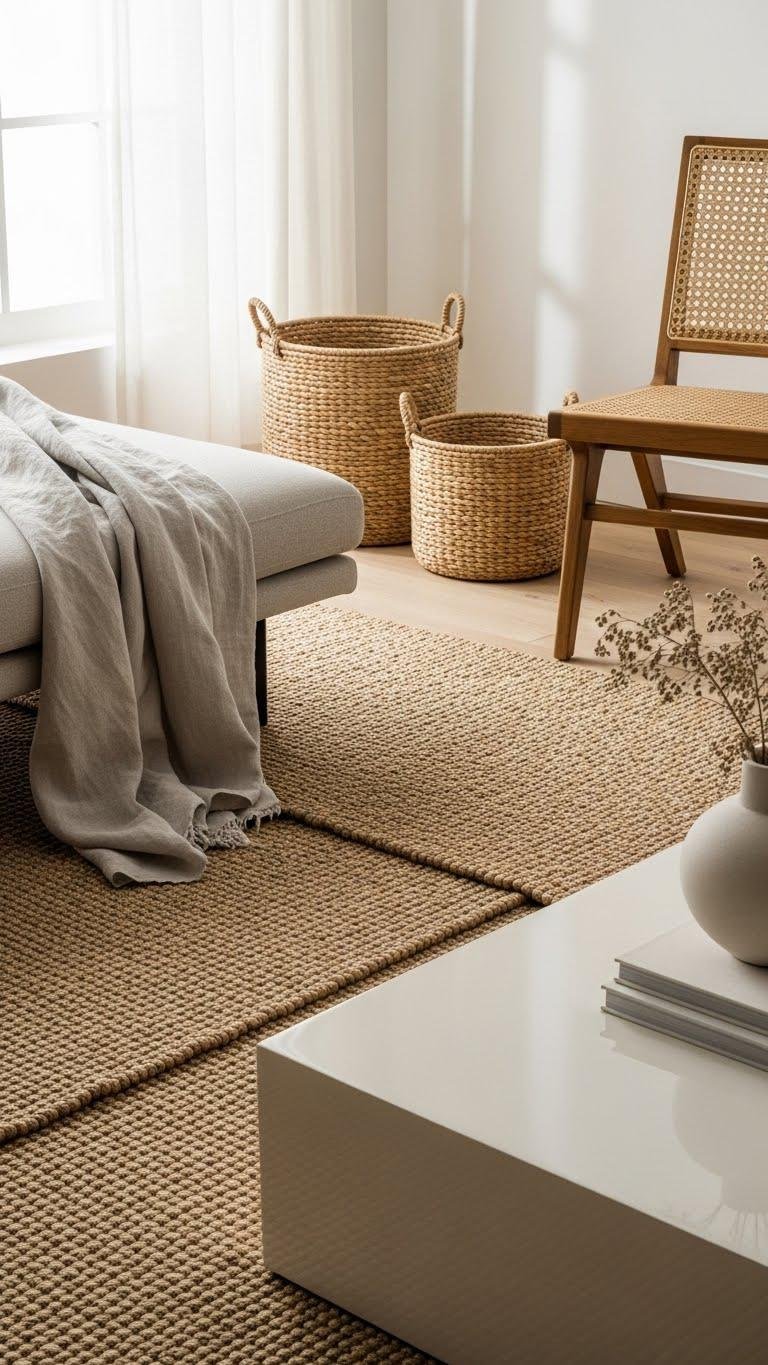
When you layer natural fibers with smooth surfaces, you create a tactile counterpoint that instantly elevates a room’s sense of calm and sophistication.
You’ll pursue deliberate textural contrast: sisal rugs, linen throws, and sleek lacquered tables.
Introduce woven accents—baskets, chair seats—to anchor warmth without clutter.
You choose pieces that breathe, offering a liberated, refined aesthetic that feels both curated and effortlessly yours.
Mix Metal Finishes for Subtle Contrast
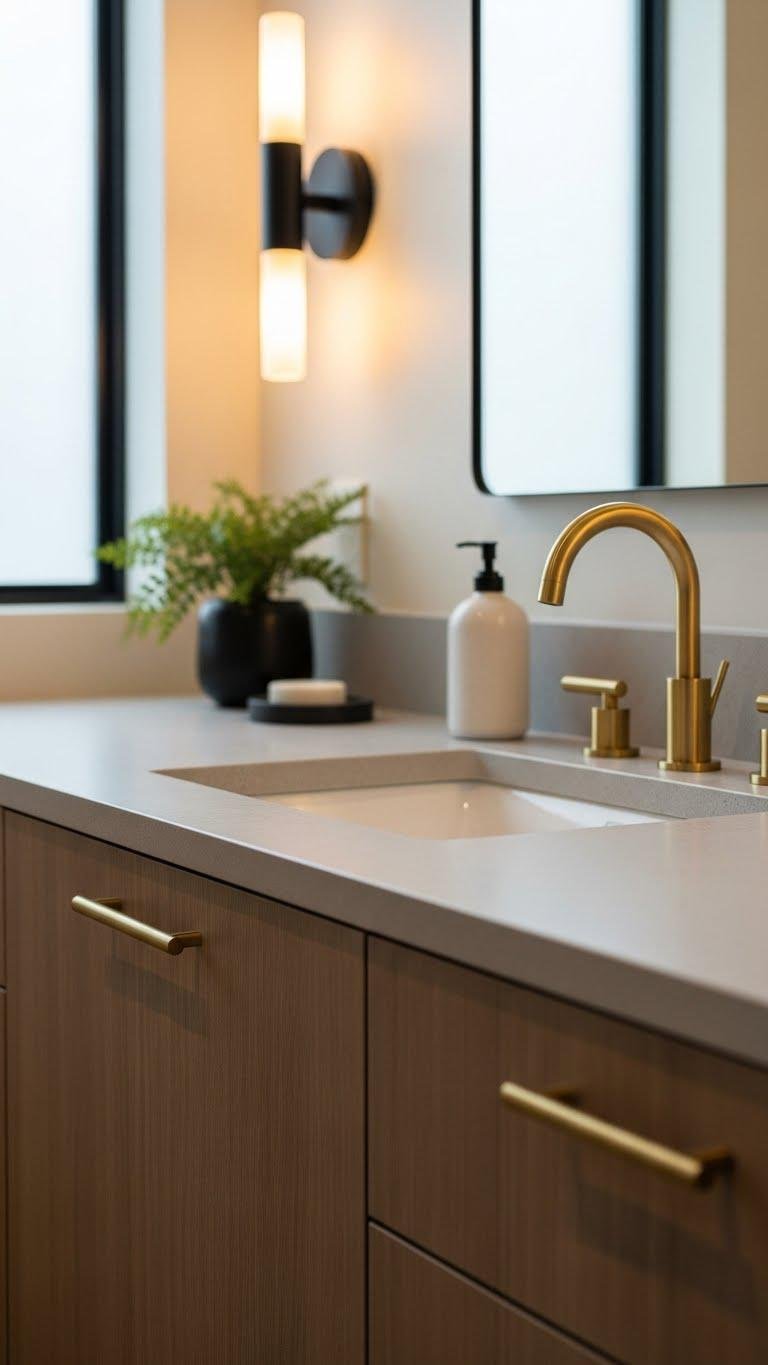
Often you’ll want to mix metal finishes to add tailored depth without creating visual clutter; do it with intention by choosing a dominant finish and using others as accents. You’ll favor warm brass as a luxe anchor, then introduce matte black for graphic restraint. Pair metals across fixtures, hardware and lighting, keeping scale consistent so each piece breathes and the room feels freely curated.
Add Timeworn Finishes and Antique Ceramics

Layer in timeworn finishes and antique ceramics to give your space a lived-in, curated soul—start small and let each piece tell its own story.
You’ll choose patina techniques that honor age, balance matte metals with soft woods, and select ceramics after thoughtful inspection.
Embrace ceramic restoration for fragile finds, repairing imperfections with confidence so every object feels intentional and free.
Combine Varied Upholstery Textures
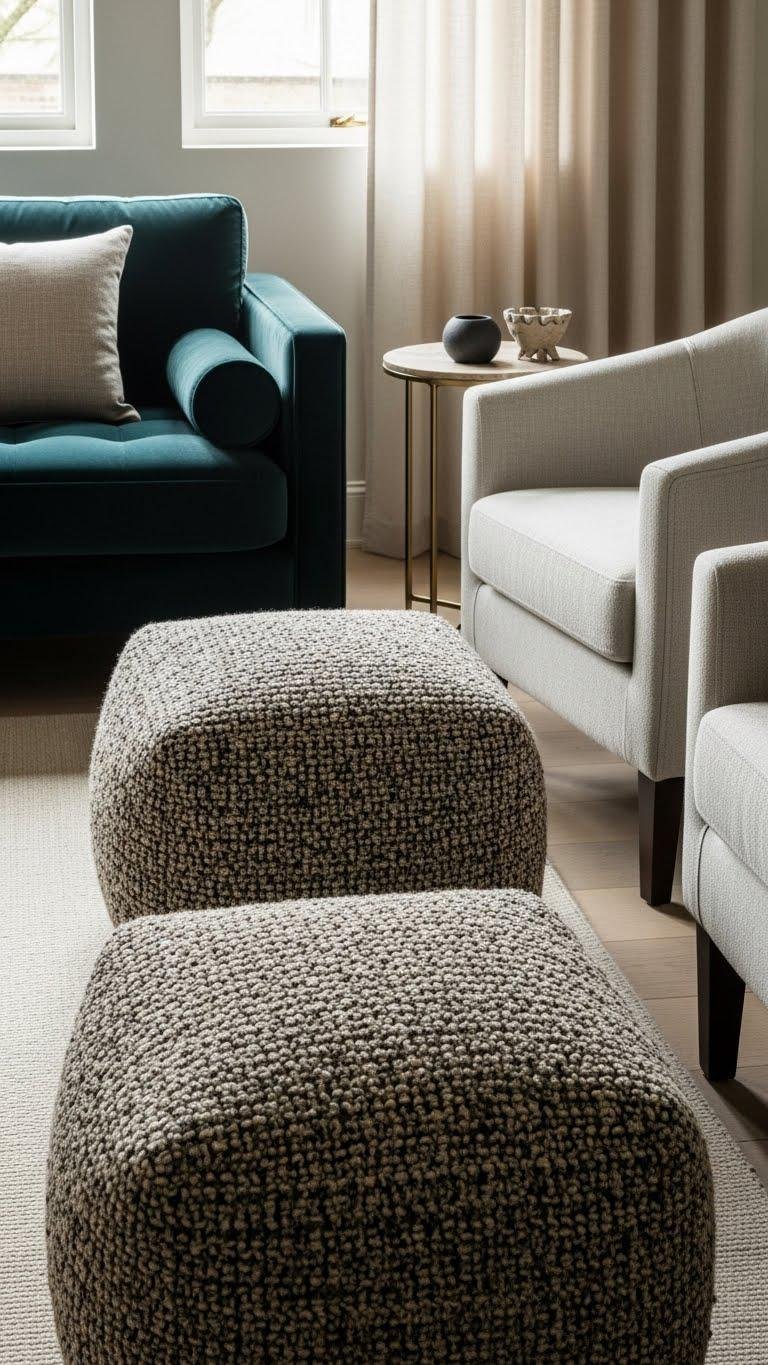
Mixing upholstery textures gives your room depth and invites touch—you want fabrics that contrast and complement, not fight. Choose velvet vs. linen strategically: velvet for drama and rich color, linen for ease and breathability. Add boucle accents for sculptural softness.
Balance scale and sheen, limit your palette, and let tactile variety create a collected, liberated feel that’s refined without feeling staged.
Layer Rugs to Define and Soften Zones
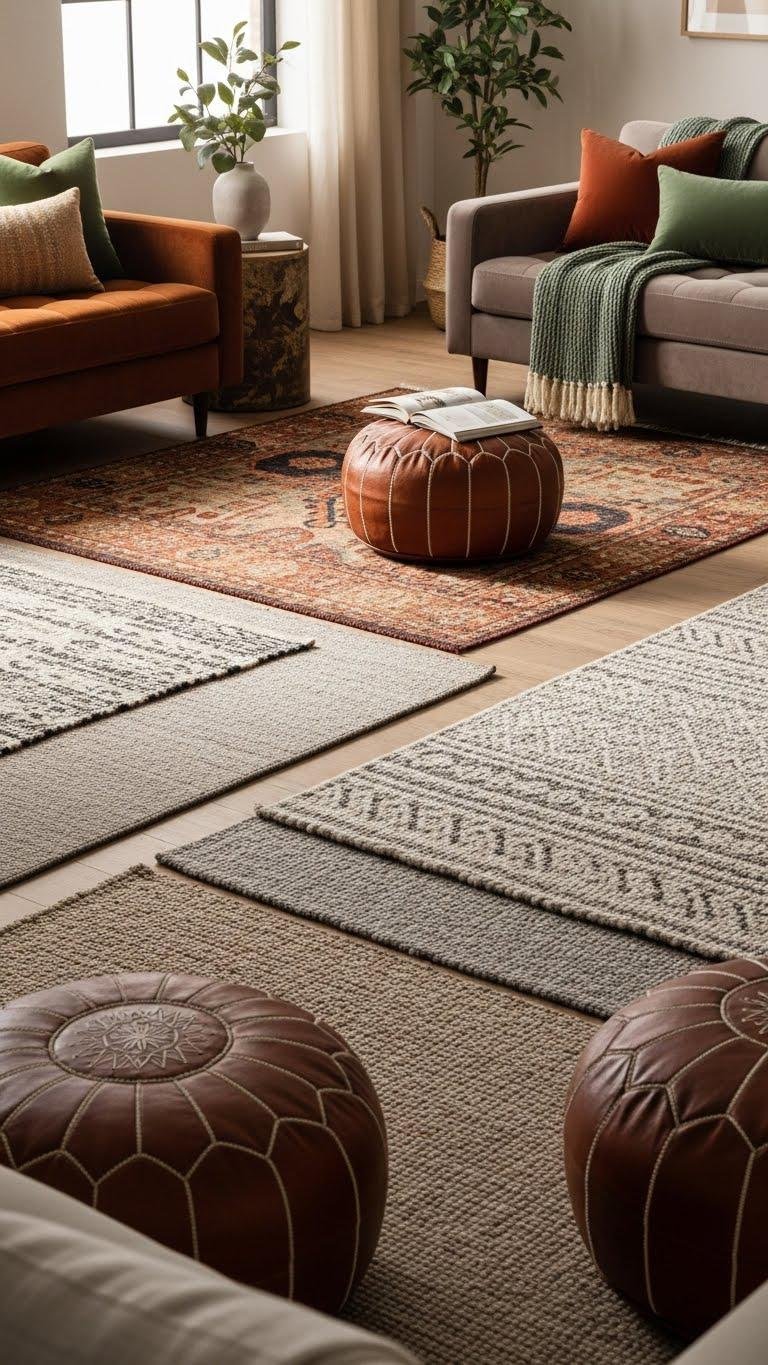
After you’ve arranged varied upholstery to invite touch and define seating, rugs do the same for the floor—giving each area its own purpose and softening hard surfaces underfoot. You’ll use rug layering to anchor traffic patterns, contrast textures, and clarify zone definition without clutter. Choose scale, color, and pile deliberately so each layered piece reads as intentional freedom, not accidental accumulation.
Create Curated Vignettes With Odd-Numbered Groupings
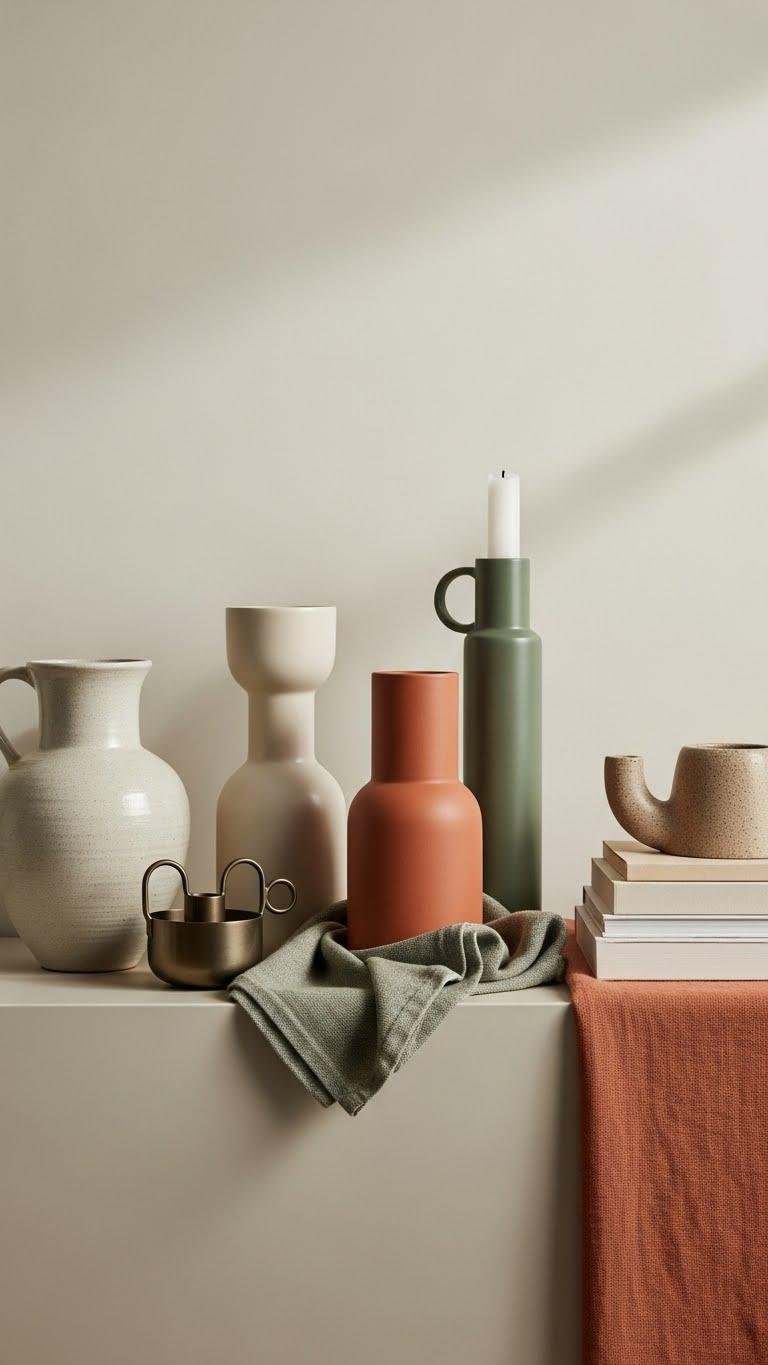
Start with three to five objects and arrange them so each piece can breathe—odd-numbered groupings read as deliberate and balanced, not fussy. You’ll create curated vignettes that feel collected by mixing heights, materials and textured contrasts to achieve asymmetrical balance. Edit ruthlessly: remove duplicates, vary color and scale, and let negative space empower each object so your display feels confident and free.
Anchor Displays With One Larger Piece
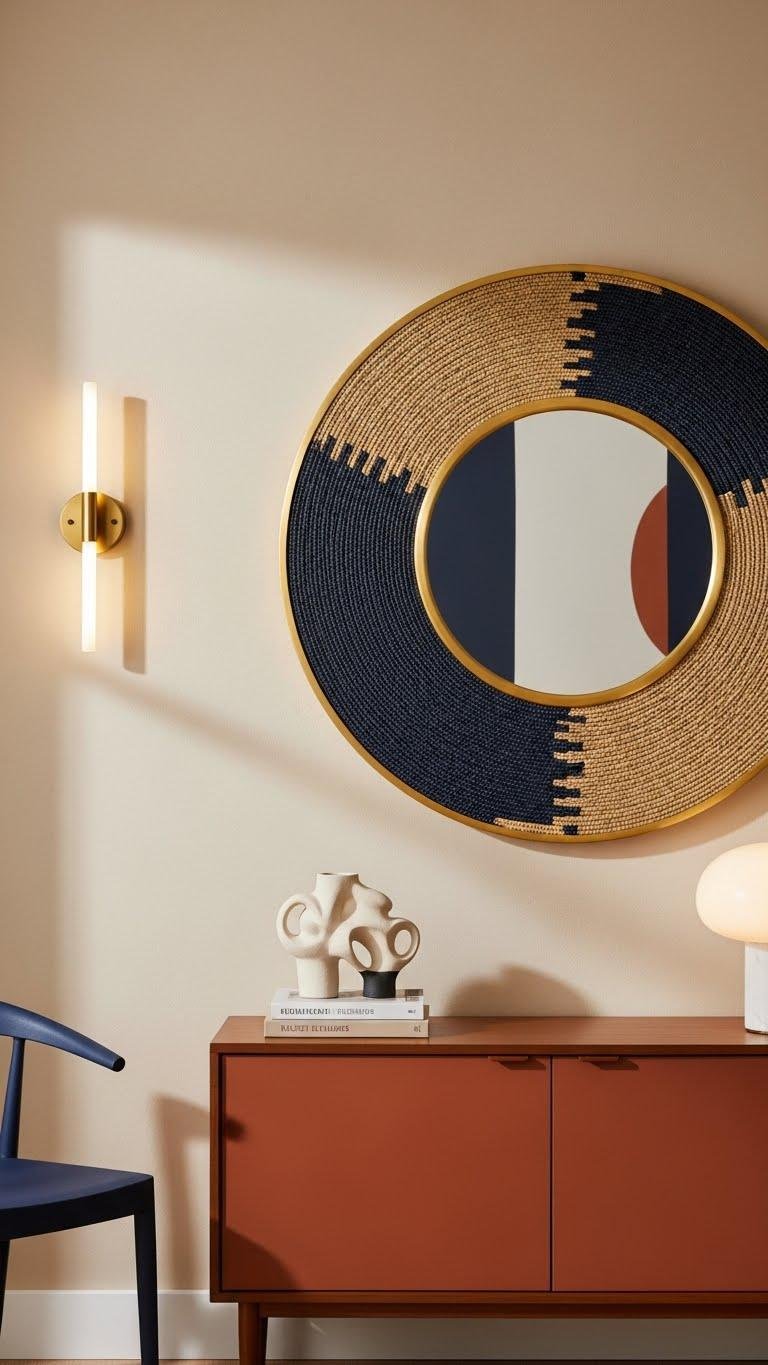
When you anchor a vignette with a single larger piece, you give the eye a confident place to land while the smaller objects support and amplify its presence.
Choose an oversized mirror or bold textile as your anchor, then balance with a compact sculpture and layered architectural lighting.
Let confident scale and deliberate spacing free the room to feel curated, personal, and effortless.
Rotate Small Finds Seasonally
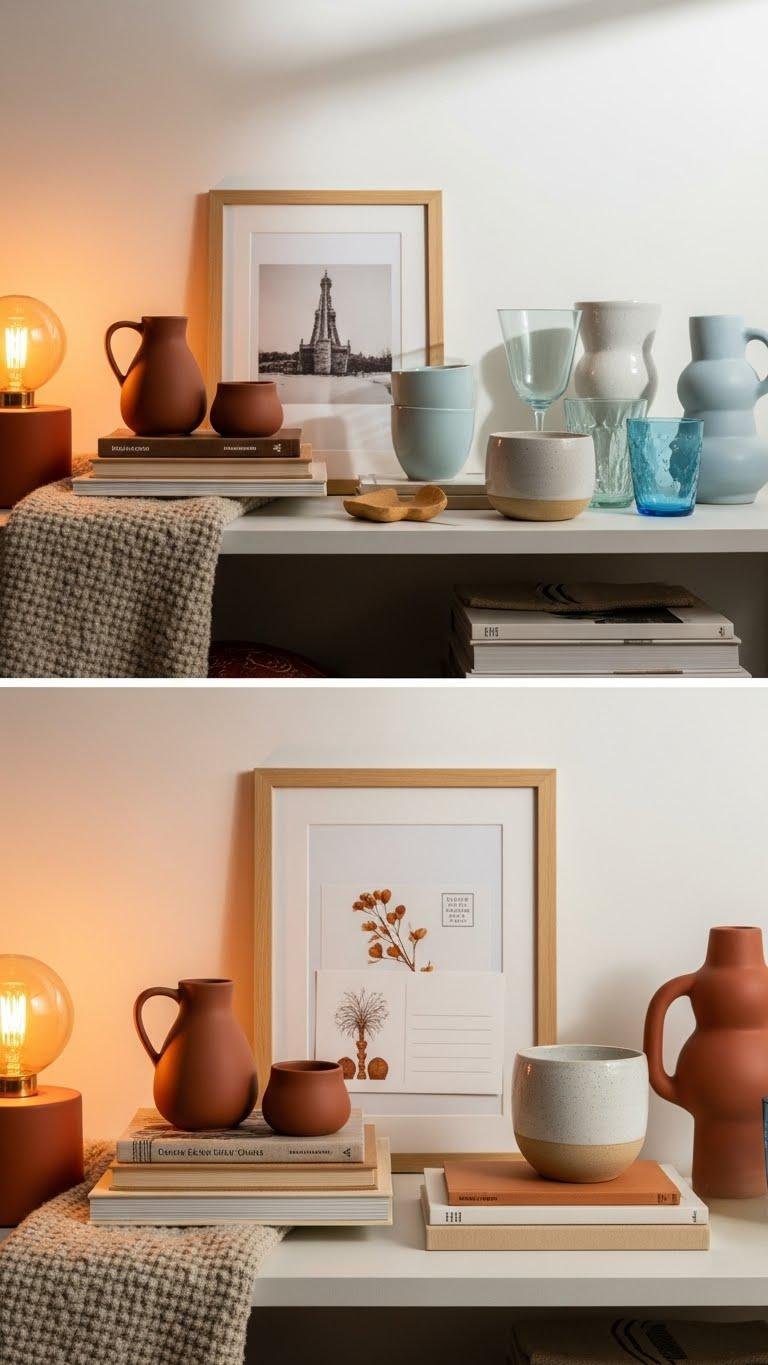
Though the big pieces set the tone, swapping small finds seasonally keeps your space feeling fresh and intentional: curate a short rotation of ceramics, books, framed postcards, and sculptural accents that you rotate every few months, pairing warmer textures and terracotta hues for fall and cozy layers, then lighter ceramics and glass with breezy blues for spring.
You’ll embrace a confident seasonal swap for focused small scale displays.
Use Uniform Bases to Tie Collections Together
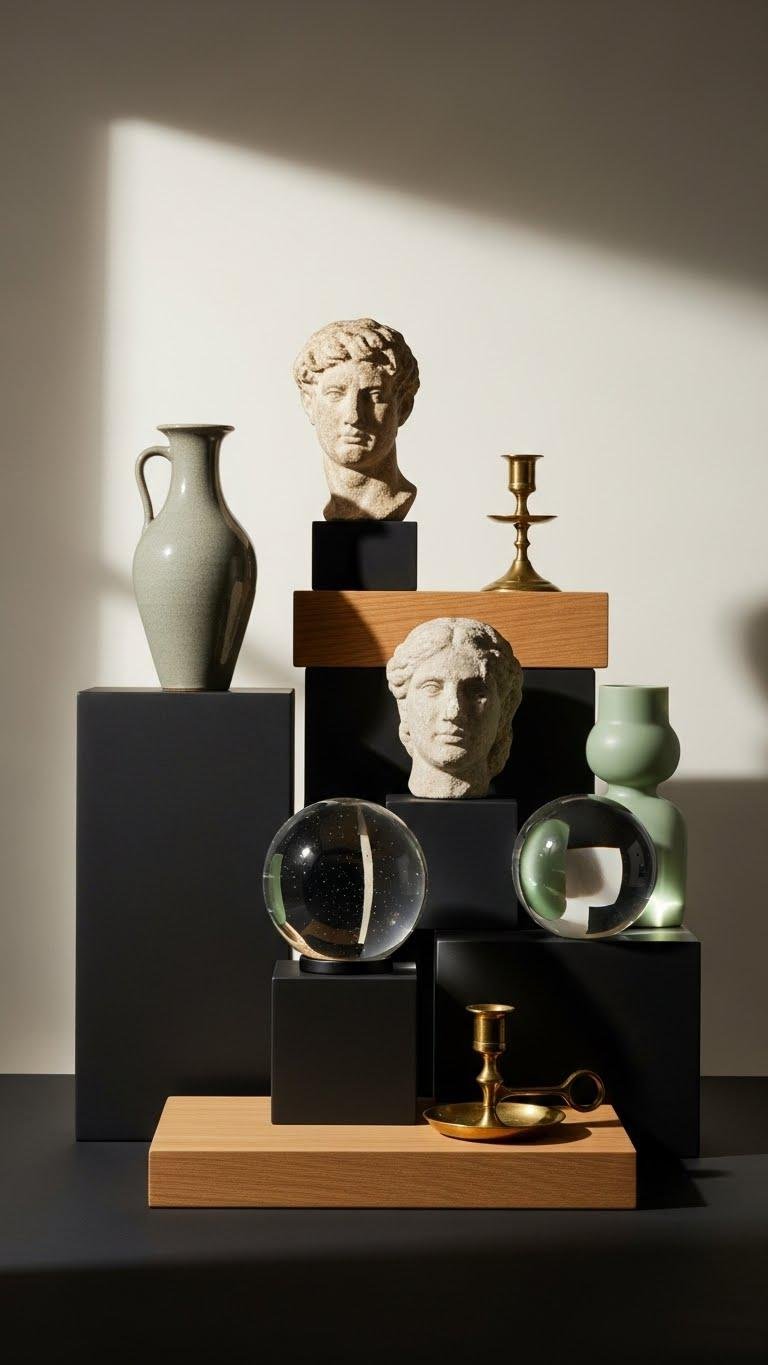
If you want your collected pieces to read as a cohesive statement, give them a common base—same color, material, or platform—to visually unify varied shapes and eras.
You’ll choose matching bases or consistent pedestals to anchor eclectic finds, streamline sightlines, and free your styling choices.
Trust bold uniformity to let individual character shine while maintaining calm, curated confidence throughout your rooms.
Leave Negative Space Around Groupings
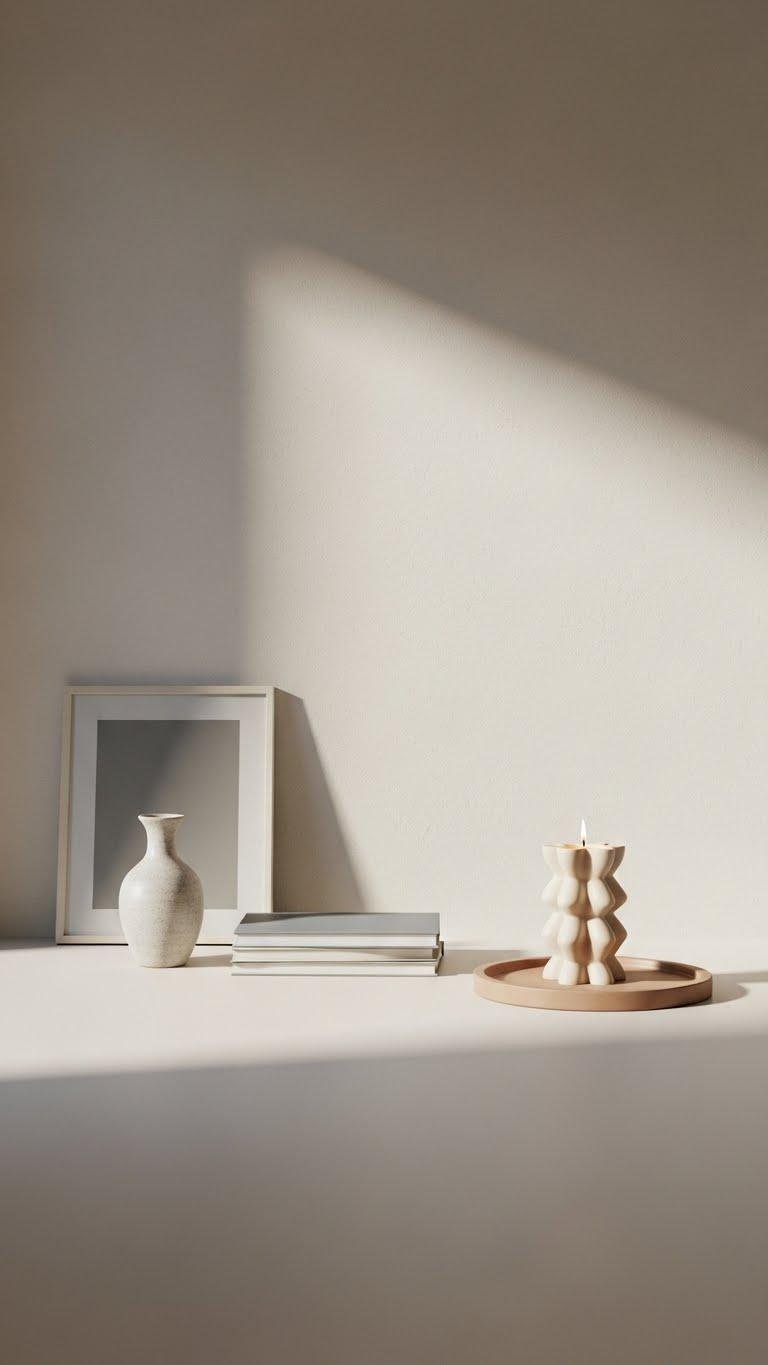
Because space around objects is as important as the objects themselves, leave clear breathing room so each piece can register on its own and as part of the group. You embrace negative space to create calm; you’ll use framed pauses and focal breathing to guide sightlines. Edit ruthlessly, spacing items for impact, letting visual air grant each object freedom and intentional presence.
Pair Vintage Statement Pieces With Modern Furniture
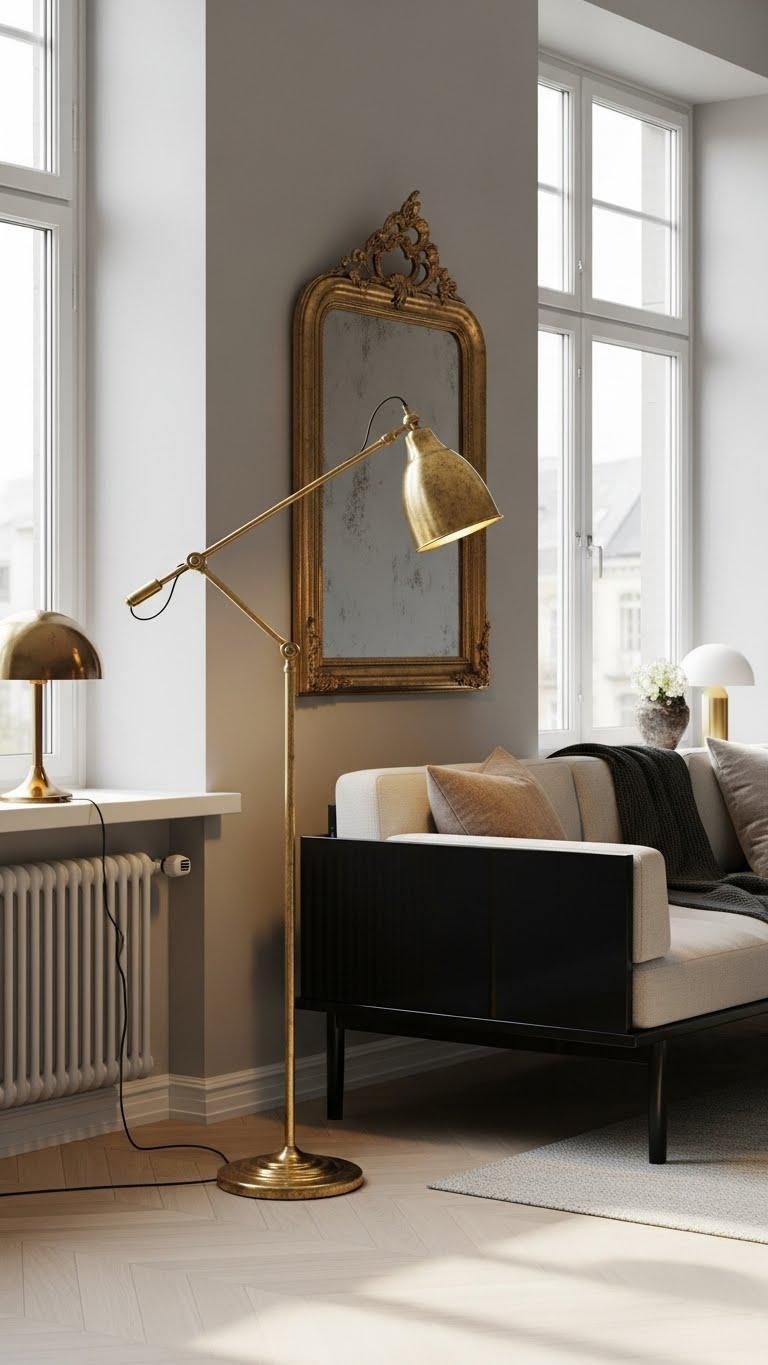
Mix a standout vintage piece into a modern scheme to give your room instant personality and depth.
You’ll balance eras by placing an aged brass lamp or mirror beside sleek lacquer furniture, letting contrast sing without clutter.
Choose one statement vintage silhouette, anchor it with modern lines, and edit boldly—freedom lives in restraint, intentional pairing, and thoughtful proportion.
Invest in One or Two Key Antiques
[IMAGE PROMPT: A serene, stylish interior scene centered on a single well-chosen antique—an ornate wooden chest, gilt-framed mirror, or carved chair—anchoring a modern living room. Soft natural light filters through tall windows, casting warm golden tones and gentle shadows on muted neutral walls and minimalist contemporary furniture arranged around the antique. Textural details: visible patina, worn wood grain, subtle scratches, and a small provenance tag; color palette of warm browns, cream, soft gray, and brass accents; balanced composition with the antique slightly off-center, creating harmony and quiet elegance in a photorealistic, editorial-style rendering.]
Invest in one or two well-chosen antiques to anchor your room and give it history without overwhelming the space.
You’ll select pieces with confident restraint, valuing patina education and provenance research to guarantee authenticity and story.
Let an antique command attention — a chest, mirror or chair — then arrange your modern items around it.
This creates freedom, balance, and lasting personality.
Source Thrifted Treasures for Authentic Patina
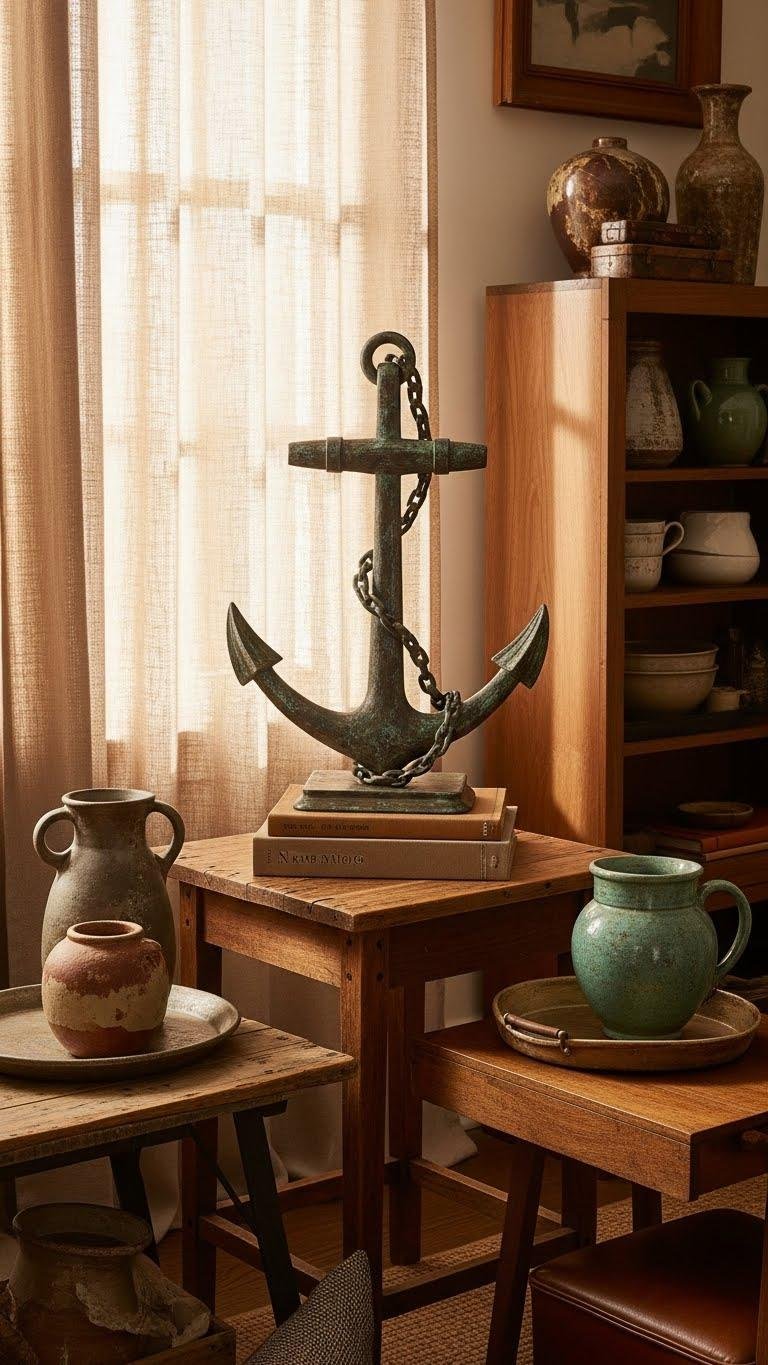
Once you’ve let a single antique anchor the room, hunt for thrifted finds that bring layered patina and provenance without breaking the look. You’ll seek pieces with stories, practice patina preservation—clean gently, never strip character—and use community sourcing to locate unique items. Curate confidently: mix scales, prioritize tactile age, and let authentic wear read as intentional, freedom-forward style.
Tie Eras Together With Repeated Color or Material Threads
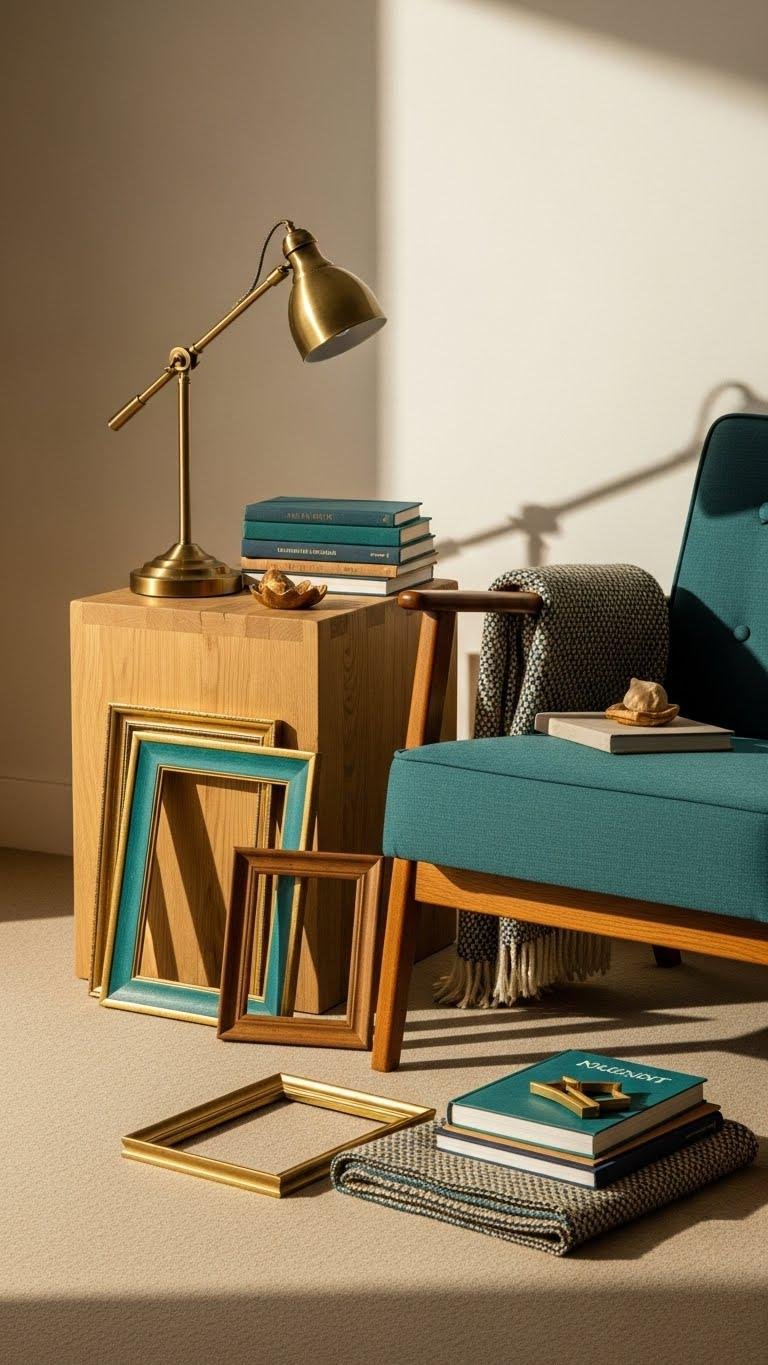
Often the easiest way to make disparate eras feel intentional is to repeat a single color or material across the room—choose a thread like brass hardware, deep teal, or raw oak and let it reappear in unexpected spots: lamp bases, picture frames, a stack of books, or a woven throw. You’ll use color threads and material echoes to unify vintage and modern pieces, creating bold cohesion without constraint.
Introduce High-Quality Reproductions Where Needed
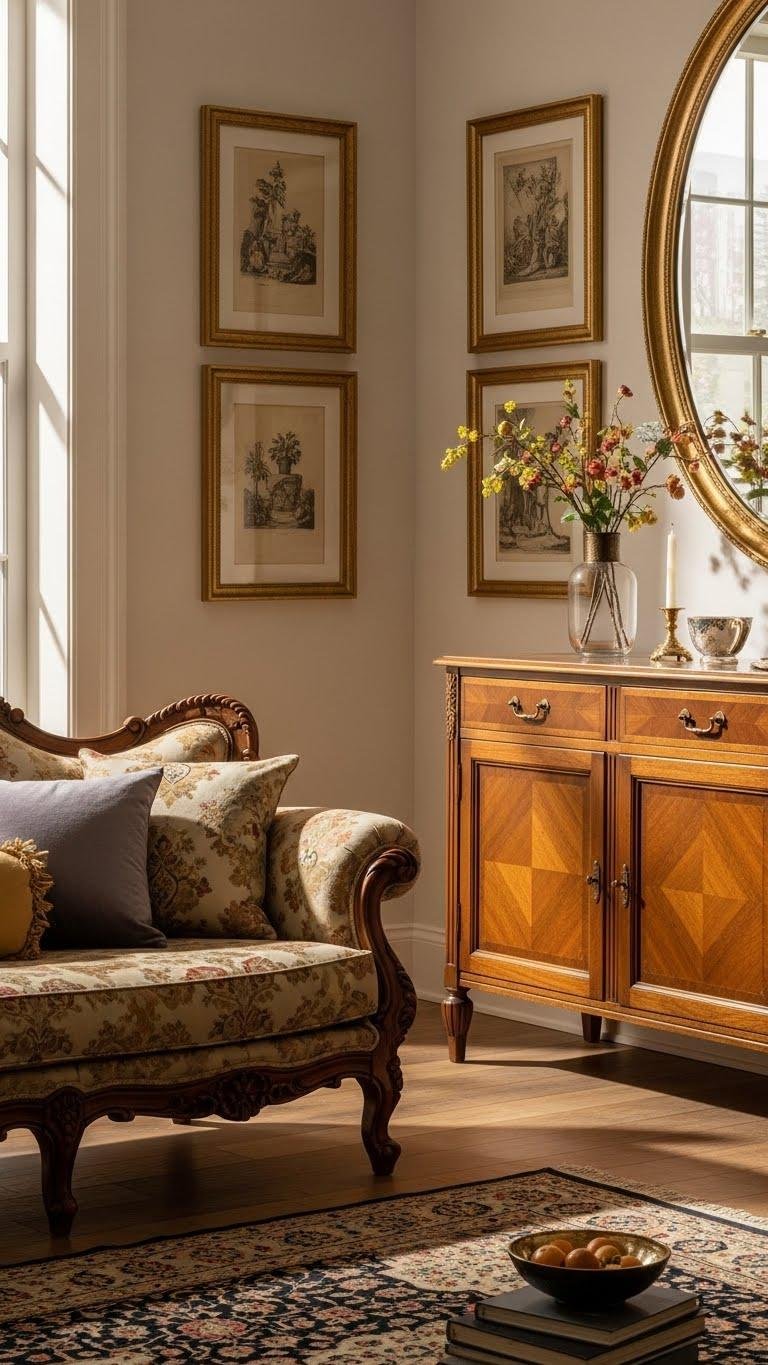
A well-chosen reproduction can give your room the look and feel of a period piece without the cost or fragility of an original, so pick pieces that match the scale, finish, and craftsmanship of the era you’re referencing.
Choose museum replicas for statement furniture, archival prints for wall impact, and prioritize materials and patina that read authentic.
You’ll gain freedom to live boldly.
Mix Original Art With Framed Prints and Found Objects
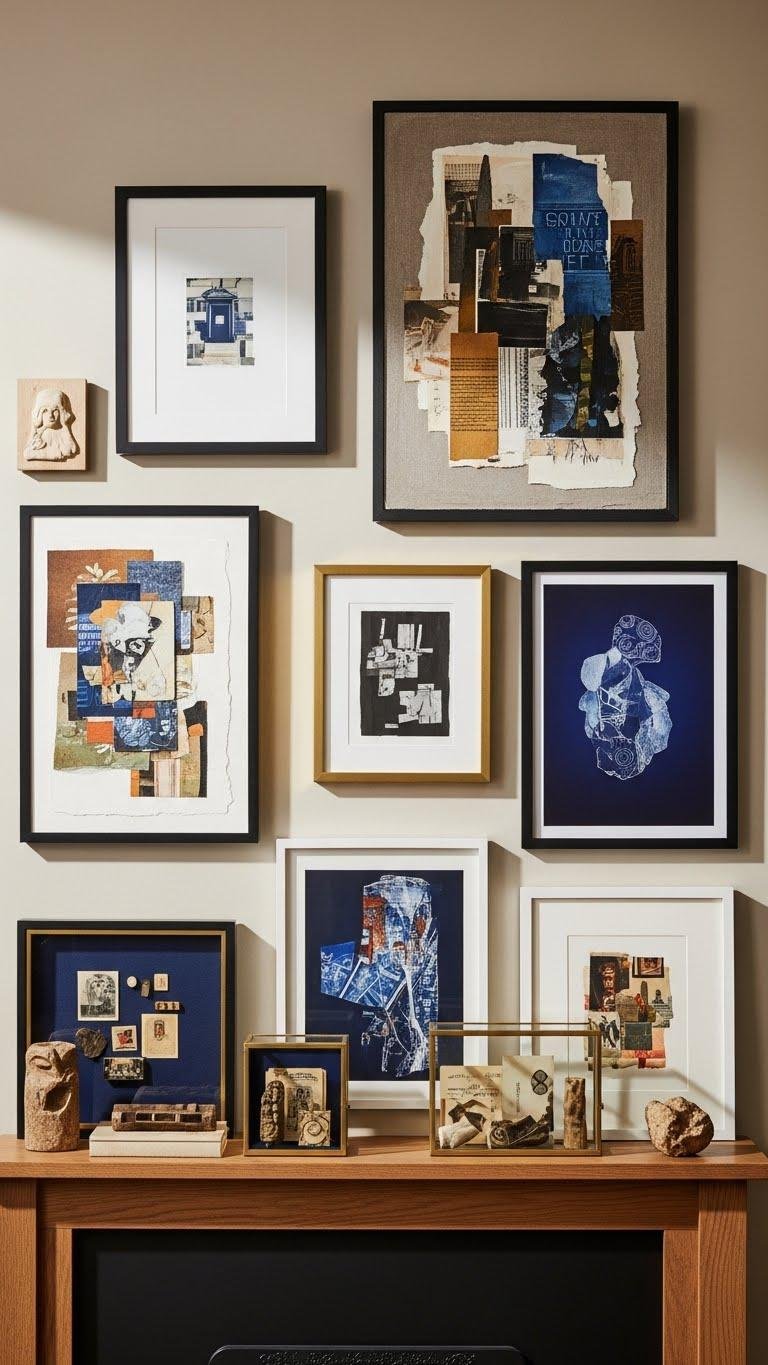
By pairing original artworks with carefully framed prints and well-chosen found objects, you create a layered, museum-quality look that still feels personal and lived-in.
Mix original collages with sleek prints, vary frame finishes, and place found ephemera in shadowboxes or on mantels.
Curate scale, rhythm, and negative space; let each piece breathe so your home reads as intentional, adventurous, and utterly yours.
Feature Meaningful Travel Mementos and Maps
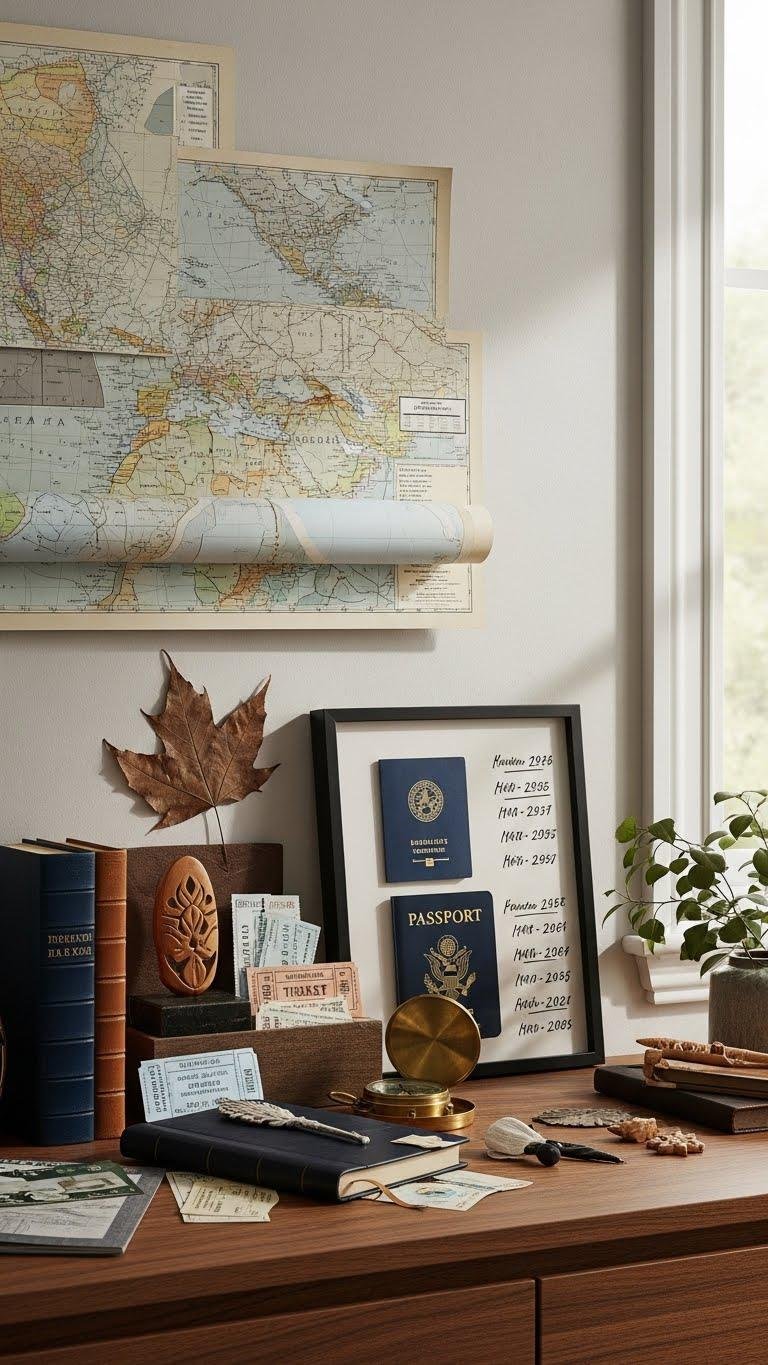
With a few well-placed pieces, you can turn travel souvenirs and maps into a refined, story-driven display that anchors a room and sparks conversation. Curate travel journals, ticket stubs and small artifacts in grouped vignettes; mount maps as layered wall treatments. Include passport displays in a streamlined cabinet or shadowbox, labeling dates and routes so each item reads like a deliberate, liberated keepsake.
Vary Frame Styles While Repeating a Finish
[IMAGE PROMPT: A styled interior vignette showing a gallery wall of framed art with varied frame profiles—slim metal, chunky wood, and ornate carved frames—all finished in the same warm brass patina. Soft, directional natural light from the left casts gentle shadows and highlights the texture of frames and matching brass hardware; neutral matte wall in warm cream lets each piece breathe. Photorealistic composition, shallow depth-of-field focusing on a group of three frames at different depths, curated and minimalist mood conveying cohesion, elegance, and intentionality.]
Mixing frame profiles while keeping the same finish helps your eye travel across a wall without the display feeling chaotic, and it makes each piece read as part of a cohesive collection.
You’ll combine mixed frame silhouettes—slim, chunky, ornate—while repeating that finish and using matching hardware. The result feels curated, liberated and intentional: a collected look that lets each work breathe without fighting the others.
Use Scale Contrast for Visual Hierarchy
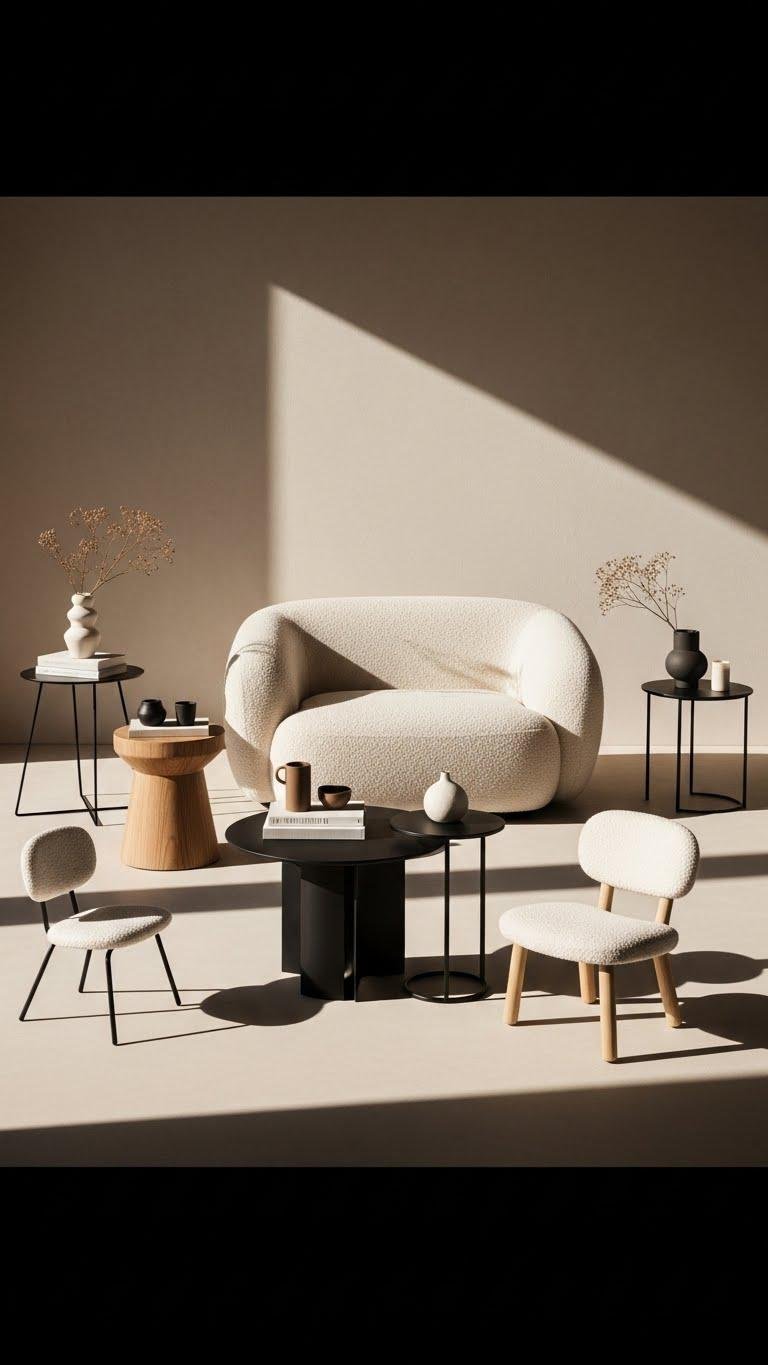
You’ve established cohesion through a unified finish; now use scale to direct the eye and set a clear hierarchy. You’ll create deliberate scale tension by pairing oversized anchors with petite accents, letting proportion play guide focal points.
Choose one dominant piece, counterbalance with smaller companions, and resist symmetry when freedom calls—this disciplined contrast clarifies flow and elevates your collected, intentional aesthetic.
Edit Ruthlessly to Prevent Clutter
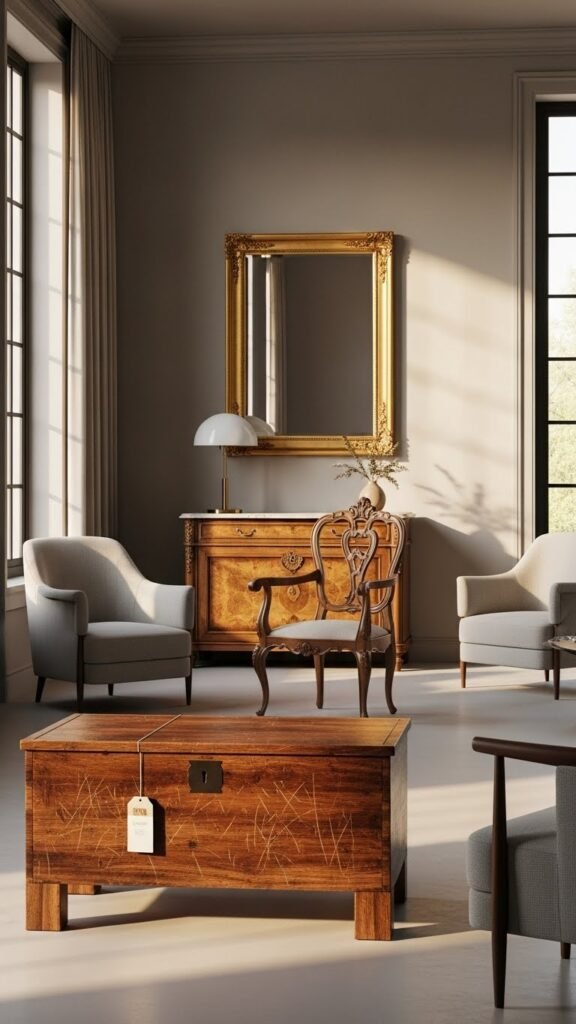
Although curated layers can feel inviting, they stop being intentional the moment surfaces get crowded; edit ruthlessly so every object earns its place.
You decide what stays: edit boldly, question sentiment, and let function lead.
Purge ruthlessly items that dilute your calm, keep only pieces that spark purpose or joy, and arrange them with confident restraint so your rooms breathe and feel truly free.
Incorporate Concealed Storage and Baskets
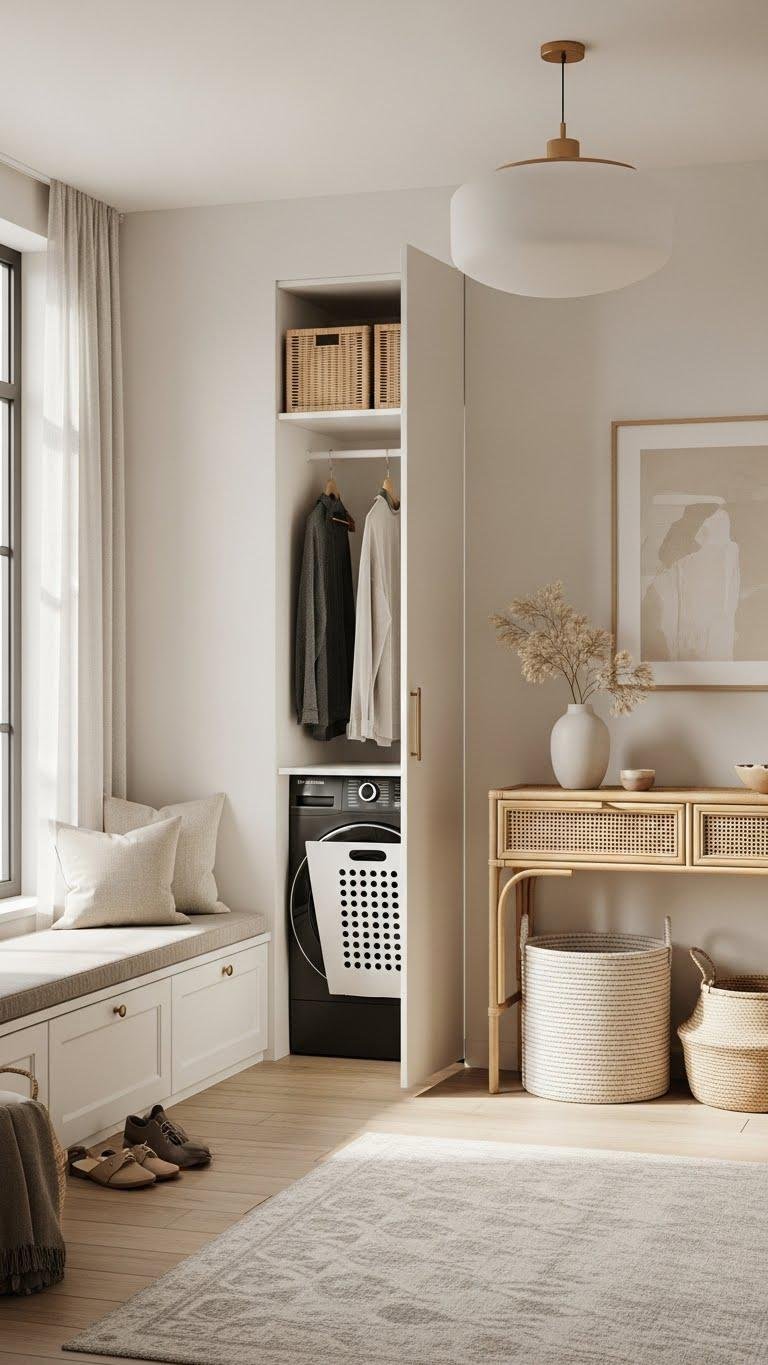
Tuck clutter out of sight with concealed storage and thoughtfully chosen baskets that preserve your room’s calm without hiding its aesthetic.
You’ll choose hidden hampers for laundry areas, slim built-ins under benches, and woven consoles to anchor entryways. Prioritize accessibility, consistent materials, and breathable textures so every piece feels intentional. This approach frees you to live simply and stylishly, without compromise.
Limit Surface Styling to a Few Purposeful Objects
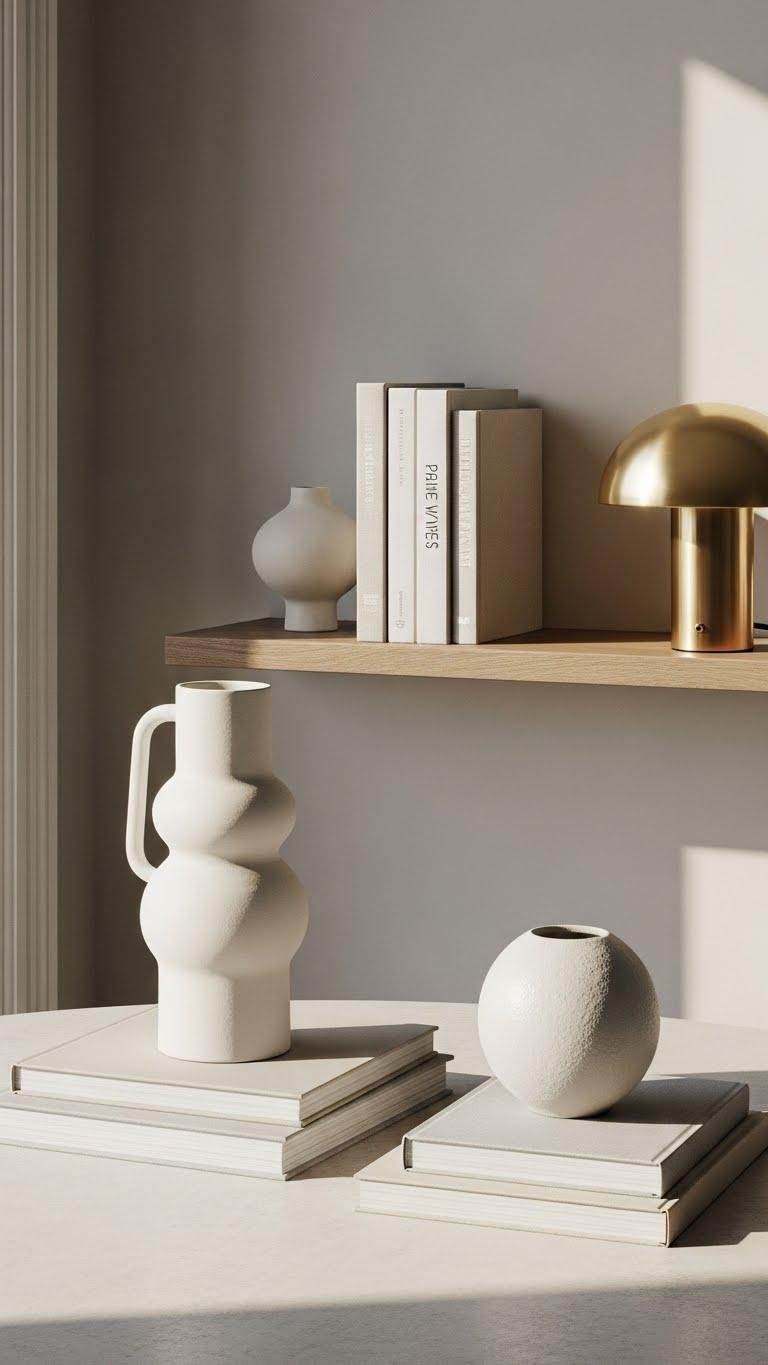
Choose just a handful of objects per surface and let each one earn its place—functional items, a sculptural vase, or a single stack of books—so the room reads as deliberate, not crowded.
You’ll favor minimal surfaces and intentional curation: limit pieces to purposeful forms, vary scale and texture, and leave negative space.
This gives you freedom to breathe and clarity in every vignette.
Choose Multi-Purpose Furniture for Display and Storage
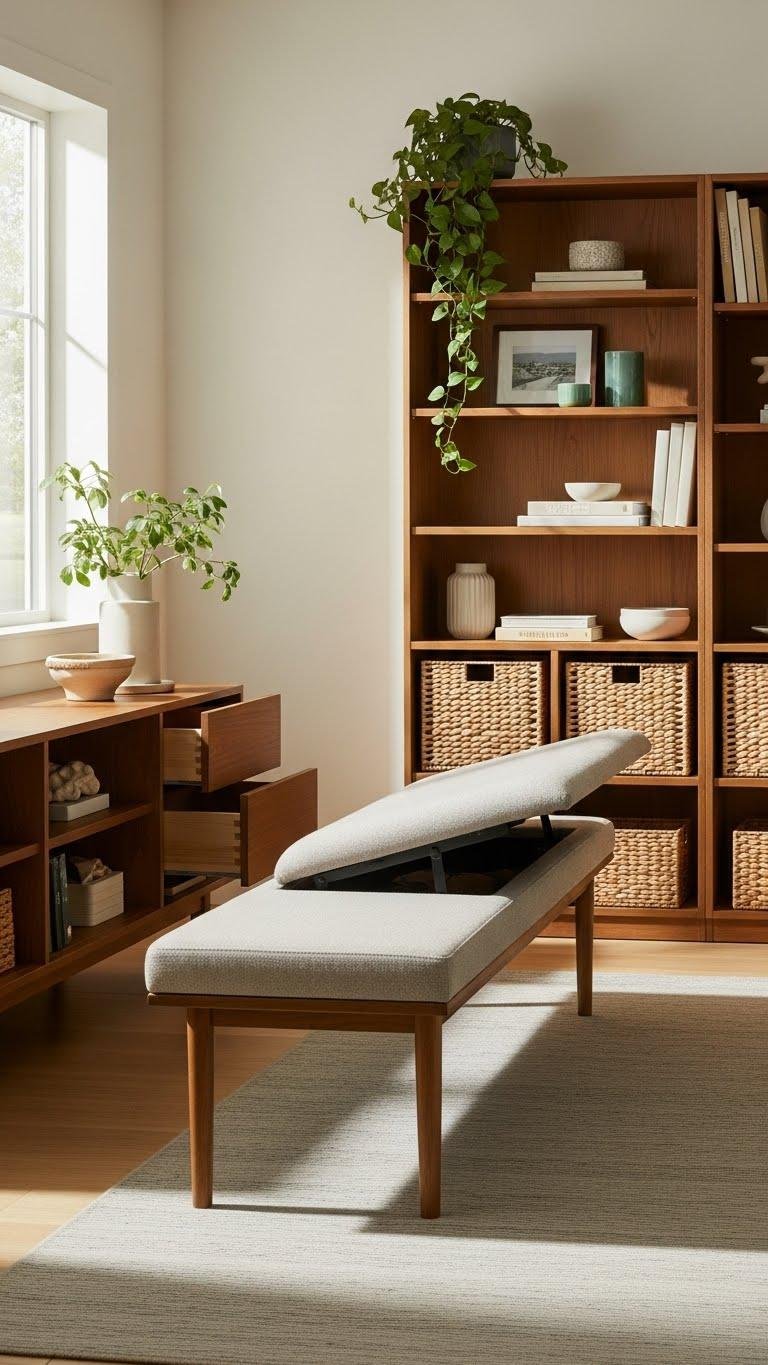
Think about furniture that pulls double duty: a credenza with open shelving and concealed drawers, a bench with hidden storage beneath a slim seat, or a bookcase whose lower cubbies hide baskets while the top becomes a curated display.
You’ll choose pieces like a convertible bench or a storage ottoman that showcase objects, stash essentials, and keep rooms feeling liberated, purposeful, and elegantly edited.
Schedule Regular Reassessment and Rotation
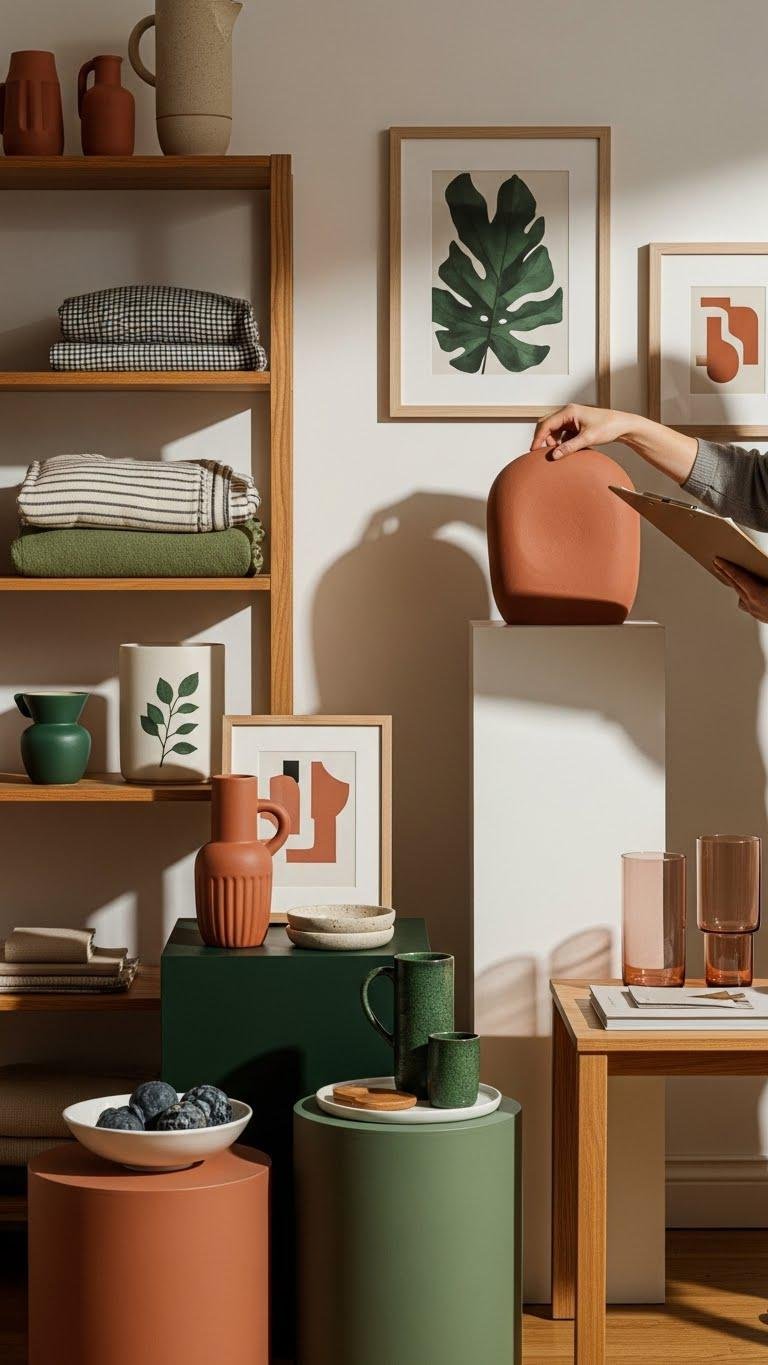
Regularly reassess and rotate your displays so they stay fresh and purposeful rather than static.
You’ll audit seasonal inventory, edit items that no longer resonate, and decide which rotating focal pieces deserve prominence. Set a simple schedule—monthly or quarterly—so choices remain intentional, not cluttered.
This disciplined rhythm preserves freedom to experiment while keeping every vignette confident, curated, and meaningfully yours.
Establish a Unifying Palette Across Rooms
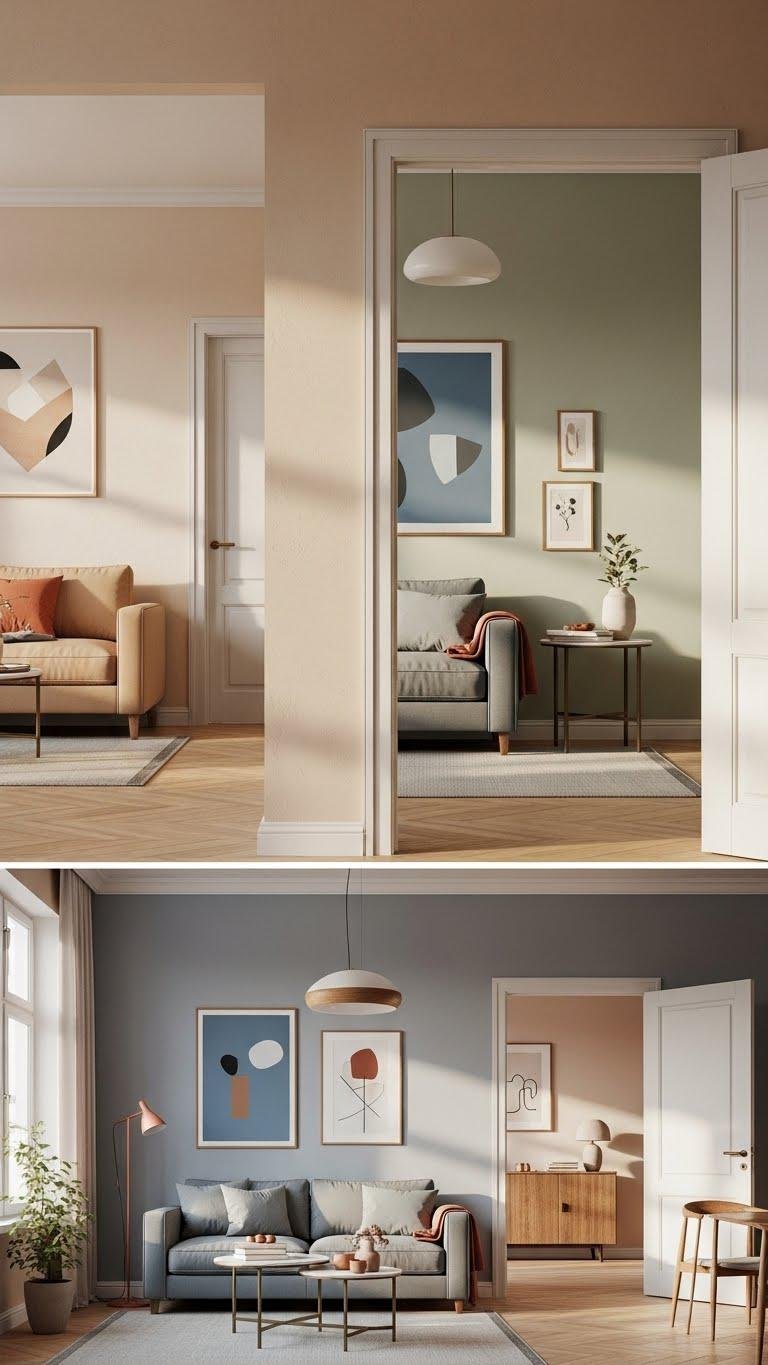
Harmony guides how a home feels from room to room, so establish a unifying palette that threads through your spaces and makes shifts effortless.
You’ll choose a cohesive colorplan—a restrained base, two supporting hues, and one accent—then apply tonal variations to create depth. Use bridging accents sparingly: textiles, trim, or art that link rooms without forcing uniformity, granting visual freedom and calm.
Repeat Motifs to Link Disparate Pieces
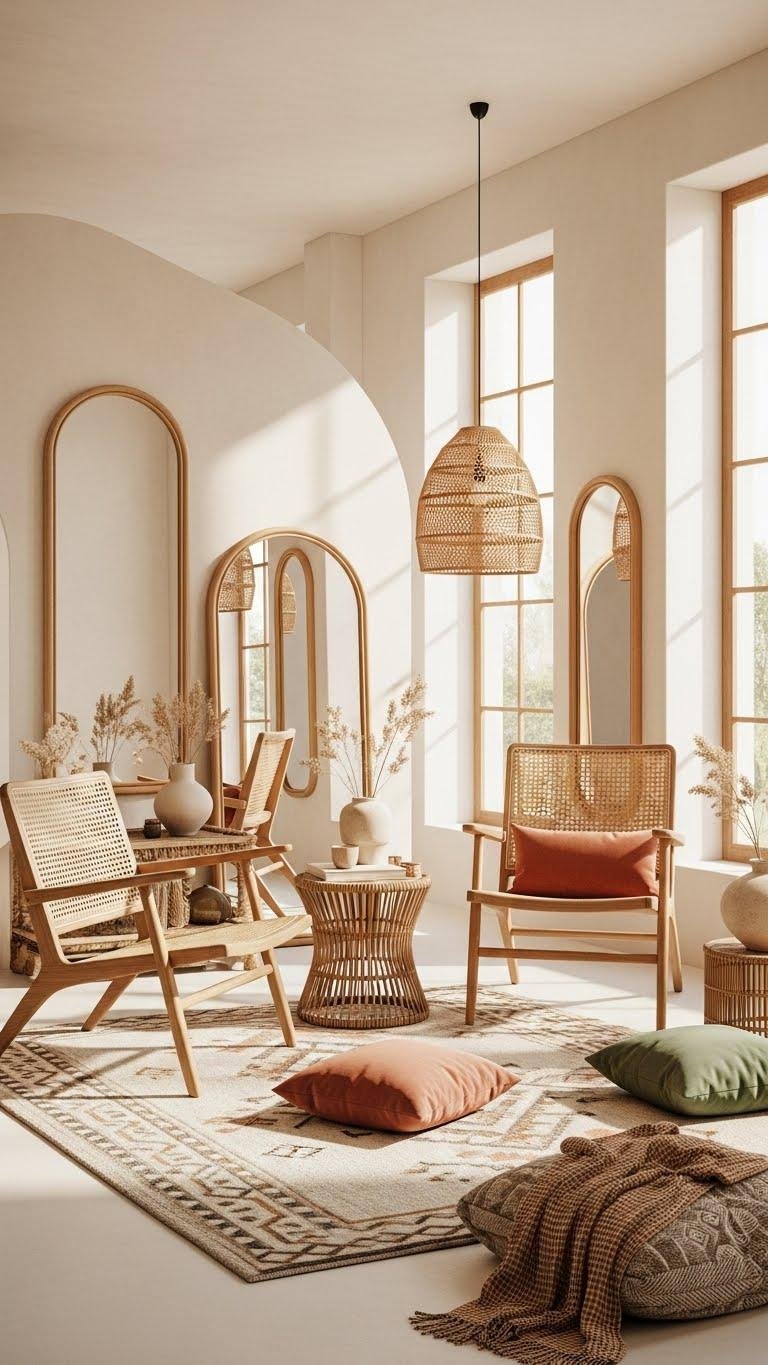
Often you’ll find that a single recurring motif—whether a geometric pattern, a material like rattan, or a line motif such as arched tops—can quietly unify mismatched furniture and decor across rooms. You’ll use motif repetition to create intentional anchor echoes: repeat a shape, texture, or color in small doses so pieces converse rather than compete, giving your home a liberated, cohesive feel.
Vary Scale Deliberately for Layered Interest
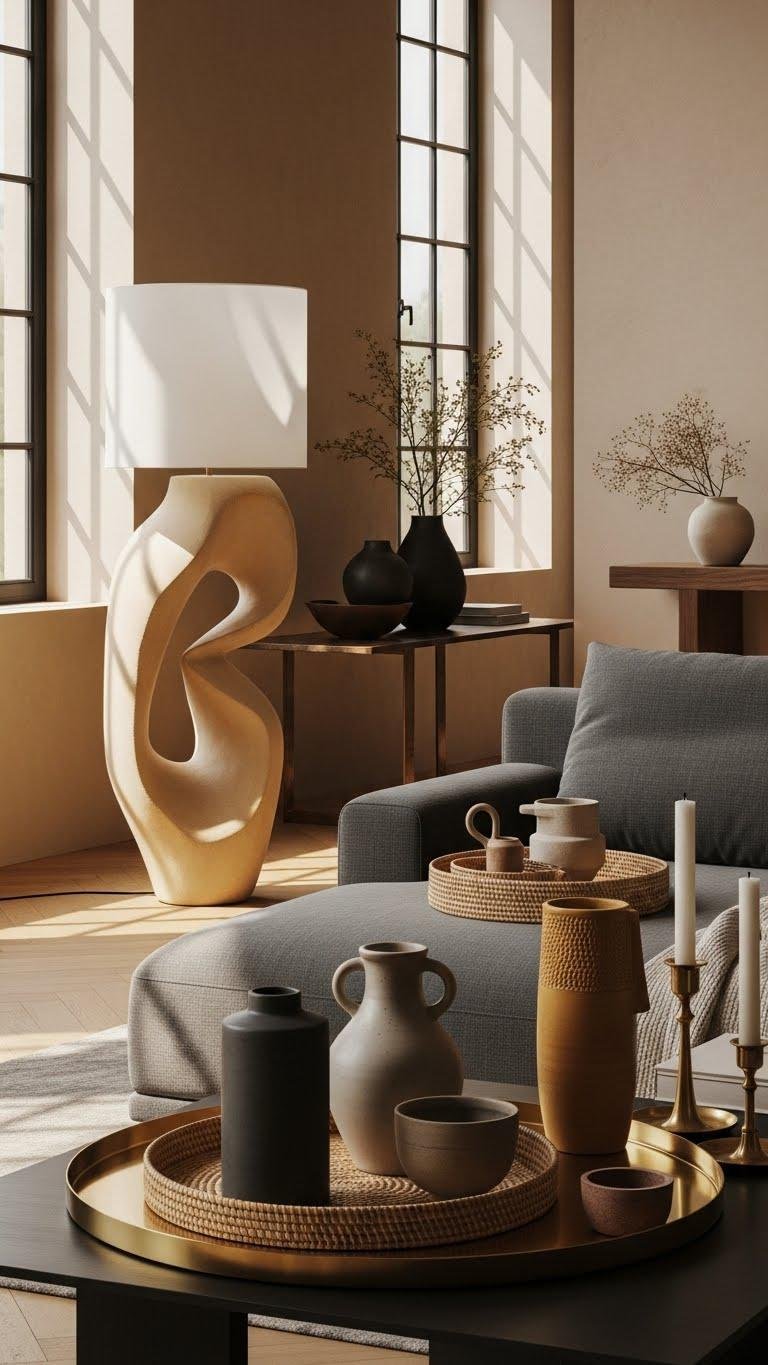
Repeating motifs helps pieces speak the same visual language, but varying scale gives that conversation depth and rhythm.
You’ll layer bold and subtle elements with intent, using varying scales to anchor sightlines and invite movement. Make deliberate contrasts between large anchoring furniture and small, tactile accessories so each object asserts personality without overpowering. You’ll curate freedom through precise proportion and confident restraint.
Use Rhythmic Placement to Create Balance
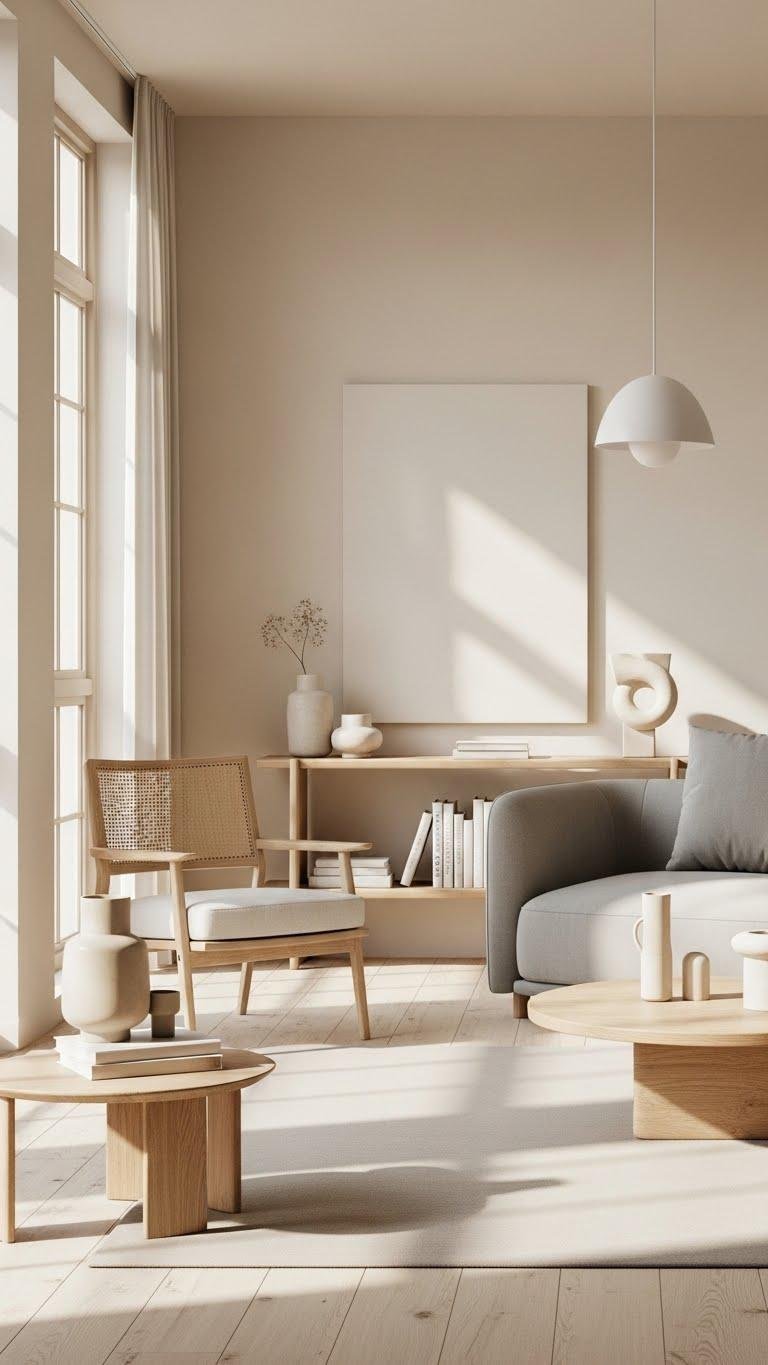
With a practiced eye, you’ll place objects so they beat like a quiet metronome across the room: clusters, pauses, and single accents that guide the gaze and calm the space. You use rhythmic repetition and alternating spacing to craft momentum without clutter.
Trust proportion, repeat materials, and leave deliberate pauses so each piece breathes — the result feels composed, free, and confidently balanced.
Maintain Sightlines With Thoughtful Height Placement
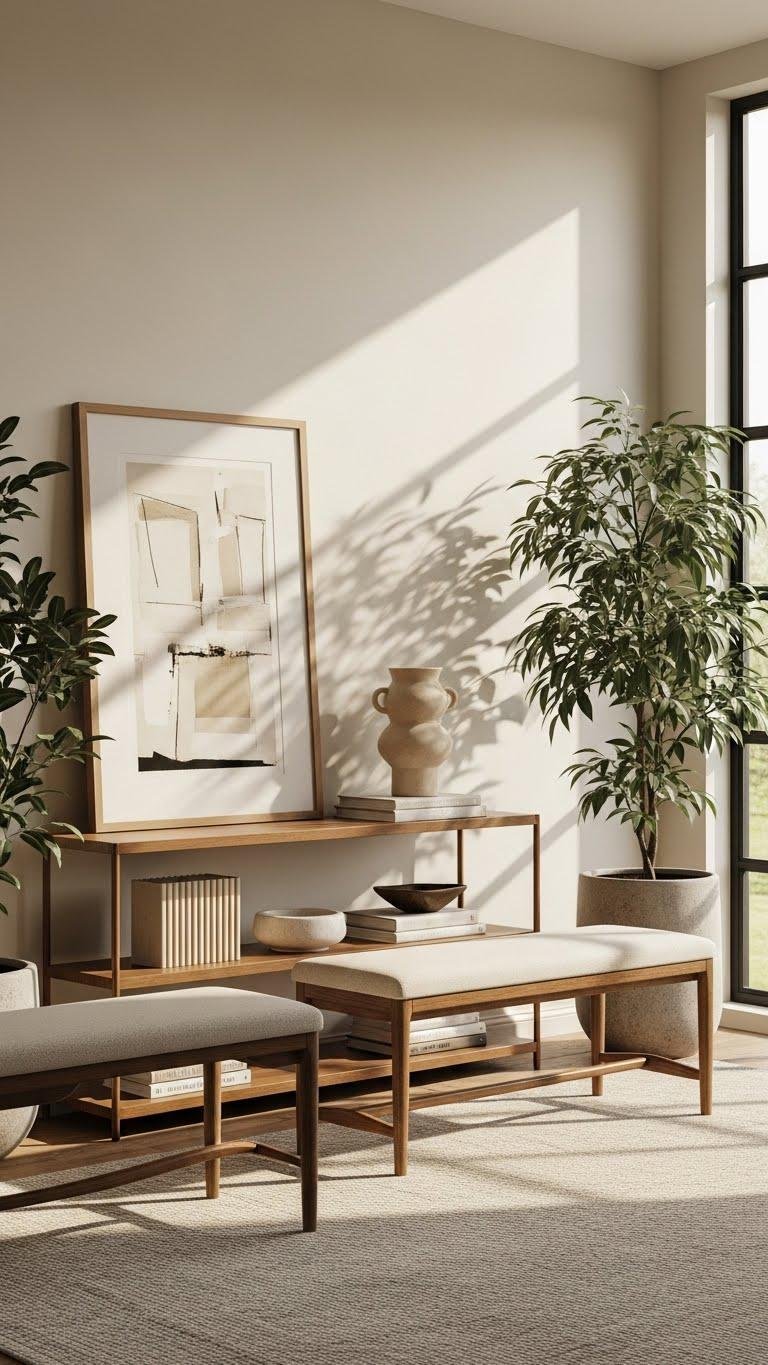
When you arrange pieces by height, you control sightlines so the room feels open and intentional rather than crowded. You place focal items at eye level, then build a staggered height composition around them so movement and view stay unobstructed. Be deliberate: low benches, mid shelves, tall plants—each choice frees circulation and feels collected without sacrificing personality or effortless style.