
You’ll create a balanced living room by pairing one or two oversized anchors with smaller textural pieces and thoughtful negative space. Think a single statement canvas over the sofa, a low gallery grid with matching mats, or layered picture ledges with woven baskets and mirrors to add tactility. I’ll show practical arrangements, lighting tips, and scale rules that help a room feel calm and cohesive—and a few tricks to avoid overcrowding.
Oversized Single Artwork Above the Sofa
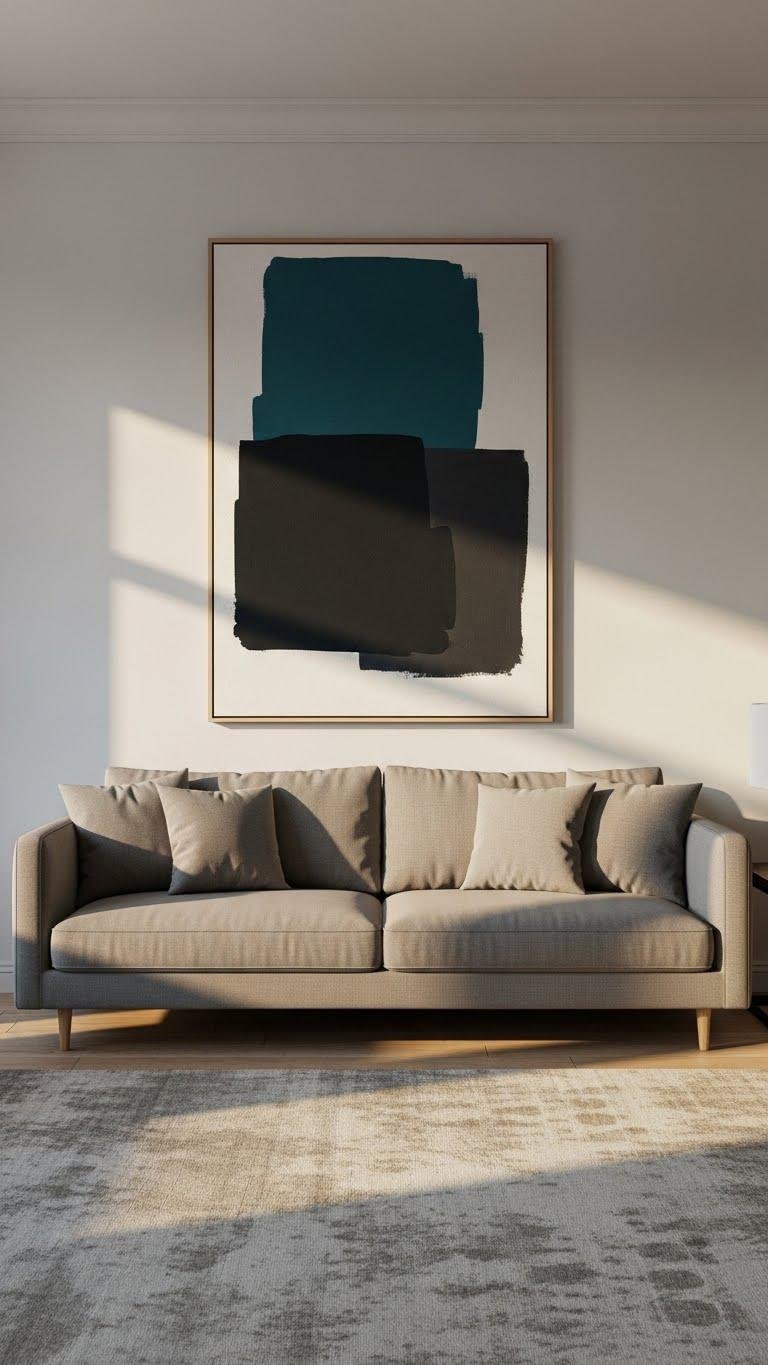
When you center one large piece above the sofa, it instantly anchors the room and sets the scale for everything else; choose artwork that complements your sofa’s color and the wall’s proportions so the piece feels intentional, not overpowering.
Embrace oversized proportion while preserving negative space; let the art breathe. You’ll balance bold presence with calm openness, creating a liberated, confident focal point.
Triptych or Multi-Panel Statement Piece
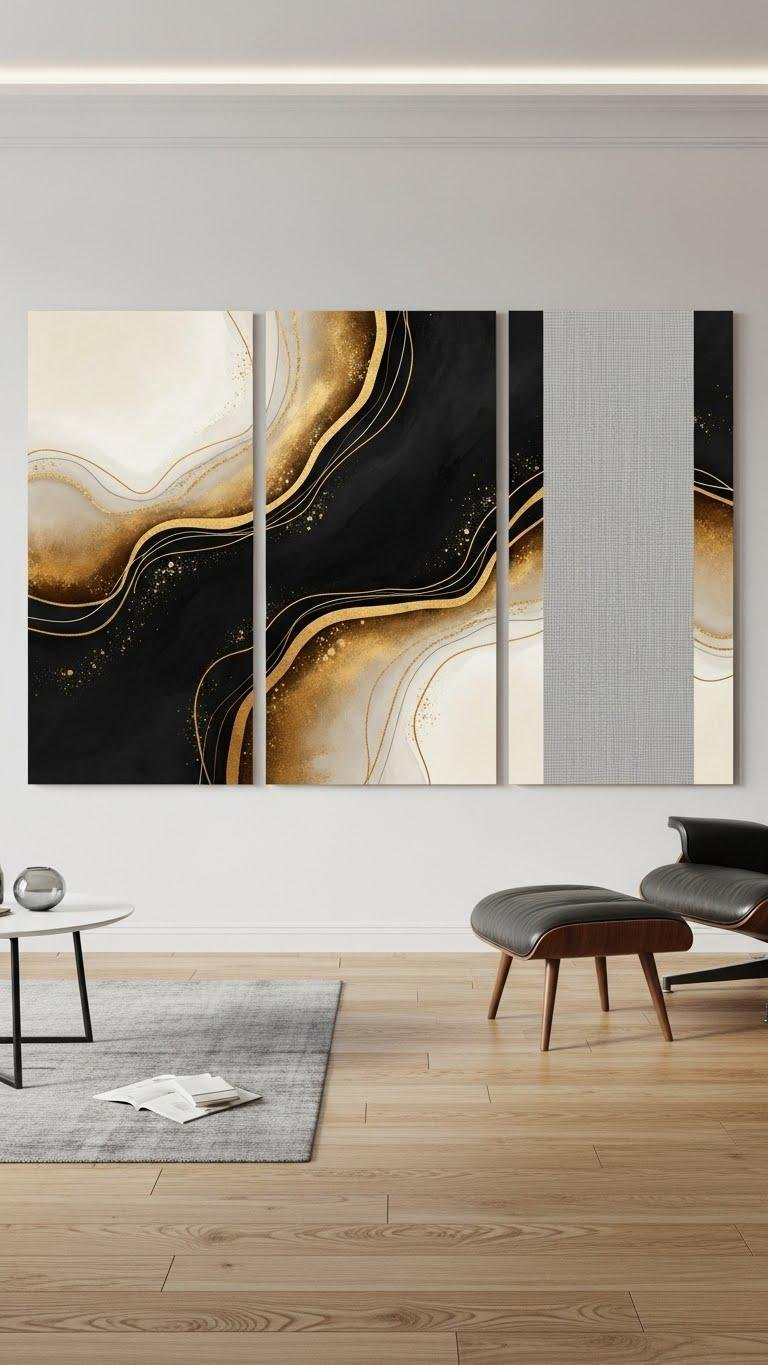
Split a single visual idea across three or more panels to create rhythm and drama that guides the eye across the wall. You’ll anchor a room with bold scale, mixing metallic accents for sparkle and texture. Space panels to let negative space breathe, or swap in acoustic panels for function without losing impact. Keep color and line consistent so the composition reads as one liberated whole.
Gallery Wall in a Consistent Frame Style

If you loved the rhythmic drama of a multi-panel statement, a gallery wall offers the same momentum in a more intimate, layered way.
Choose frames in one finish, matte finish photos on archival paper, and a matching mat to unify diverse pieces.
Hang with uniform spacing and a central anchor piece so your collection feels deliberate, free, and confidently composed.
Mixed-Size Art Grid for Uniform Balance
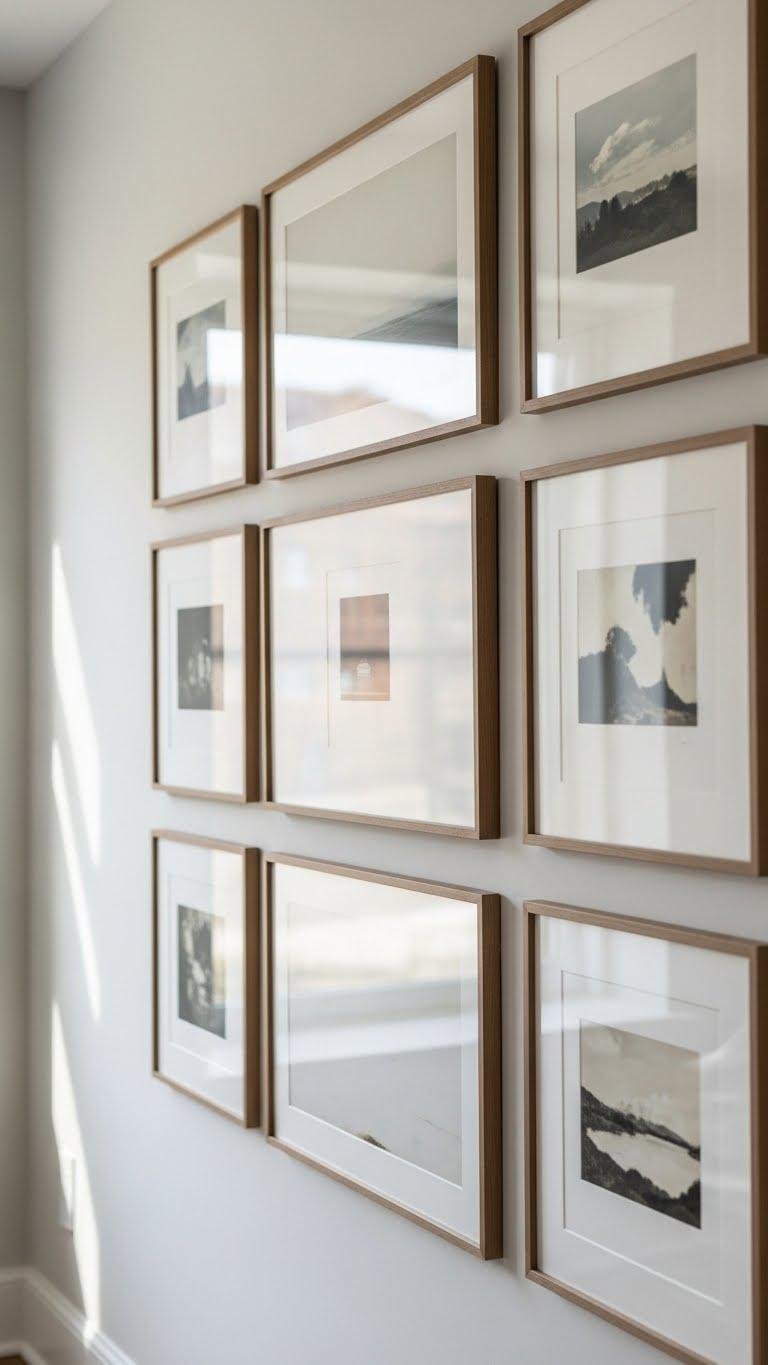
Mix a range of frame sizes to build a grid that feels orderly yet dynamic, and anchor the layout with a predictable rhythm so your eye moves easily across the wall. You’ll balance scale contrast by repeating small and large pieces, keeping consistent frame spacing to maintain calm. Arrange focal art off-center to create freedom within structure, and tweak spacing until proportions read as intentional.
Art Stack for Narrow Wall Slivers
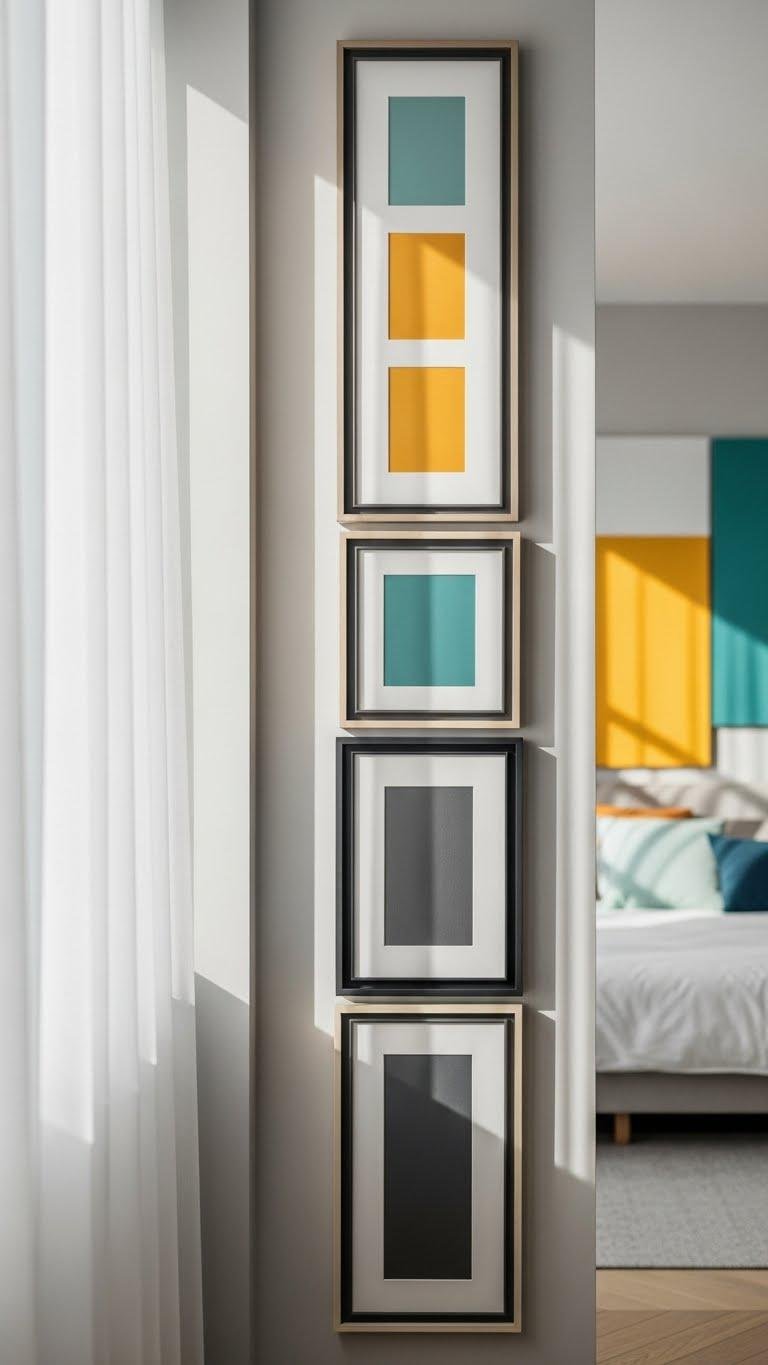
For a narrow wall sliver, stack art vertically to make the most of limited width and draw the eye upward; you’ll create a sleek, gallery-like column by combining similarly framed pieces or varying sizes that share a common visual thread (color, mat, or frame finish). Choose slim canvases or vertical triplets, keep spacing tight, and let rhythm and negative space give the wall room to breathe.
Picture Ledge With Layered Frames and Objects

After stacking art vertically to lift a narrow wall, try a picture ledge to create a more relaxed, layered look without sacrificing vertical interest.
You’ll arrange frames, small sculptures and books on a thin ledge, letting shadow play add depth and movement.
Mix frame sizes and lean pieces forward or back; you’ll change the mood easily and enjoy a free, curated vignette.
Symmetrical Pairing of Wall Sconces and Art
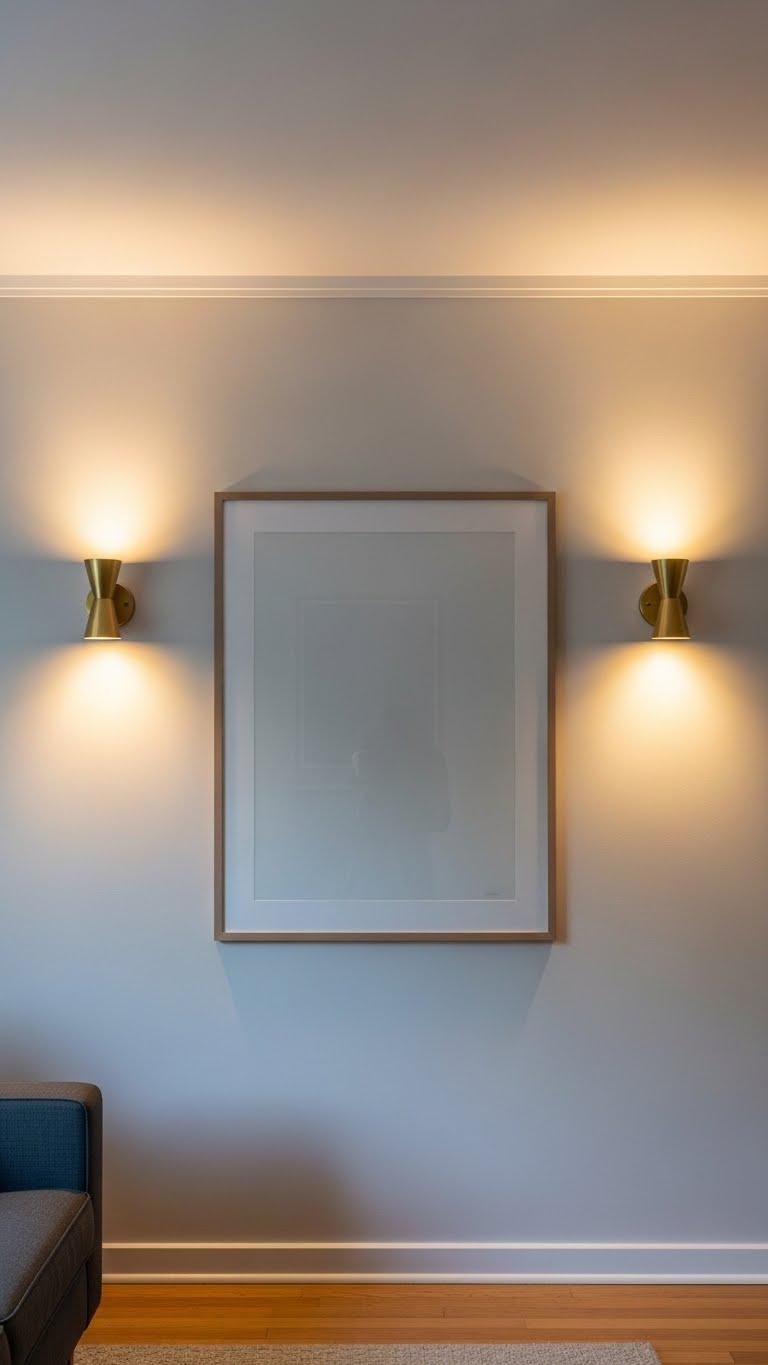
When you flank a focal artwork with matching wall sconces, you create immediate balance and a polished, gallery-like feel that anchors the room while highlighting the piece.
Place centered art at eye level, align sconces for mirrored symmetry, and choose fixtures that deliver balanced lighting. You’ll enjoy a calm, intentional look that feels open and controlled without feeling constrained.
Asymmetrical Grouping Anchored by a Console
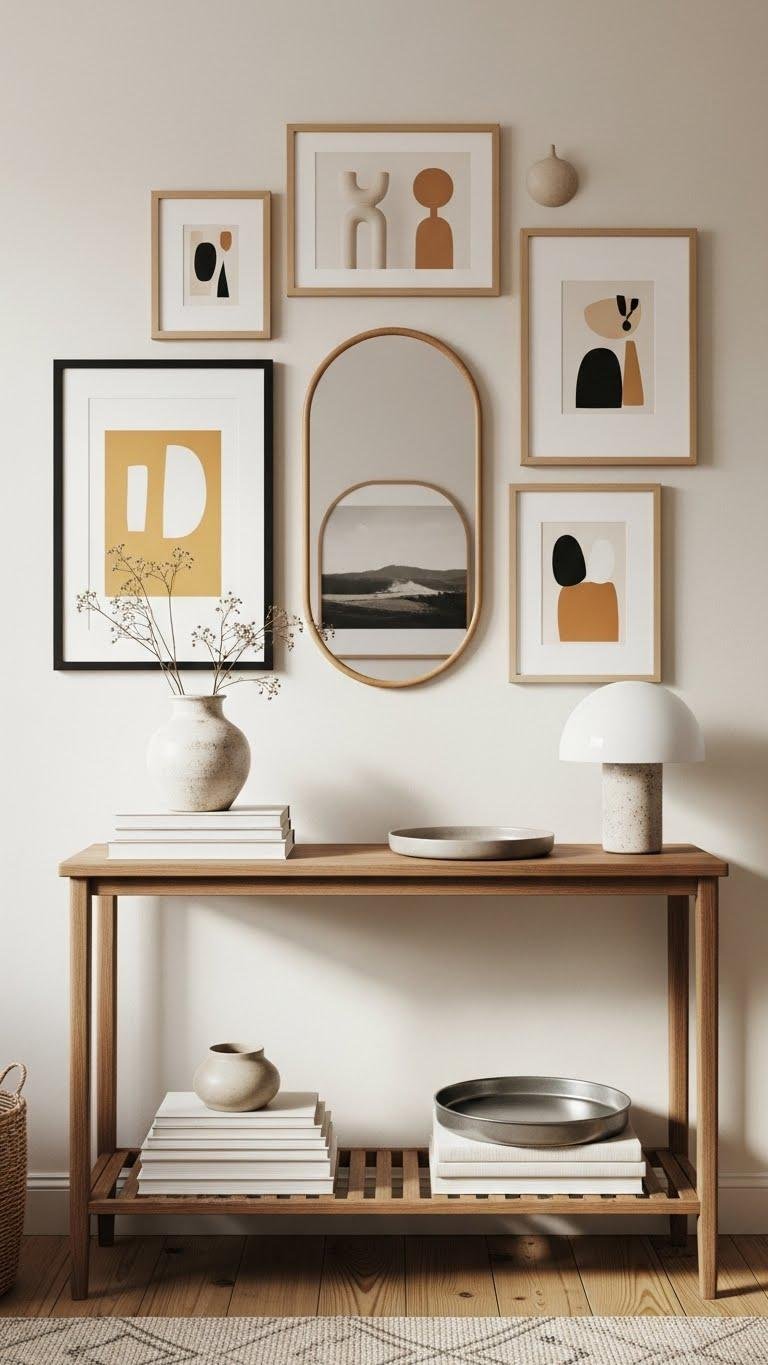
Shifting from the tidy symmetry of sconces and a centered artwork, you can create a more relaxed, layered look by anchoring an asymmetrical gallery above a console.
Embrace console styling that balances scale and negative space; mix frames, mirrors, and sculptural objects.
Follow basic asymmetry rules — varying heights, weighted groupings, and visual pivots — so the arrangement feels intentional, free, and effortlessly curated.
Woven Baskets Arranged in a Rhythmic Cluster
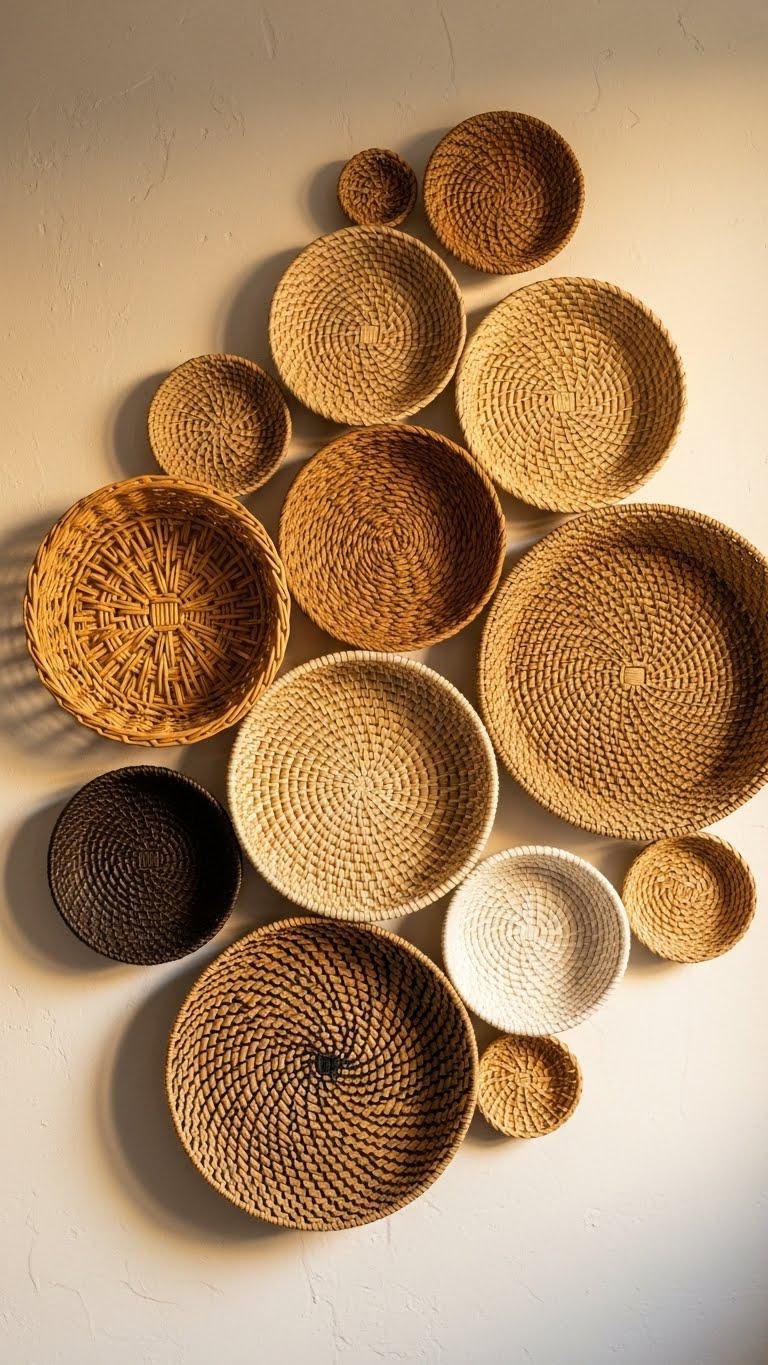
Anchor a wall with a rhythmic cluster of woven baskets to add texture, warmth, and an organic pattern that feels both crafted and effortless. You’ll compose a woven rhythm by mixing sizes, tones, and weaves, placing pieces to create intentional basket symmetry without rigid grids. The result feels liberated and calm—dynamic repetition that anchors the room while leaving visual air and movement.
Textile Wall Hanging to Soften a Hard Surface
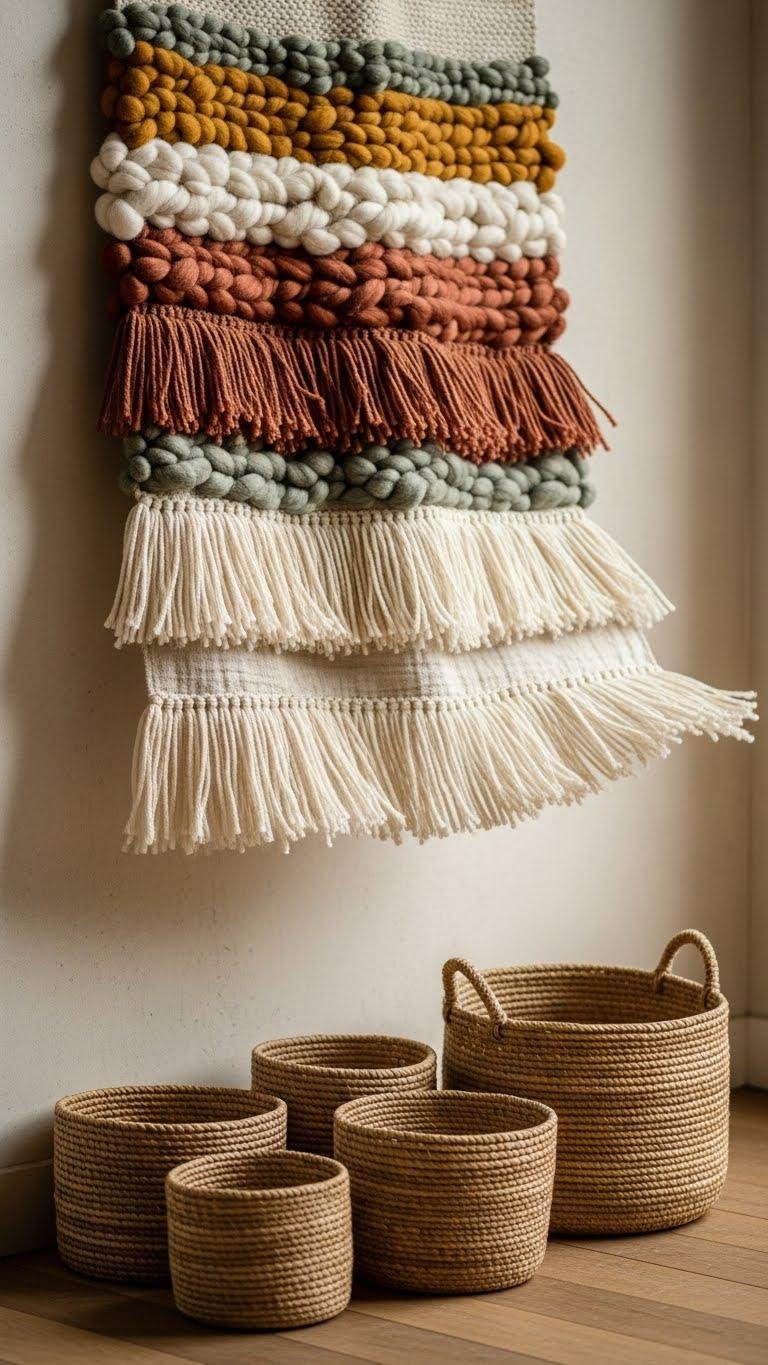
After a cluster of woven baskets brings rhythm and texture, a textile wall hanging will soften the room with layered color and movement. You’ll choose fibers that introduce softening texture and tactile contrast against hard surfaces, like chunky wool or linen with fringe. Hang it slightly off-center to create relaxed balance, let it flutter with air, and enjoy the liberating warmth it adds.
Statement Mirror to Reflect Light and Space
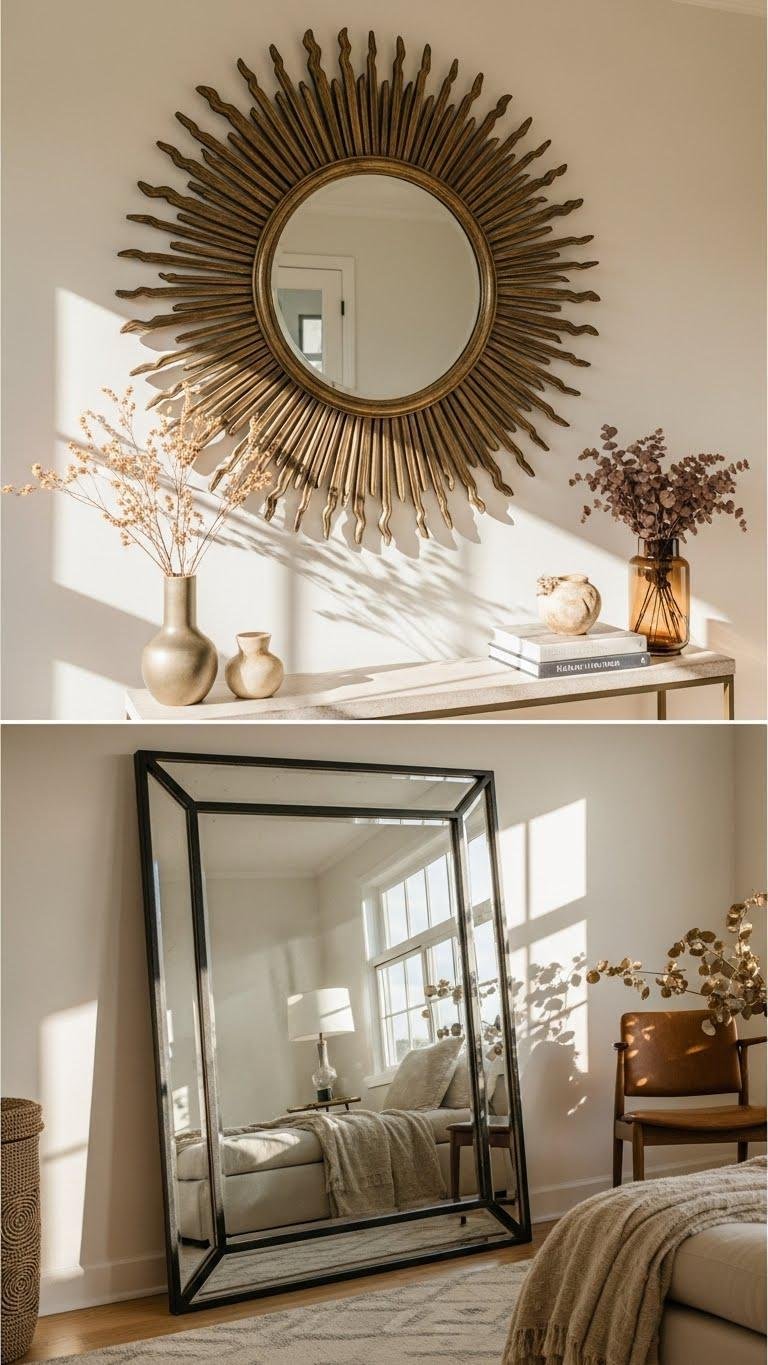
A large, sculptural mirror instantly opens a room by bouncing light and doubling visual depth, so pick one with a bold frame or unusual shape that complements your decor. Hang an antique mercury mirror for moody patina or an oversized sunburst to energize a wall. Center it above a low console, lean it for casual flair, and let reflections expand your freedom-filled space.
Floating Shelves With Books, Plants, and Art
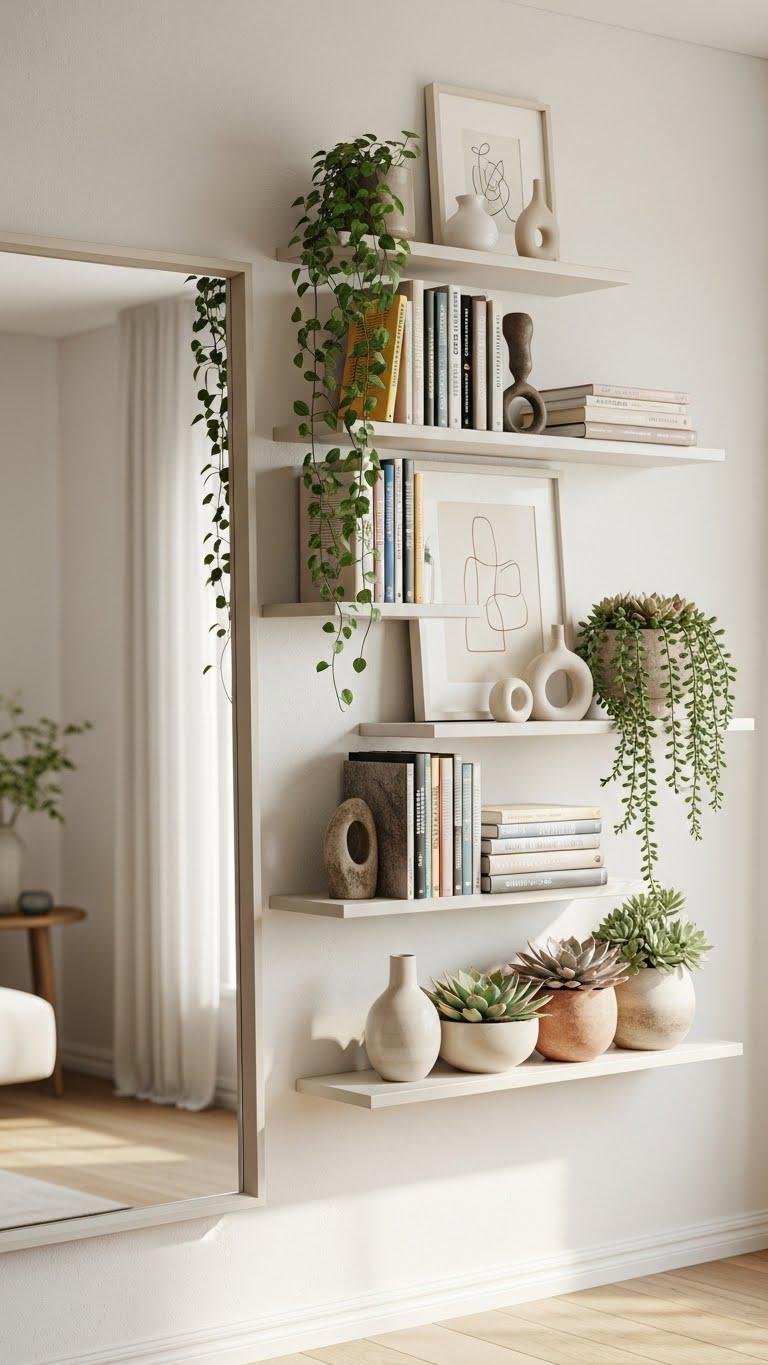
Mirrors expand a room by playing with light and scale, while floating shelves give you a chance to curate that newly amplified space with personality. You’ll build a floating library mixing hardbacks, art, and small sculptures, punctuated by botanical vignettes — trailing pothos or succulents in varied pots.
Keep lines clean, stagger heights, and leave negative space so each piece breathes and the wall feels free.
Three-Piece Rule Cluster for Balanced Interest

Think in threes: groupings of three objects create a natural rhythm that your eye can easily follow, so arrange three pieces of varying scale and texture to form a cohesive focal cluster. You’ll play with scale contrast and material differences to build visual rhythm. Position taller, medium, and low elements slightly offset, leaving breathing room so the trio reads as intentional, airy, and liberating.
Black-and-White Photo Series for Calm Cohesion
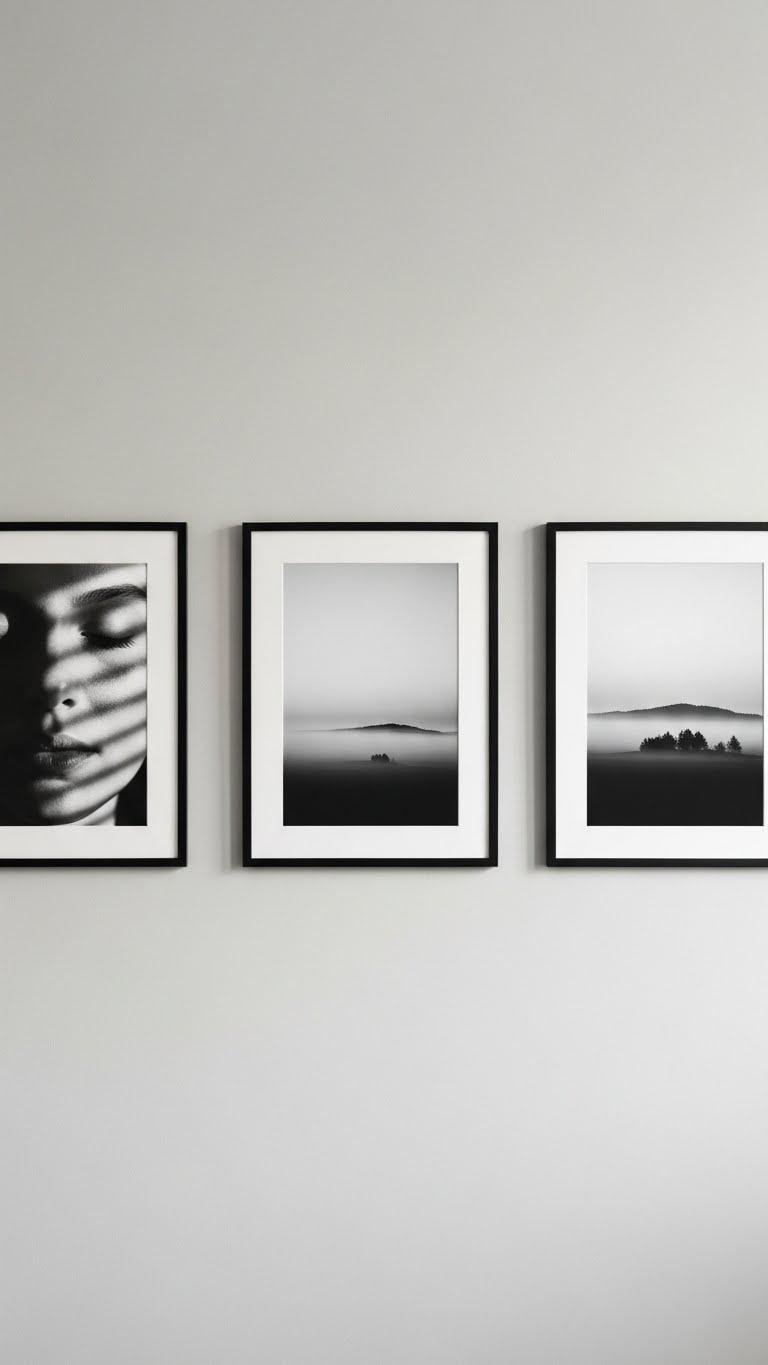
After you’ve mastered the rhythm of a three-piece cluster, let monochrome photography bring a quiet, cohesive counterpoint to the room.
You’ll arrange monochrome portraits and tonal landscapes in consistent frames and spacing, creating visual rhythm without color noise.
Keep edges clean, vary scale subtly, and let negative space breathe — the result feels liberated, calm, and intentionally unified.
Color-Blocked Accent Wall With Minimal Art
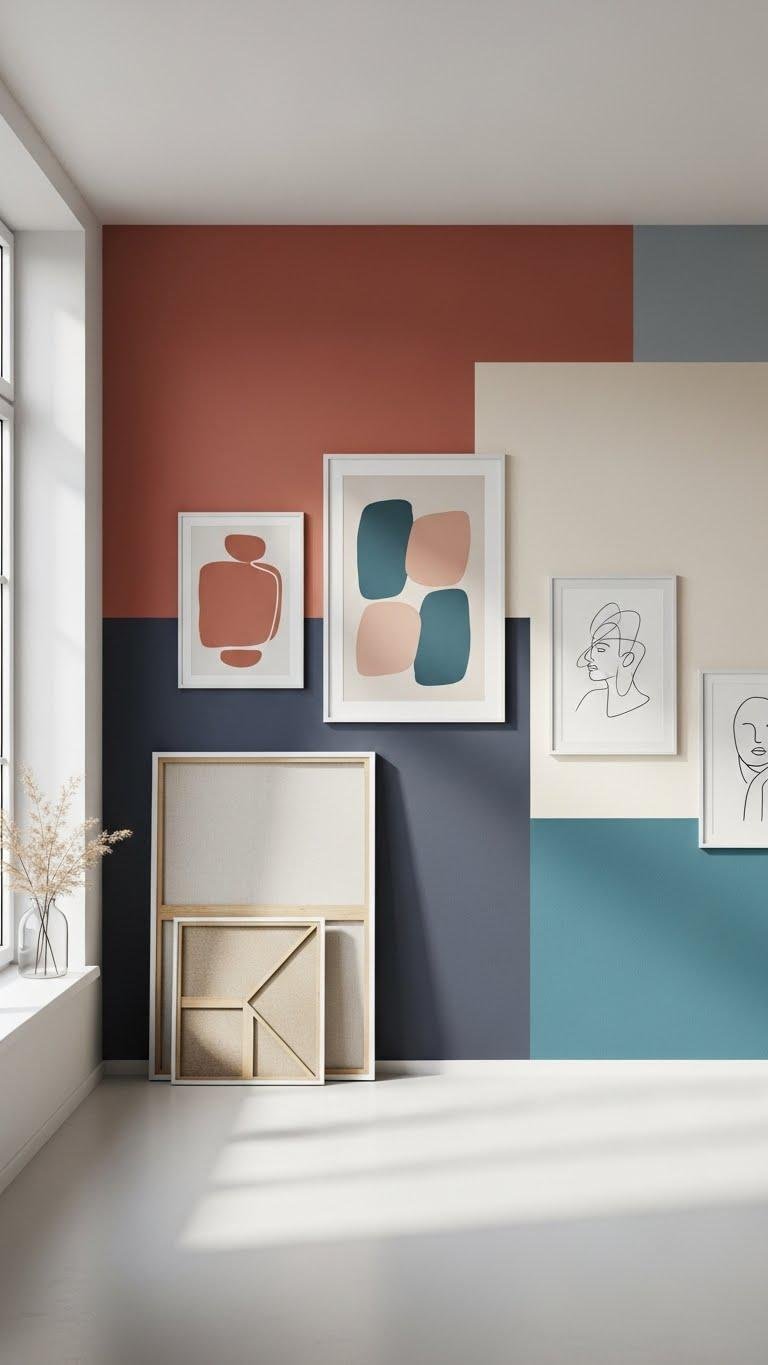
When you block paint in bold, geometric swaths, you create an architectural stage for a few well-chosen pieces of minimal art to really sing. You’ll use monochrome geometry to anchor mood and let negative space framing amplify each work. Choose restrained hues, place art with intentional gaps, and let clean lines and openness give your living room a liberated, composed presence.
Layered Frames on a Mantel or Low Shelf

If you lean frames against the wall on a mantel or low shelf, you’ll create a relaxed, gallery-like display without committing to nails; layer larger, unframed or thin-framed pieces at the back and stagger smaller works in front so each edge and mat shows.
Mix art, vintage postcards and seasonal prints; vary heights, textures and lean angles so pieces feel effortless yet intentionally arranged.
Sculptural Wall Mounted Objects in Coordinated Tones

Bring sculptural wall pieces together in a coordinated palette to add depth and rhythm without overwhelming the room. You’ll choose forms that breathe — shallow bowls, folded metal, carved panels — in matte finishes and muted hues. Arrange by size and tonal gradients to guide the eye, keeping negative space intentional so each piece feels liberated, cohesive, and quietly expressive.
Picture Rail Display for Flexible Arrangement

Lift your display off the floor and let a picture rail give you instant flexibility: a slim moulding near the ceiling lets you hang, layer, and rearrange art or objects without punching new holes, so you can swap prints, vary heights, or create seasonal vignettes with minimal effort.
Use adjustable hooks and thin cords, mix rotating frames and mirrors, and rearrange freely to refresh mood.
Lighted Artwork With Picture Lights or Spotlights

After anchoring a long wall with a panoramic piece, you can refine the room’s focus by adding directed lighting that highlights texture, color, and form. Use picture lights or LED spotlights to create drama without clutter. Aim adjustable uplights for sculptural pieces, dimming to set mood. You’ll enjoy a curated, liberated feel where art breathes and the room reads intentional.
Combined Functional Elements: Shelves, Hook, and Art
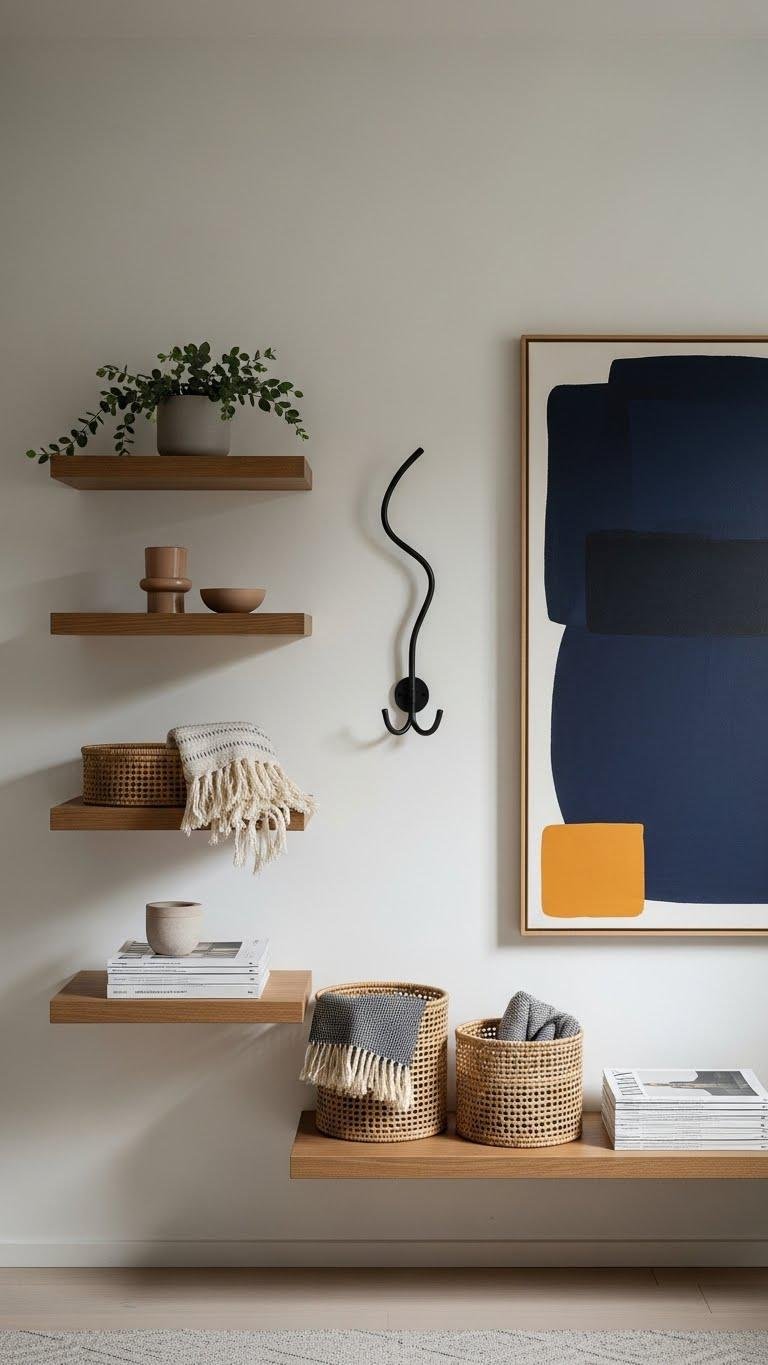
If you want a wall that works as hard as it looks, combine low-profile shelves, a sculptural hook, and curated art to create a single, streamlined vignette that balances storage and display. You’ll anchor floating hooks beside staggered shelves, tuck decorative baskets for throws or magazines, and let one bold artwork set rhythm. The result feels practical, airy, and intentionally free.
Framed Textile or Vintage Fabric as a Focal Piece
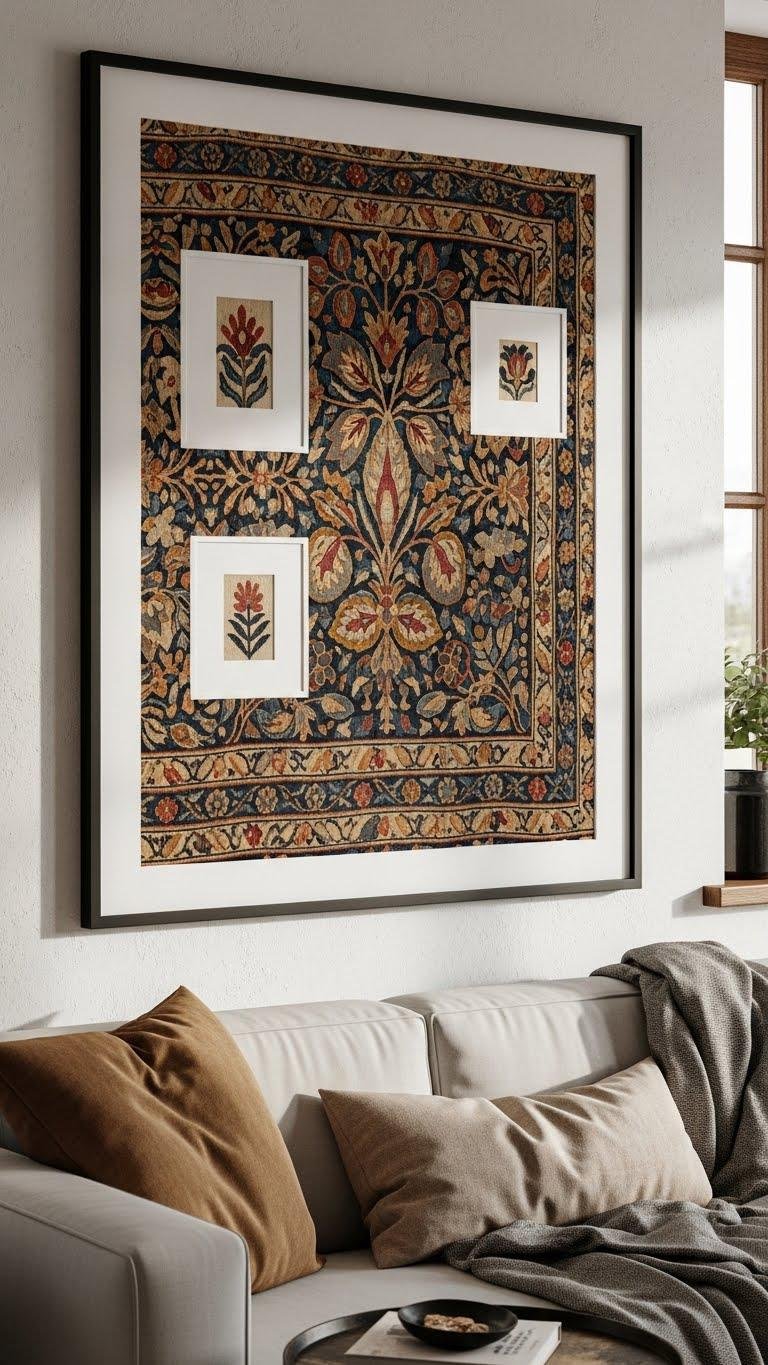
Though textiles often feel like soft accessories, framing a vintage fabric turns it into a striking focal point that anchors a room with texture, history, and color. You’ll display an antique textile as a framed heirloom, choosing simple mats and narrow frames to highlight a bold botanical print or an intricate ethnic motif. It frees your space, balancing modern minimalism with soulful character.