
You’ll get more space than you think by making a few thoughtful changes: paint walls pale, lay light woodgrain floors, hang sheer curtains high and use mirrors to double daylight. Pick slim, multifunctional furniture, stack labeled baskets in vertical storage, and keep accents subtle so the room breathes. I’ll walk you through 28 practical, easy tweaks that transform a cramped layout into an open, calm home—starting with paint and light.
Use a Light, Neutral Paint Palette
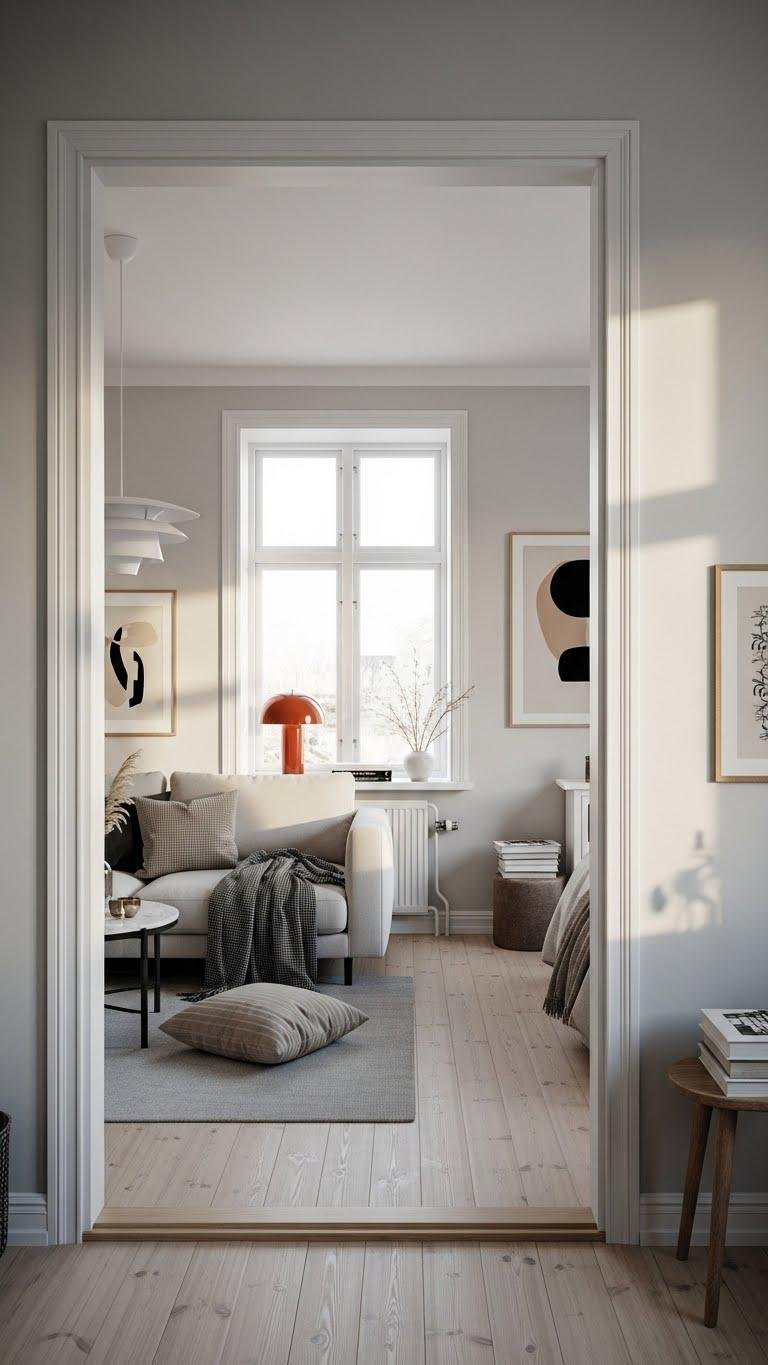
Choose a light, neutral paint palette to make your small apartment feel brighter and more open; pale whites, soft greiges, and muted beiges reflect light and create a cohesive backdrop for furniture and art.
You’ll lean into soft warmtones and subtle undertones to unify rooms, highlight textures, and keep sightlines clean. Paint becomes a quiet framework that frees you to style boldly without crowding the space.
Choose Pale, Low‑Contrast Flooring
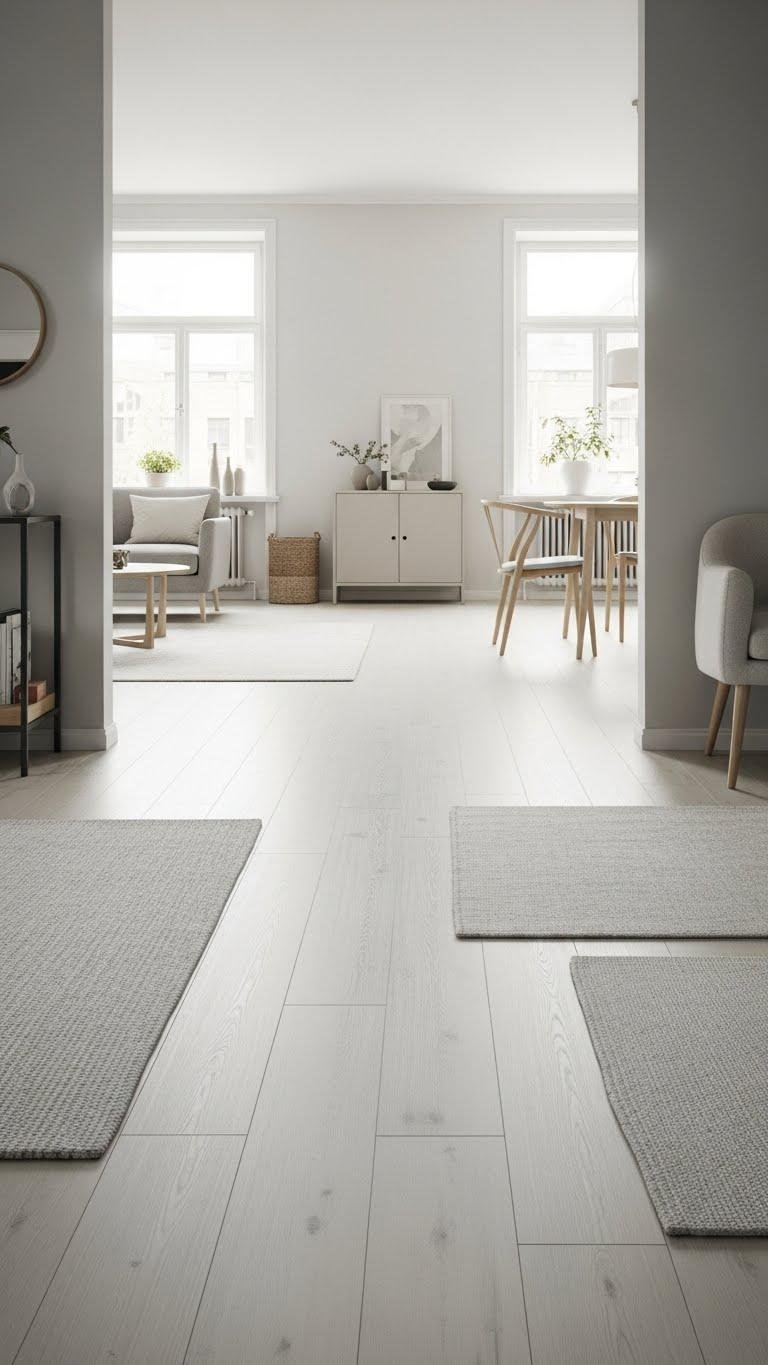
Often a subtle change, picking pale, low-contrast flooring instantly enlarges a small apartment by keeping the eye moving across rooms instead of snagging on dark patches.
Choose neutral woodgrains or light vinyl planks to reflect light and unify spaces. Layer pale texturedrugs for warmth and softness without breaking flow. You’ll create breezy continuity that feels open, calm, and free.
Hang Curtains Close to the Ceiling

By mounting curtain rods just a few inches below the ceiling, you’ll make windows look taller and ceilings feel higher, instantly expanding a small room’s vertical scale.
Hang lightweight curtains and use precise drapery rod placement to draw the eye up. Choose airy fabrics and stacked curtain panels for layered light control so your space breathes, feels open, and invites movement.
Install Floor‑to‑Ceiling Shelving

Install floor-to-ceiling shelving to maximize vertical storage and make your small apartment feel taller.
You’ll free up floor space, display essentials, and create airy sightlines. Choose units with a hidden backing to hide cords and clutter, and pick adjustable shelfing so you adapt storage to changing needs. Anchor to studs for safety, keep styling minimal, and embrace the open feeling.
Select Slim, Raised‑Leg Furniture
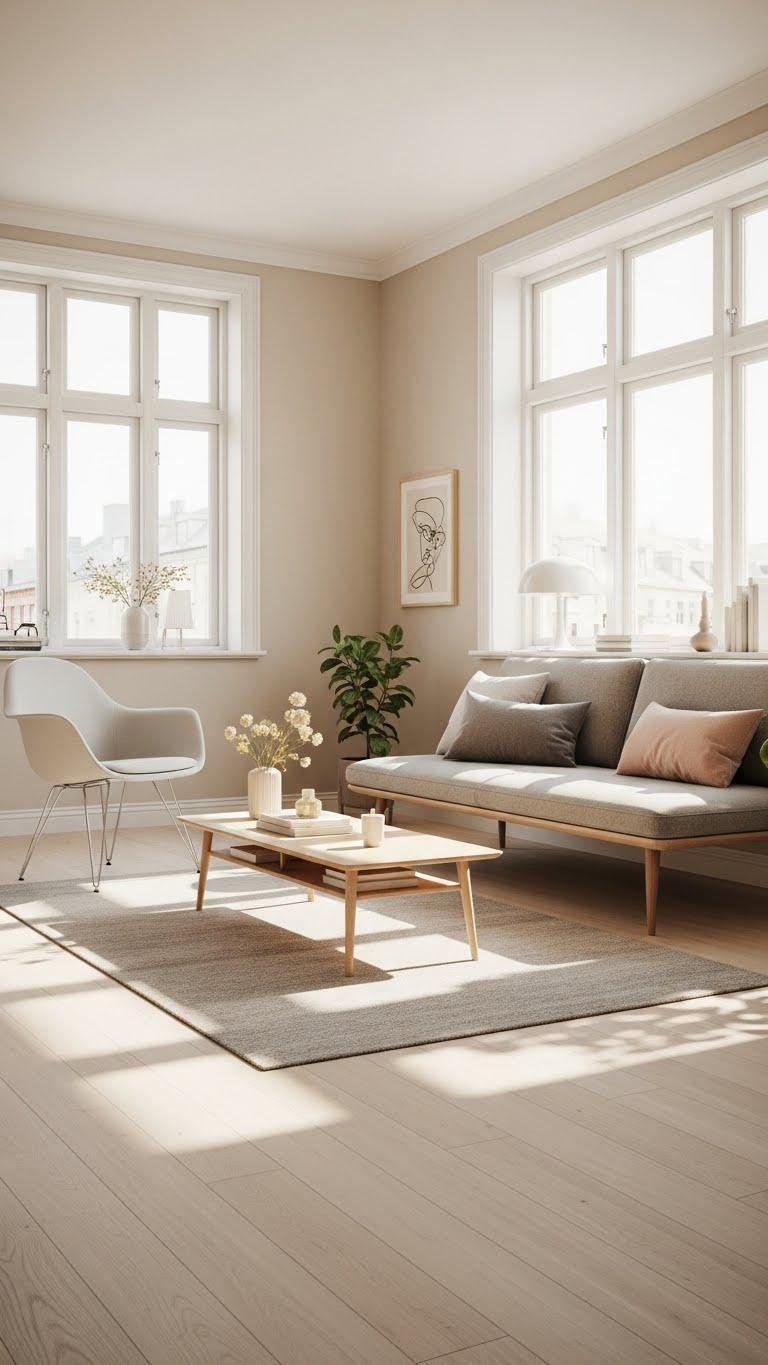
You’ll want slim, raised‑leg furniture to keep sightlines open and make floors feel airy, which visually enlarges a small apartment. Choose pieces with visible legs and airy silhouettes so light flows beneath them and cleaning’s easy. Lean toward low, narrow profiles, tapered wood or metal legs, and minimal armrests. They’ll free up visual space and keep your rooms feeling unconfined.
Incorporate Multi‑Functional Pieces

Think practical: choose furniture that pulls double duty so each piece earns its place. You’ll love a convertible credenza that stores gear, acts as a media console, and unfolds into extra surface when guests arrive.
Opt for a slim Murphy bedstead that tucks away to free floor space by day. Prioritize clean lines, hidden storage, and easy mechanisms to keep your apartment airy and flexible.
Mount Fold‑Down Desks and Tables

When your credenza and Murphy bed free up floor space, mount fold‑down desks and tables to gain usable surfaces without clutter. You’ll create a folding secretary or hidden workstation that tucks neatly away when you’re done.
Choose slim hardware, floating brackets, and warm plywood for a calm, airy look. Install at comfortable height, add a rail for supplies, and enjoy flexible freedom.
Opt for Clear Acrylic or Glass Furniture
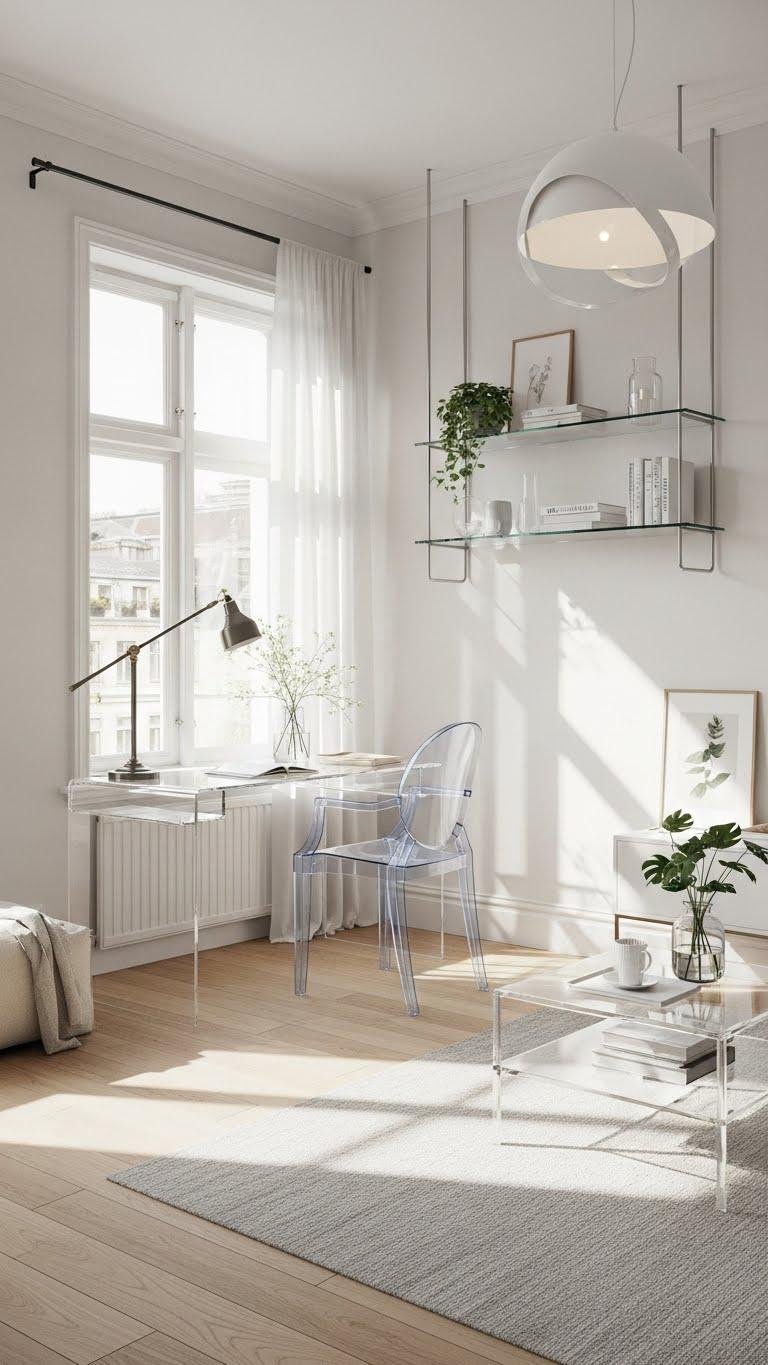
How can clear acrylic or glass furniture make a small apartment feel larger? You’ll choose clear furniture to reduce visual clutter, letting light travel and sightlines continue.
A transparent desk, coffee table, or shelving creates visual continuity, so each item breathes. You’ll keep layouts flexible, maintain openness, and enjoy a minimalist feel that supports movement, light, and a freed, airy atmosphere.
Place a Large Mirror Opposite a Window

Hang a large mirror directly opposite a window to double incoming light and instantly widen your view. Position it so it reflects sky or greenery, not clutter, to boost natural light and create visual depth. Lean it against the wall for casual freedom or mount it securely for a cleaner line. You’ll expand sightlines, brighten corners, and make the room feel airy without fuss.
Use Sheer, Light‑Filtering Window Treatments

Let in soft light with sheer, light‑filtering curtains that blur glare while keeping views and privacy intact. You’ll welcome a breezy, open feel without sacrificing privacy concerns—choose layered sheers or a roller blind behind gauze.
Pick lightweight, washable fabrics for easy fabric maintenance, hang high and wide to enlarge sightlines, and let gentle movement give your small apartment a liberated, airy vibe.
Install Wall Sconces and Pendant Lighting
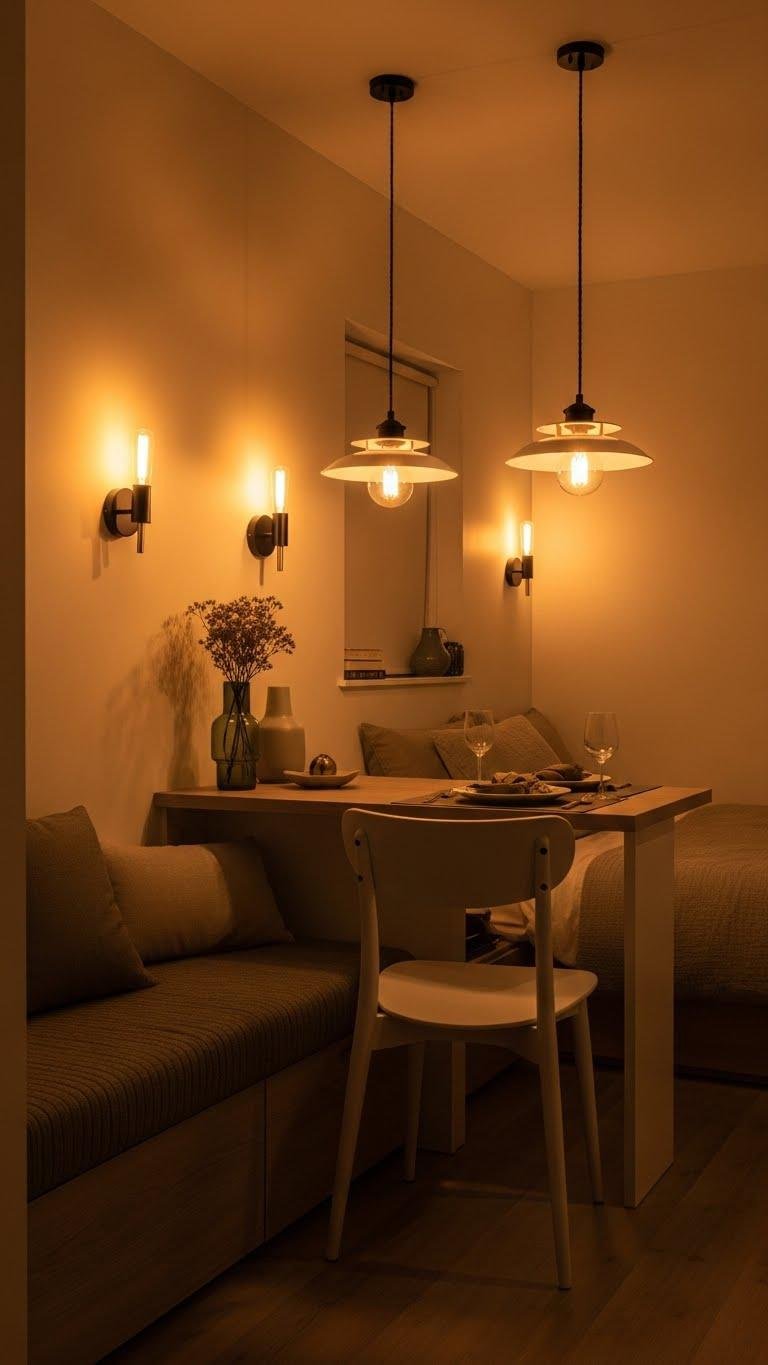
Brighten tight corners and free up floor space by installing wall sconces and pendant lights that cast layered, purposeful light.
Mount dimmable sconces near seating and beds so you control mood without bulky lamps.
Hang layered pendants over dining nooks or counters to define zones while keeping sightlines open.
Choose slim profiles and warm bulbs to keep the space airy and liberating.
Layer Ambient, Task, and Accent Lights

When you layer ambient, task, and accent lights, you create a flexible lighting plan that makes a small apartment feel larger and work harder for your needs.
Mix soft overheads for layered warmth, focused desk or under-cabinet task lights for function, and spot accent lights to highlight art or plants.
Use contrast zoning to steer activity and mood without clutter, keeping control simple and freeing.
Add Tall, Narrow Storage Cabinets

Think vertically: tall, narrow cabinets squeeze big storage into tight footprints so you can clear surfaces and keep a small apartment feeling open.
You’ll fit vertical organizers beside a washer, between appliances, or in hallways, turning wasted gaps into streamlined order. Choose slim profiles, light finishes, and adjustable shelves—use narrow pantries for food or gear—so you reclaim space and move freely.
Create Gallery Walls Upward, Not Outward

If you lift your gallery up instead of spreading it across a wall, you’ll keep floor space open and draw the eye upward to make a room feel taller. Place tall frame spacing vertically, mix staggered matting to add rhythm, and align tops or bottoms for cohesion.
You’ll create an airy, liberated vibe without cluttering sightlines or losing usable floor area.
Use Built‑In Units for Awkward Alcoves
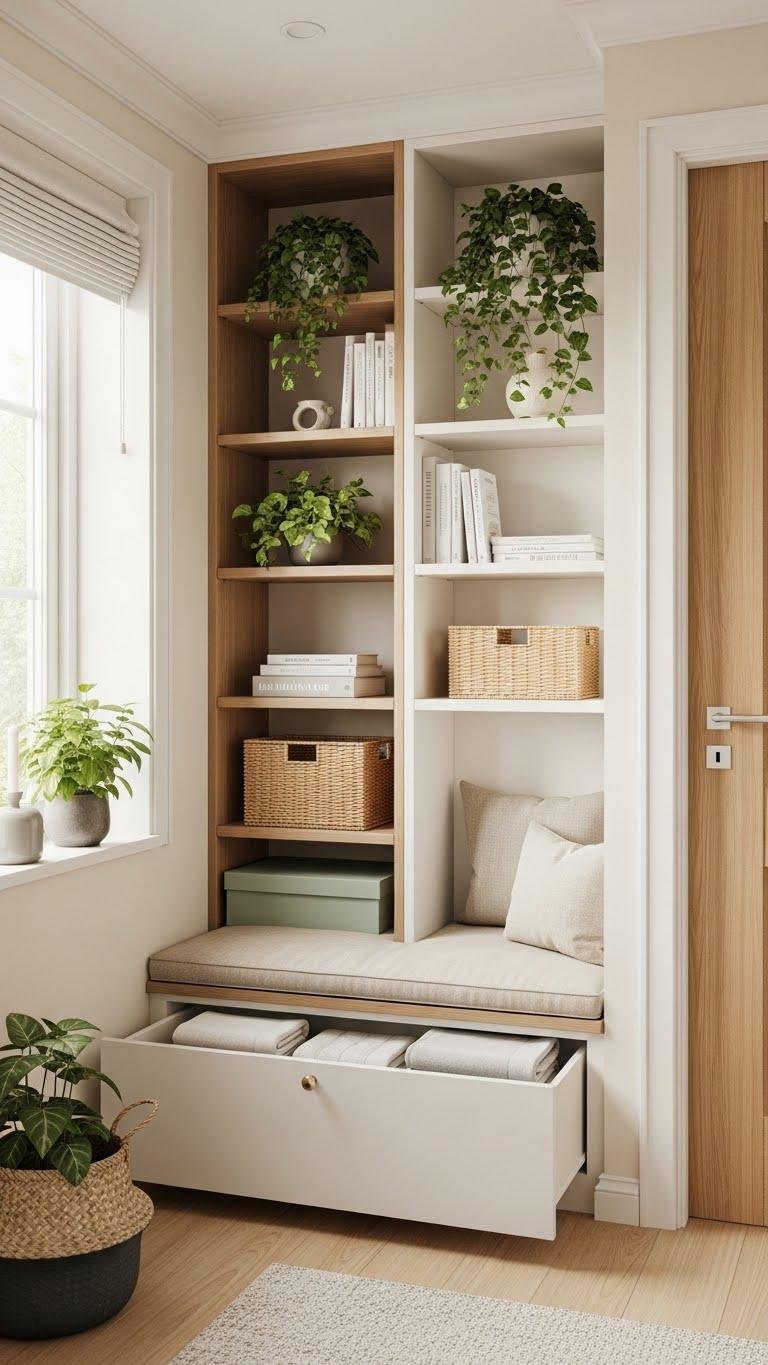
You can carry that upward focus into awkward alcoves by fitting them with custom built‑ins that make every inch useful. Add custom shelving to display plants, books, or baskets, and tuck in an alcove bench with hidden storage for linens or gear.
You’ll gain seating, surface, and vertical storage without clutter, keeping sightlines open and your small space feeling free and airy.
Choose Semi‑Gloss or Satin Trim Finishes
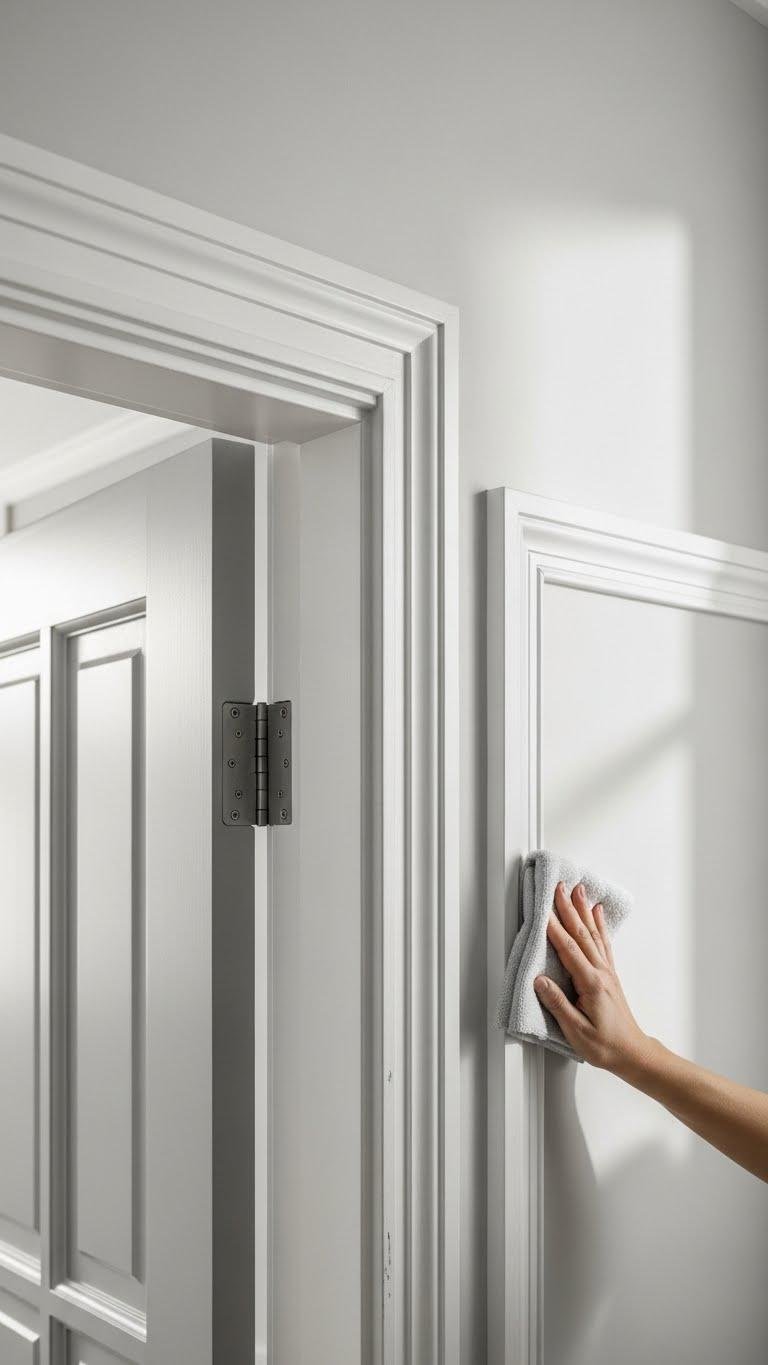
Wanting a trim finish that reads crisp but stays forgiving, pick semi-gloss or satin for your moldings and doors. They reflect light subtly, widening sightlines without the harshness of high gloss alternatives.
You’ll enjoy easy touch-ups and durable trim care—wipeable surfaces that resist scuffs yet feel soft. The result: clean edges that let your small space breathe and stay low-maintenance.
Keep Surfaces Decluttered and Curated
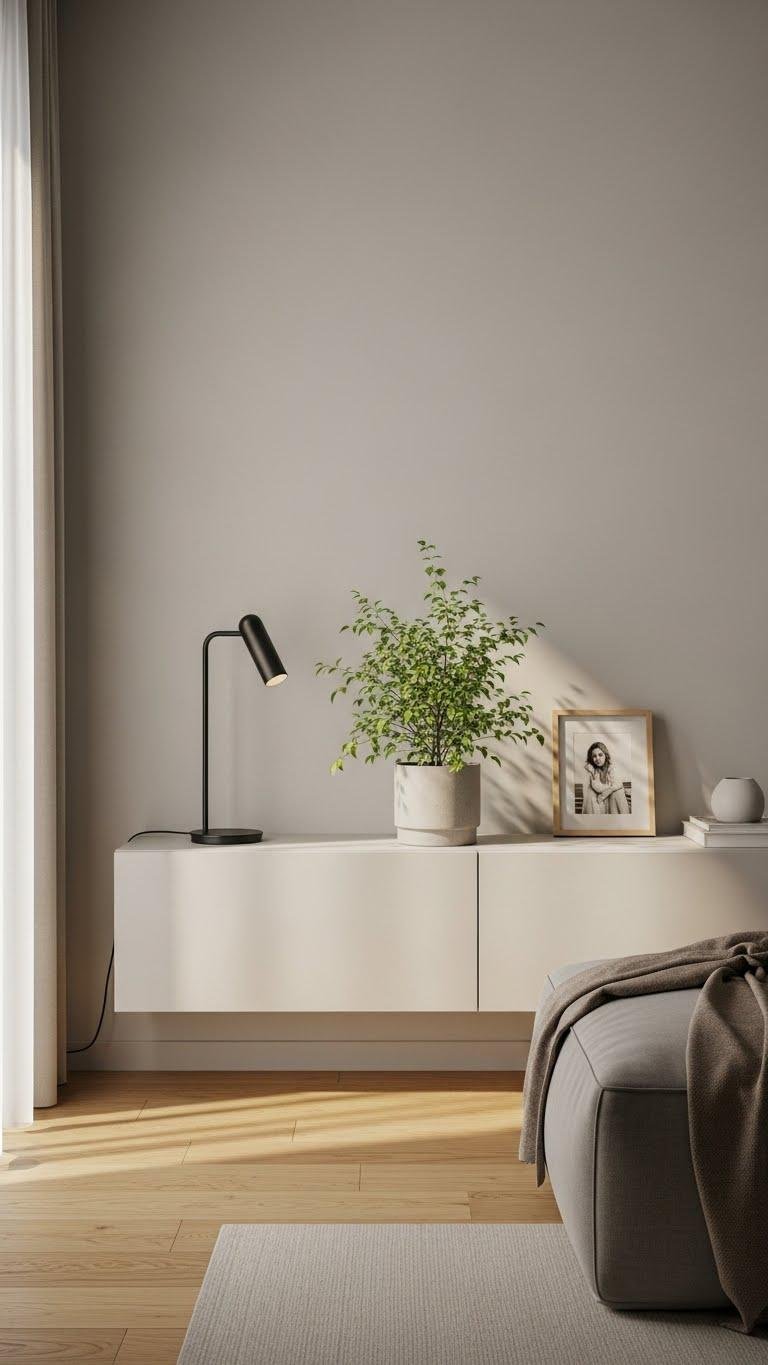
When surfaces are kept clear, your small apartment instantly feels larger and more intentional.
You’ll edit down to a few meaningful objects: a slim lamp, a plant, one framed photo. Rotate decor with seasonal rotation — swap textiles and small accents to refresh air and mood. Practice scent curation with a single diffuser or candle. Keep flat surfaces purposeful and uncluttered.
Use Matching Baskets and Bins on Open Shelves

Bring order to open shelving with a set of matching baskets and bins that hide visual clutter while keeping things accessible. You’ll pick baskets with a light woven texture to soften lines and keep the space airy. Match sizes and colors for cohesion, add subtle label visibility so you can grab what you need, and enjoy a tidy, free-flowing room that feels intentional.
Store Infrequently Used Items Out of Sight
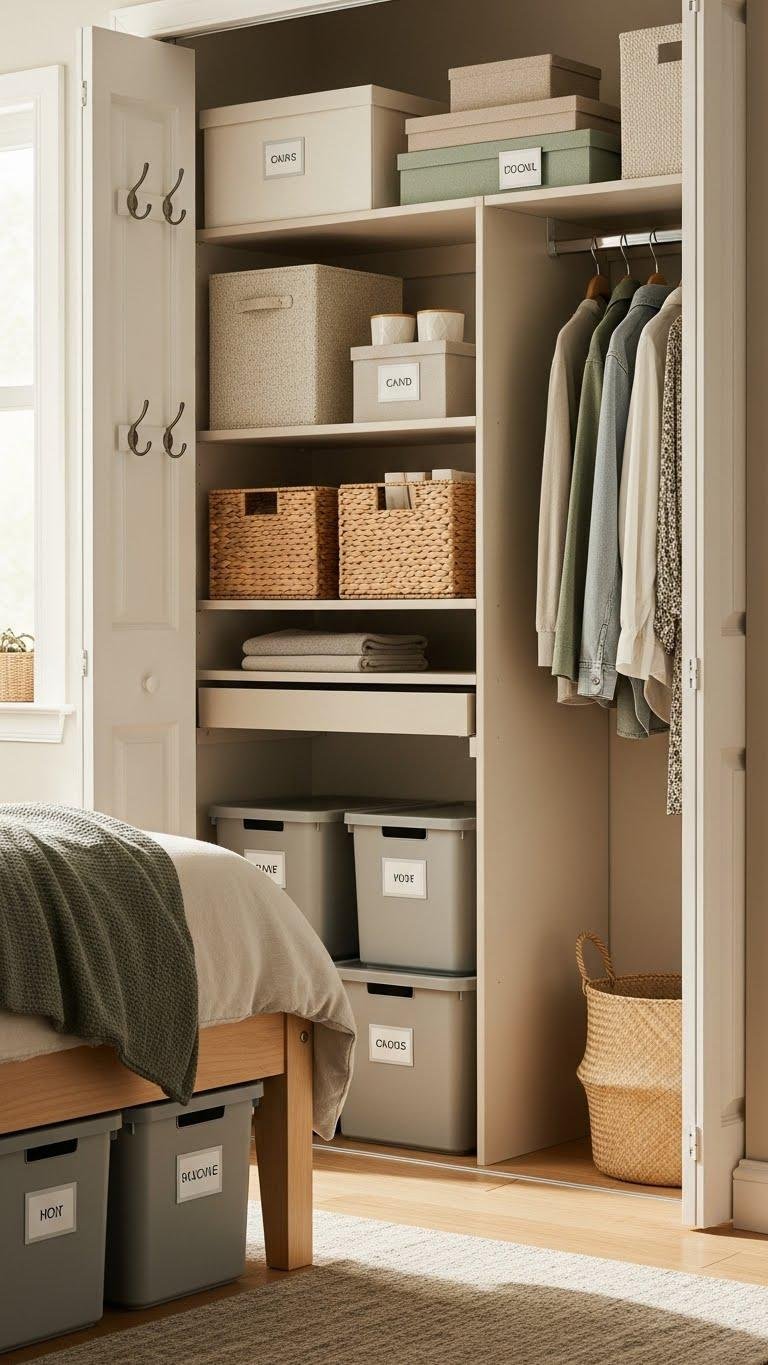
Matching baskets keep daily items tidy and visible, but some things only see the light a few times a year — seasonal décor, extra linens, rarely-used appliances.
Stow them in labeled bins for seasonal rotation, slide under beds, or top closets. Use hidden hooks and wall-mounted racks inside doors to free floor space. You’ll reclaim calm, keep sightlines clean, and stay ready.
Pick Extendable Dining Tables

Think about scale first: an extendable dining table gives you everyday compactness and extra seating when guests arrive.
Choose slim profiles and light finishes so sightlines stay open.
Use space saving extenders that tuck away neatly; fold leaves and sliding mechanisms keep movement effortless.
Consider urban balcony tables as dual-purpose pieces for meals and plants, freeing room without sacrificing style or flow.
Select Modular Seating for Flexibility
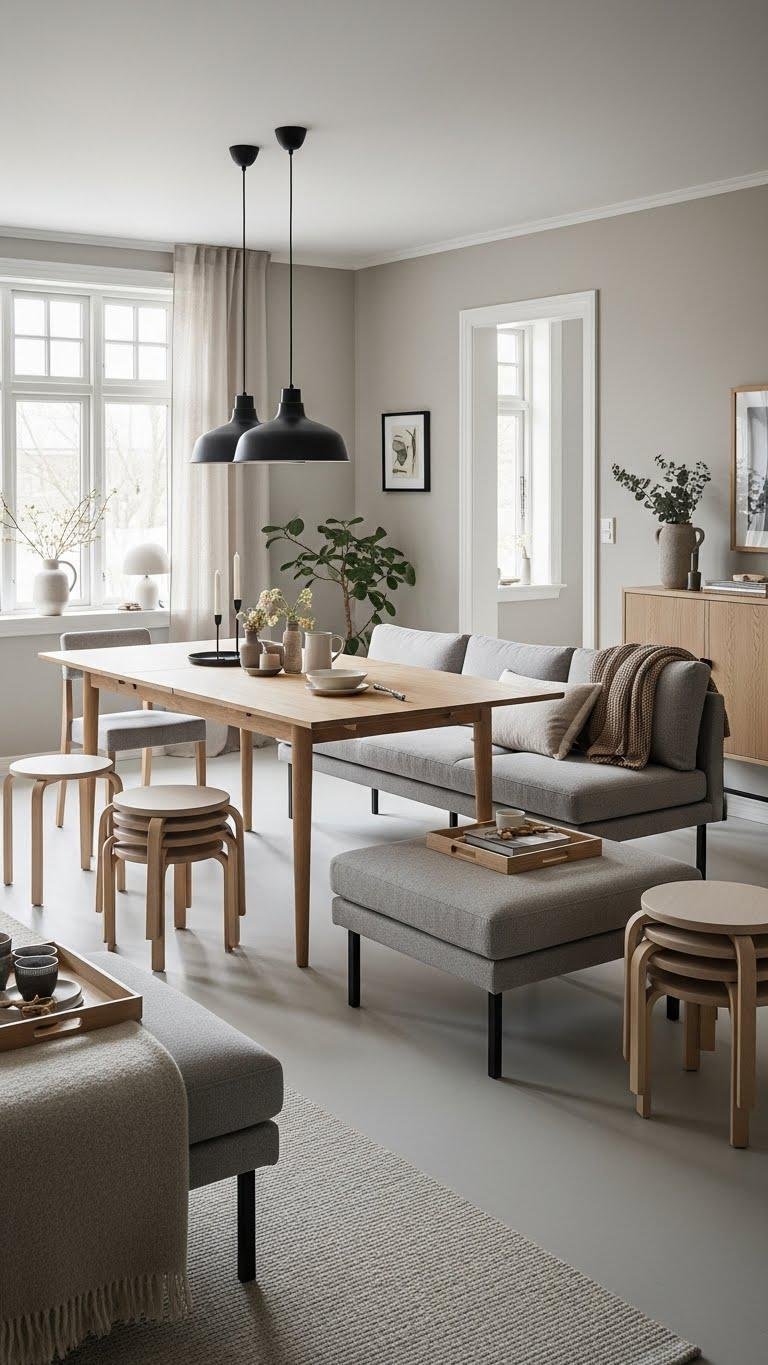
After you opt for an extendable table, pick modular seating that moves with your needs: small armless chairs, stackable stools, and sectional pieces with removable ottomans let you rearrange for meals, work, or lounging without crowding the room.
Choose convertible sectionals with low profiles and neutral fabrics, and modular ottomans that double as seats, tables, or storage to keep flow open.
Use Under‑Bed Drawers and Storage Ottomans

A couple of clever storage pieces can free up a surprising amount of floor space: slide shallow drawers under the bed for off‑season clothes, linens, or shoes, and keep a low storage ottoman at the foot for extra blankets, baskets, or quick seating.
Use rolling storage and hidden compartments to tuck away clutter, maintain open sightlines, and move pieces when you want instant breathing room.
Position Metallic or Glass Accents to Catch Light
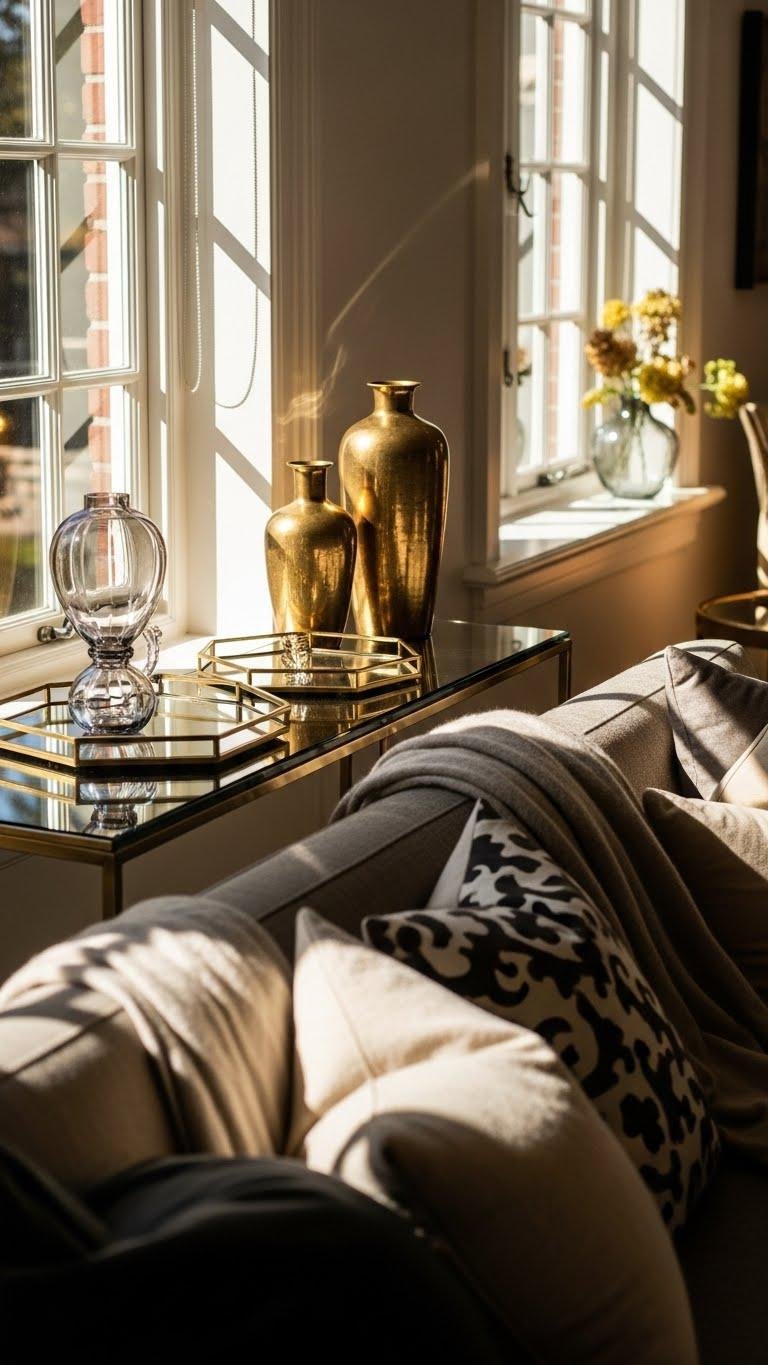
Catch light where it matters by placing metallic and glass accents near windows, lamps, or reflective surfaces so they throw sparkles and soft highlights into the room. You’ll layer mirrored trays on consoles, add brass vases on sunny sills, and use reflective textiles for throws or cushions. These touches amplify daylight, create depth, and keep the space feeling open and effortless.
Highlight Vertical Features With Directional Lights

Placing mirrors and metallics to reflect daylight is just the start — now use directional lighting to make vertical elements read bigger and more intentional. Aim uplight sconces above narrow shelves, tall plants, or art to lift sightlines. Install slim wall washers or track heads to trace vertical runners and trim. You’ll free the space visually, create height, and keep things breathable.
Limit Bold Colors to Small Accent Pieces

When you keep bold colors to small accents, the room feels larger and calmer while still getting personality—think a single mustard throw, a cobalt vase, or a scarlet pillow instead of a painted wall.
Choose one vivid hue for accent pillows, a lamp or rug, and echo it in small artwork. That restrained approach frees you to change mood without committing space.
Group Objects for Tidy, Minimal Displays

A few well-chosen pieces arranged together instantly read as intentional instead of cluttered, so group items by color, purpose, or scale to create tidy, minimal displays.
You’ll use symmetry groupings for balance, repeat a limited palette, and pair texture contrasts—smooth ceramics with woven baskets—to keep surfaces calm.
Edit ruthlessly; leave negative space so each object breathes and your small space feels free.
Designate Clear Activity Zones to Reduce Overlap
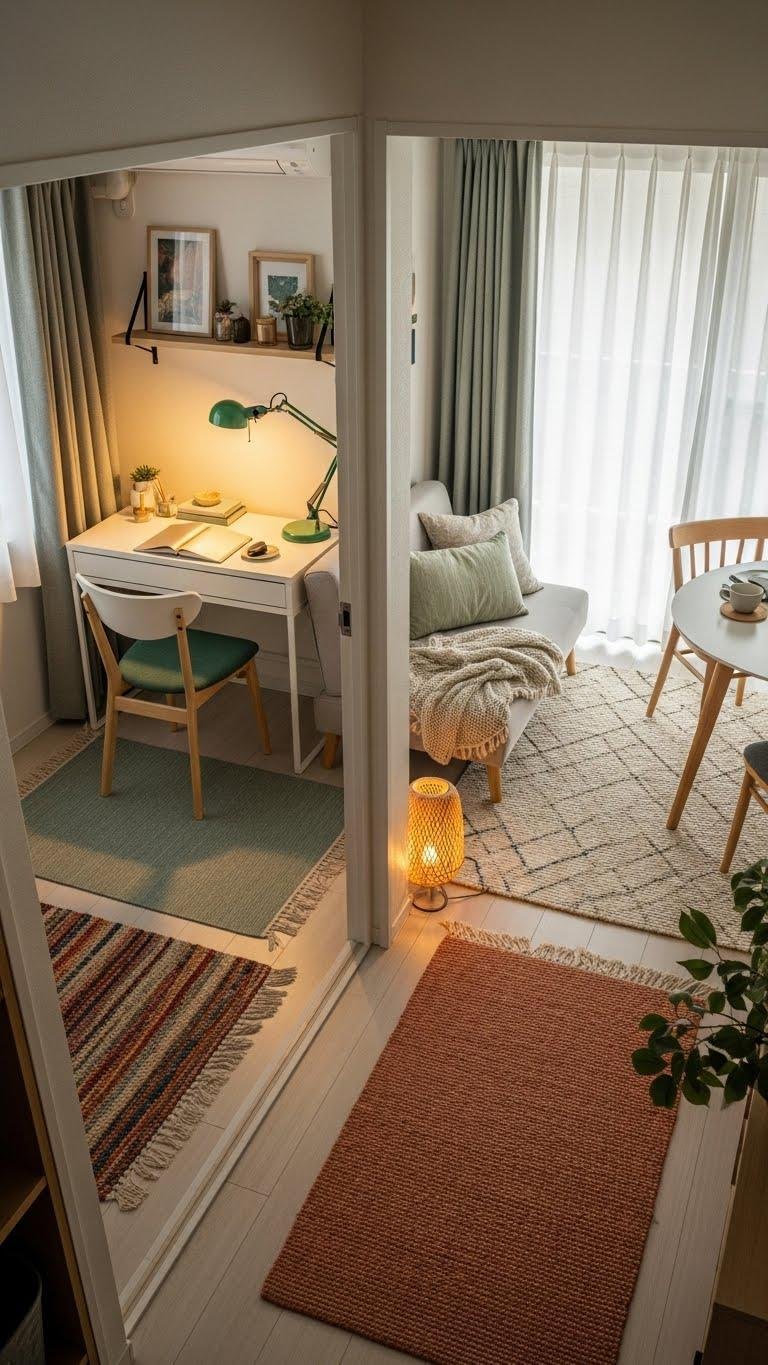
Grouping objects lets surfaces feel intentional; now apply that same discipline to how you use each corner of your apartment.
Define activity boundaries — work, rest, dining — with rugs, lighting, and furniture orientation so zones don’t blur.
Do quick circulation mapping to keep pathways clear and movement natural.
You’ll feel freer when each spot has a purpose and flow stays unobstructed.
Maintain a Regular Decluttering Routine
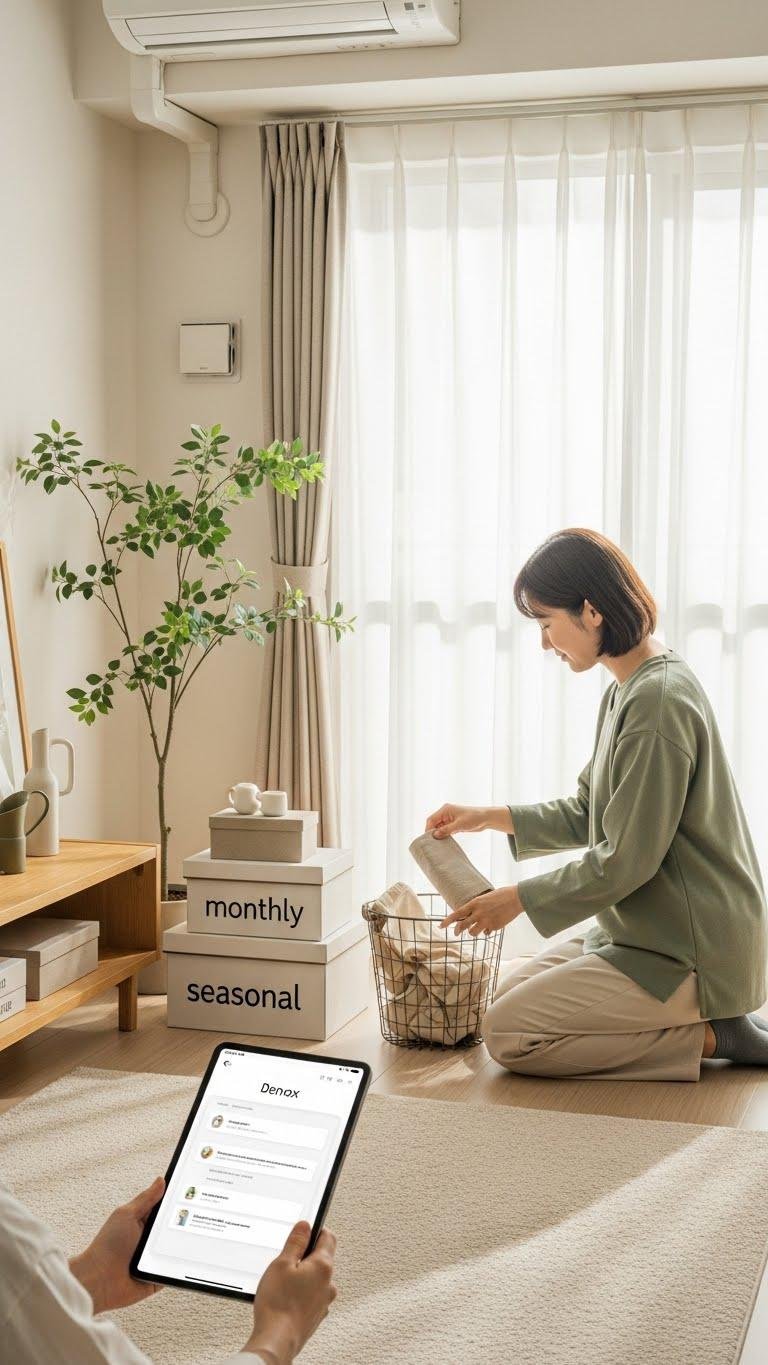
Regularly decluttering keeps small spaces feeling calm and purposeful, so set a simple, repeatable routine you can actually stick to.
Schedule a weekly 15‑minute tidy, a monthly clear‑out, and a seasonal purge to free visual space. Scan devices for digital minimalism — delete files, unsubscribe, archive. Let fewer things and screens mean more freedom, light, and breathing room.