
You can make a small living room feel airy without gutting it: use mirrors to bounce daylight, pick light neutrals for walls and ceilings, and swap bulky pieces for low-profile, leggy furniture. Layer dimmable lighting, tuck storage into vertical nooks, and let a single curated focal piece anchor the space. Try a few unexpected tweaks and you’ll see the room breathe differently—here’s how to start.
Maximize Light With Strategically Placed Mirrors
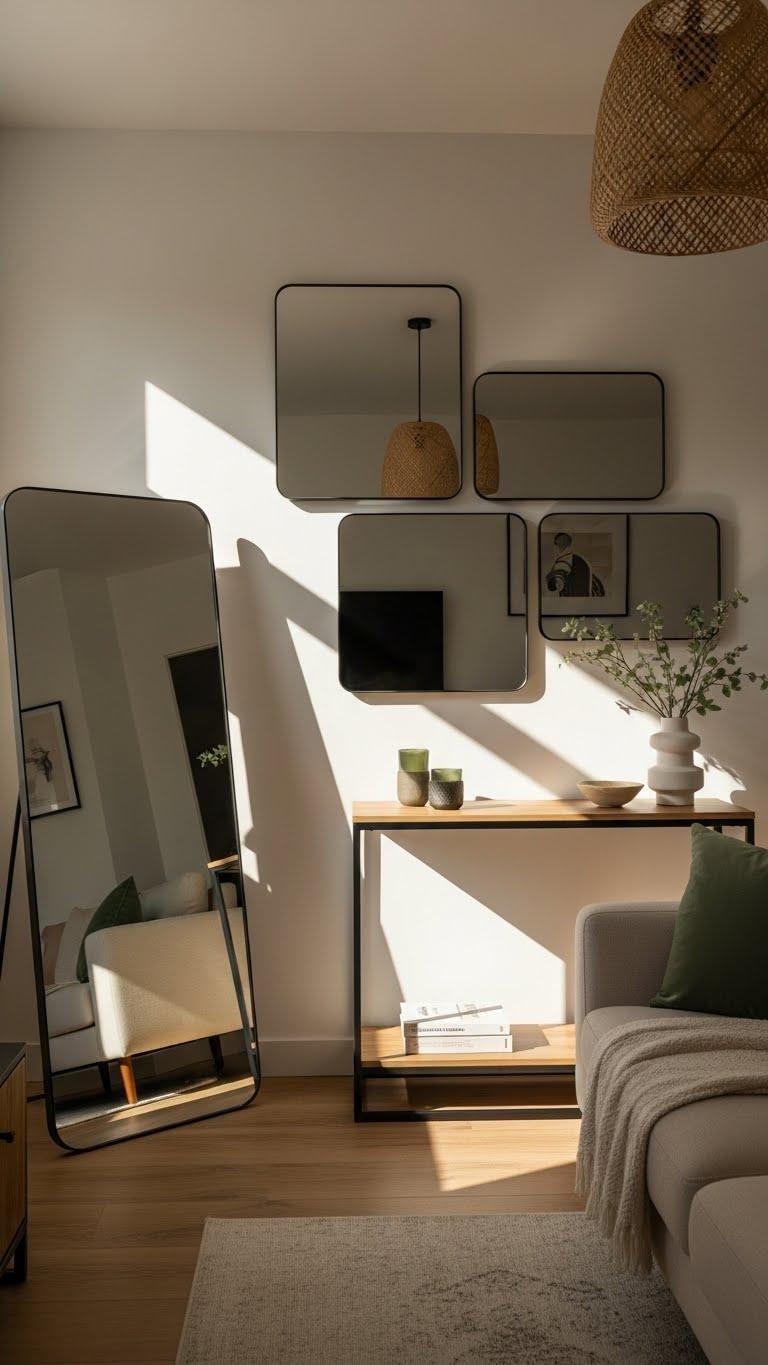
When you place mirrors where they catch and bounce natural light, a small living room suddenly feels brighter and bigger.
You’ll use an angled mirror to redirect sunbeams into dark corners, creating depth and movement.
Group mirror clusters above seating or a console to reflect views, expand sightlines, and keep the space airy.
Choose sleek frames for a modern, liberated vibe.
Paint Walls in Light, Neutral Tones
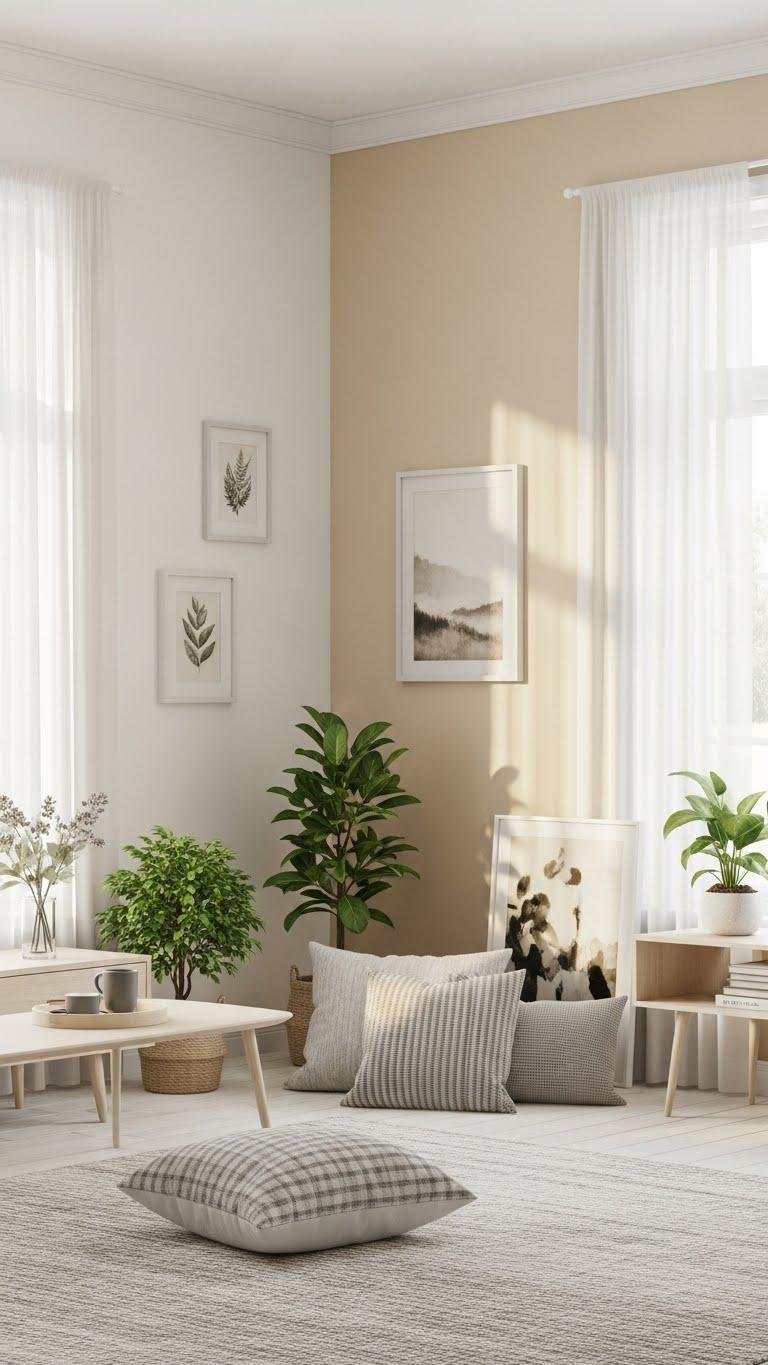
A few coats of light, neutral paint will instantly open up a small living room, making walls recede and natural light feel amplified.
Choose soft white for a crisp, airy backdrop or warm beige for cozy openness.
You’ll create a calm, adaptable canvas that highlights texture, plants, and art without crowding the space—letting you move freely and breathe in a relaxed, modern vibe.
Choose Glass and Lucite Furniture to Reduce Visual Weight

Light, neutral walls set the stage—now keep the room airy by choosing glass and lucite pieces that nearly disappear.
You’ll pick minimalist glass tables for open sightlines and lucite benches to add seating without visual bulk. These transparent elements let light flow, maintain freedom of movement, and keep the space modern and uncluttered while highlighting key accents and textures.
Install a Glossy or Satin-Finish Ceiling

Why not make the ceiling part of your decor? Paint it in a subtle tone with a reflective ceiling finish or choose satin for a restrained glow.
You’ll open the room visually, letting a light enhancing sheen bounce daylight and colors without glare. It feels modern, free, and intentional—an easy upgrade that stretches space without clutter or heavy ornamentation.
Layer Lighting: Ambient, Task, and Accent
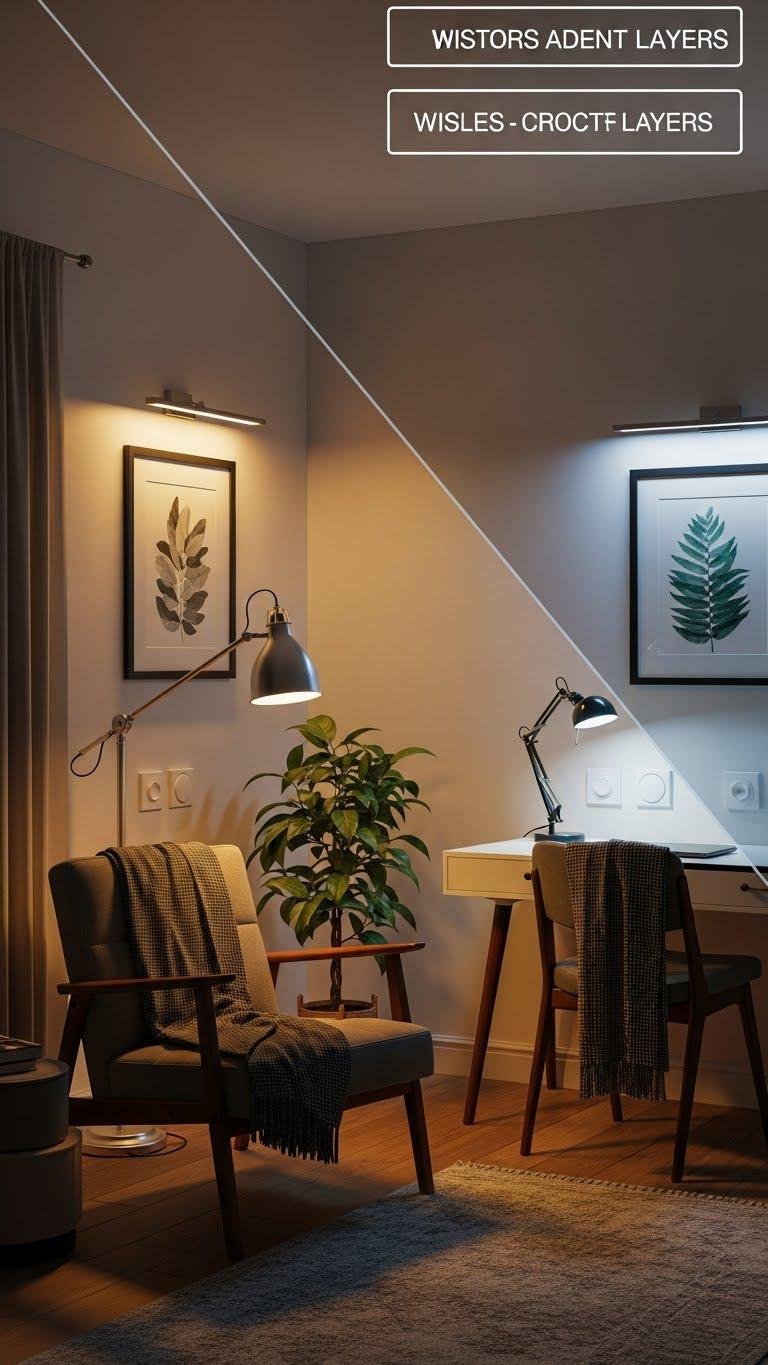
Think in layers: combine ambient, task, and accent lighting so each area serves a purpose and feels intentional.
Use dimmable switches to shift mood from bright work to relaxed lounging. Add directional task lamps for reading and slim accent LEDs to highlight art or plants.
Favor layered colortemperature—warm for cozy zones, cooler for focus—so the small space breathes and adapts to your life.
Select Low-Profile Seating With Exposed Legs
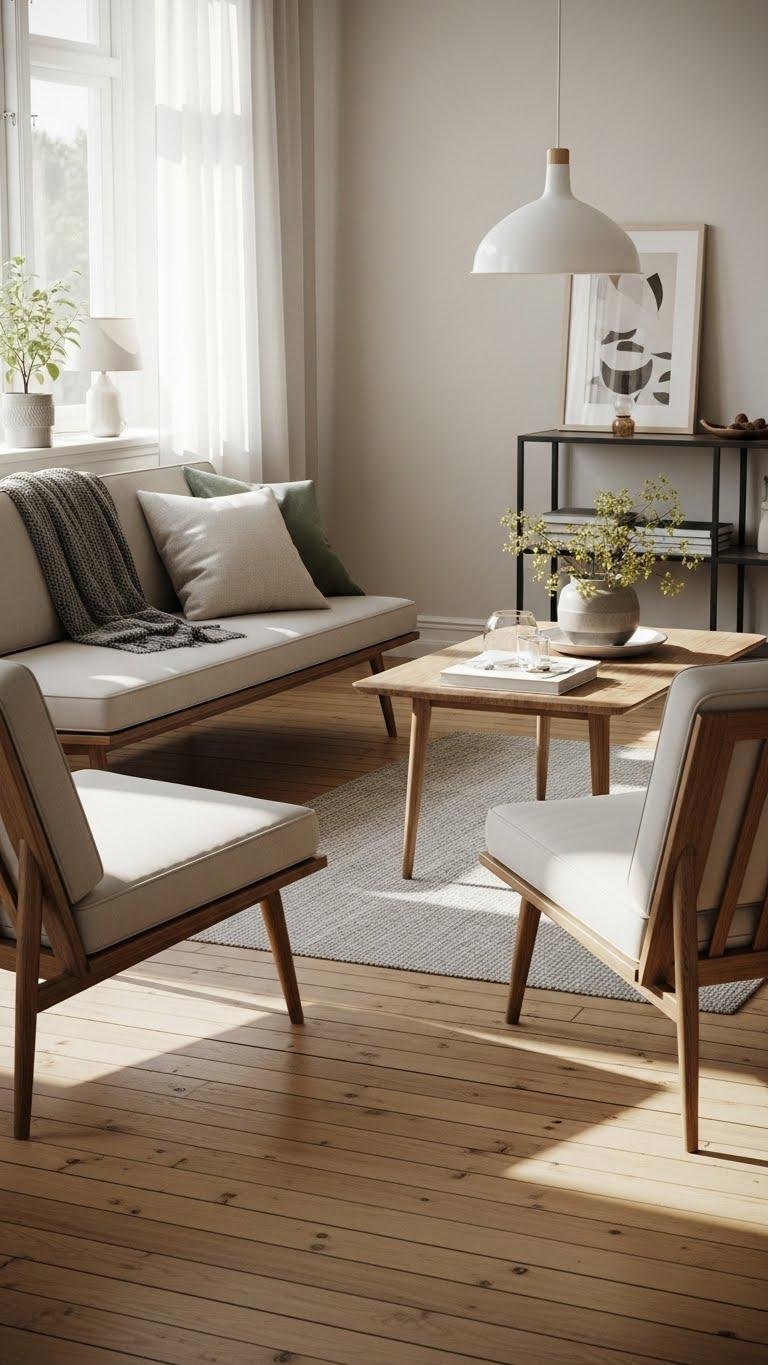
Sliding into a small living room with low-profile seating makes the space feel larger and airier, because exposed legs reveal more floor and let light pass beneath.
Choose low profile sofas and exposed legs armchairs with slim frames, tapered wood or metal legs, and low backs. They anchor the room without overpowering it, keeping sightlines open and movement effortless.
Opt for a Compact Sectional or Loveseat Plus Ottoman
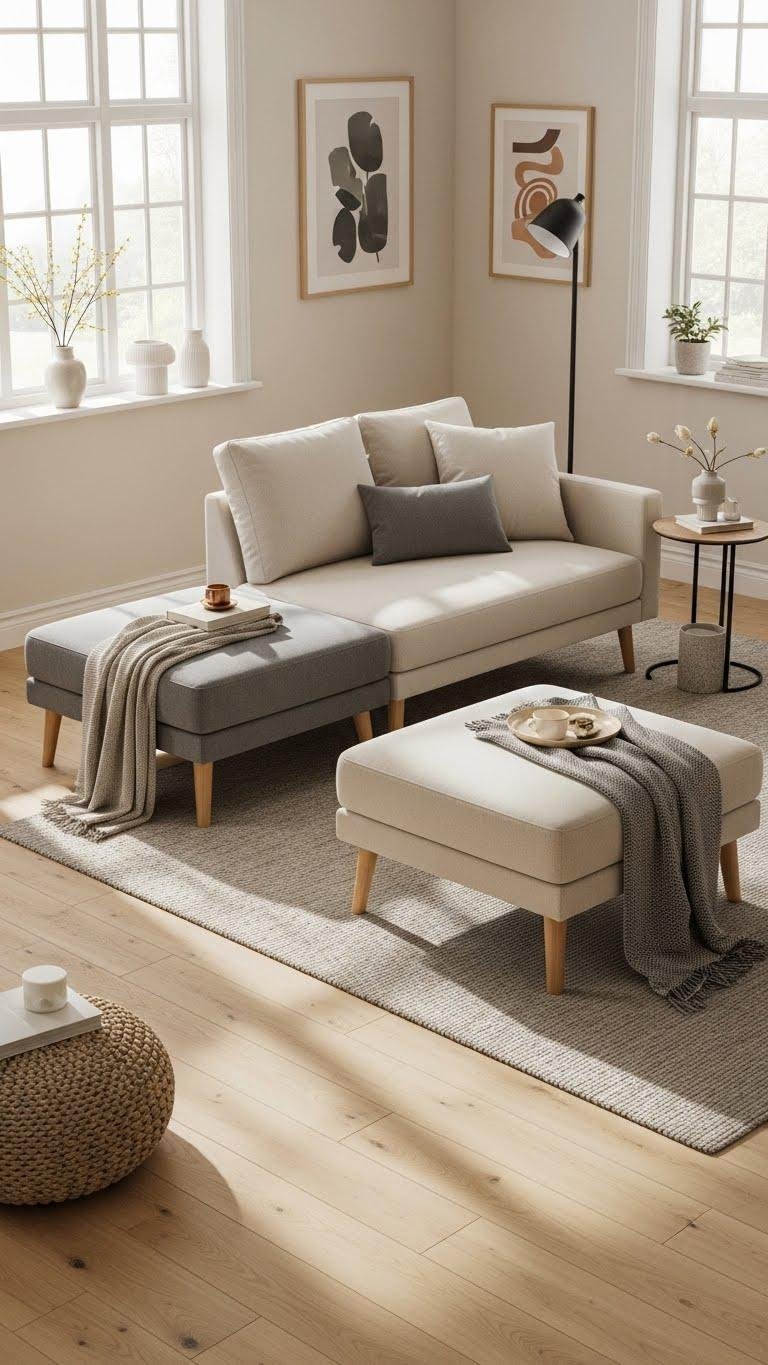
Choose a compact sectional or a loveseat paired with an ottoman to maximize seating without crowding a small living room.
You’ll pick pieces with clean lines, exposed legs, and scale cushions that keep the look airy. Add modular ottomans to extend lounging, swap for extra seating, or tuck away when you want open floor. It feels liberating and effortlessly modern.
Float Furniture Away From Walls to Create Circulation

If your compact sectional or loveseat with ottomans has opened up the center of the room, float pieces away from the walls to create clearer circulation and a more intimate seating zone.
Pull sofas and chairs inward to define a conversation area, improve traffic flow, and achieve visual balance. Add a slim console or rug anchor to keep the layout airy and liberated.
Use Rounded Furniture to Improve Flow

When you swap sharp corners for soft curves, a small living room instantly feels more navigable and relaxed.
Choose curved ottomans and a low-profile sofa with rounded edges to ease movement and invite lounging. Layer rounded rugs to define zones without harsh lines.
This approach keeps sightlines open, encourages effortless circulation, and gives your space a modern, carefree vibe that lets you live freely.
Incorporate Nesting or Stackable Tables
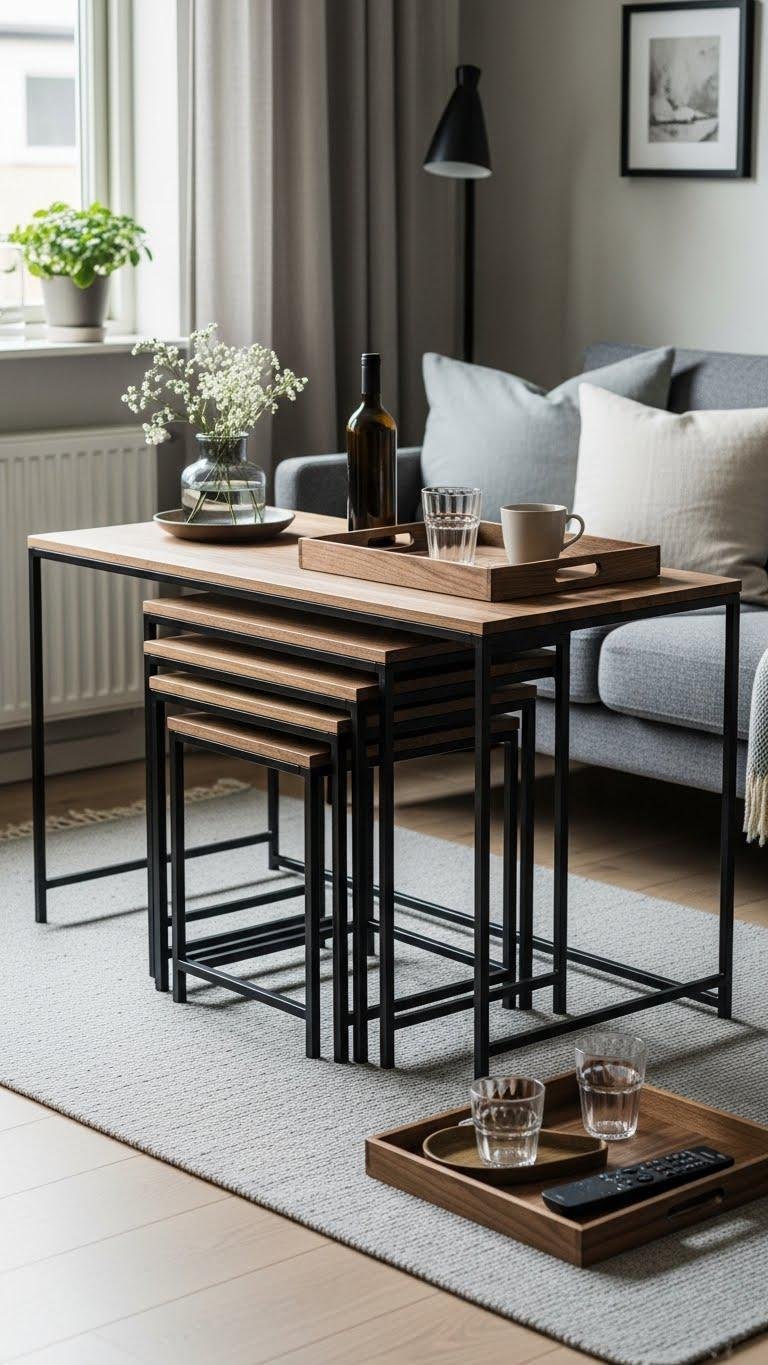
Bring nesting or stackable tables into your small living room to gain flexible surfaces without crowding the floor. You’ll layer pieces that slide away when you want open space. Choose airy metals, warm woods, stackable stools for extra seating, and nesting trays that corral drinks and remotes. The look’s modern, effortless, and lets you rearrange instantly to suit mood or guests.
Add Built-In Shelving Above Windows and Doors
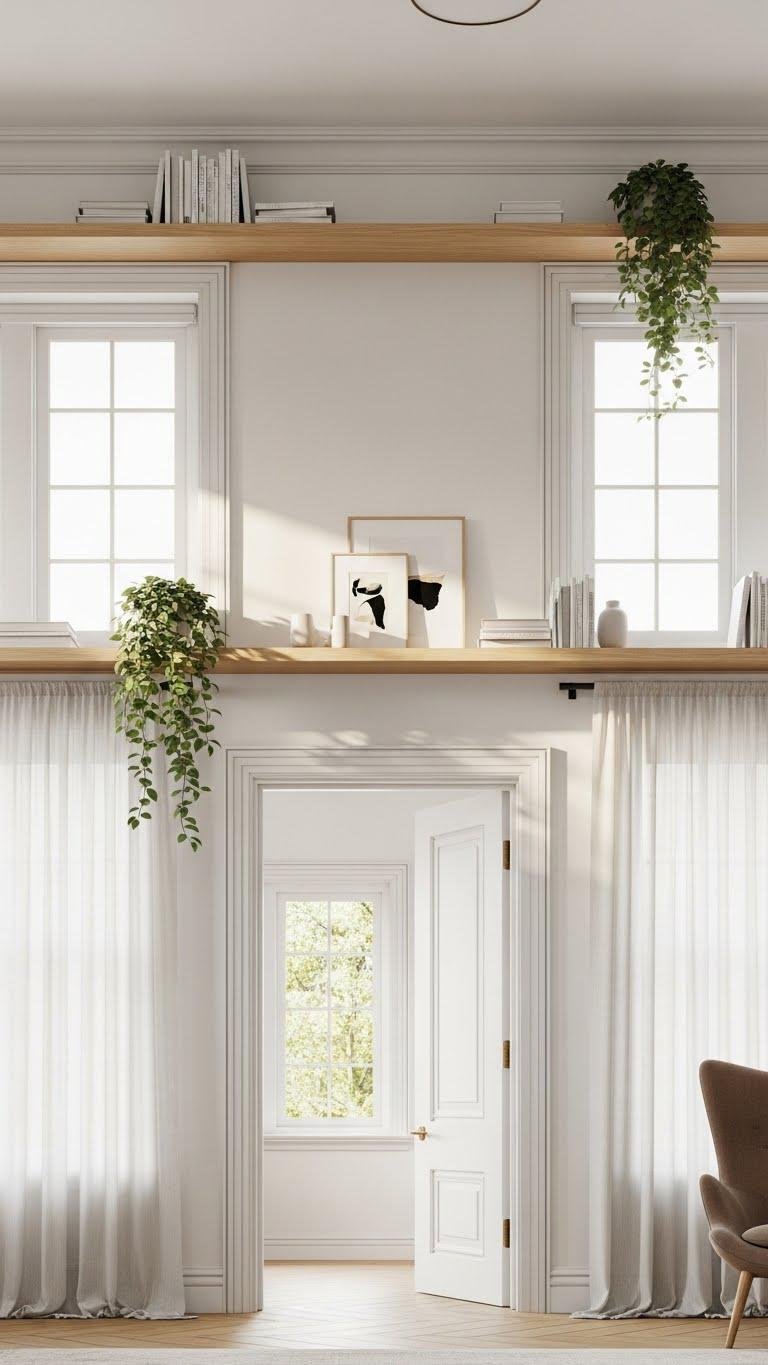
You can carry that same space-smart thinking upward by adding built-in shelving above windows and doors to reclaim often-unused vertical real estate. Use slim upper ledges for books, plants, or art; keep items low-profile to maintain airiness. Integrate shelving with existing door pediments for a custom look.
This frees floor space, creates visual height, and feels modern, curated, and liberating.
Choose Furniture With Hidden Storage
[IMAGE PROMPT: A bright, modern living room interior showcasing multifunctional furniture with hidden storage—a light wood lift-top coffee table partially open to reveal compartments, a neutral-toned sofa with under-seat drawers slightly ajar, and a fabric ottoman with its removable lid beside it. Clean lines, minimal clutter, and ample negative space emphasize an airy, organized atmosphere; soft natural daylight streams through large windows casting gentle shadows, warm beige and gray palette with touches of natural wood and greenery. Photorealistic style, wide-angle composition that feels inviting and practical, balanced and uncluttered.]
Maximize function without sacrificing style by choosing furniture that hides clutter—think lift-top coffee tables, sofas with under-seat drawers, and ottomans with removable lids.
You’ll free floor space and sightlines by using a slim drawer bench, an under bed storage frame, or a coffee table with compartments.
Choose clean lines, neutral fabrics, and multitasking pieces so your room breathes and you move freely.
Install Wall-Mounted Shelves and Floating Cabinets
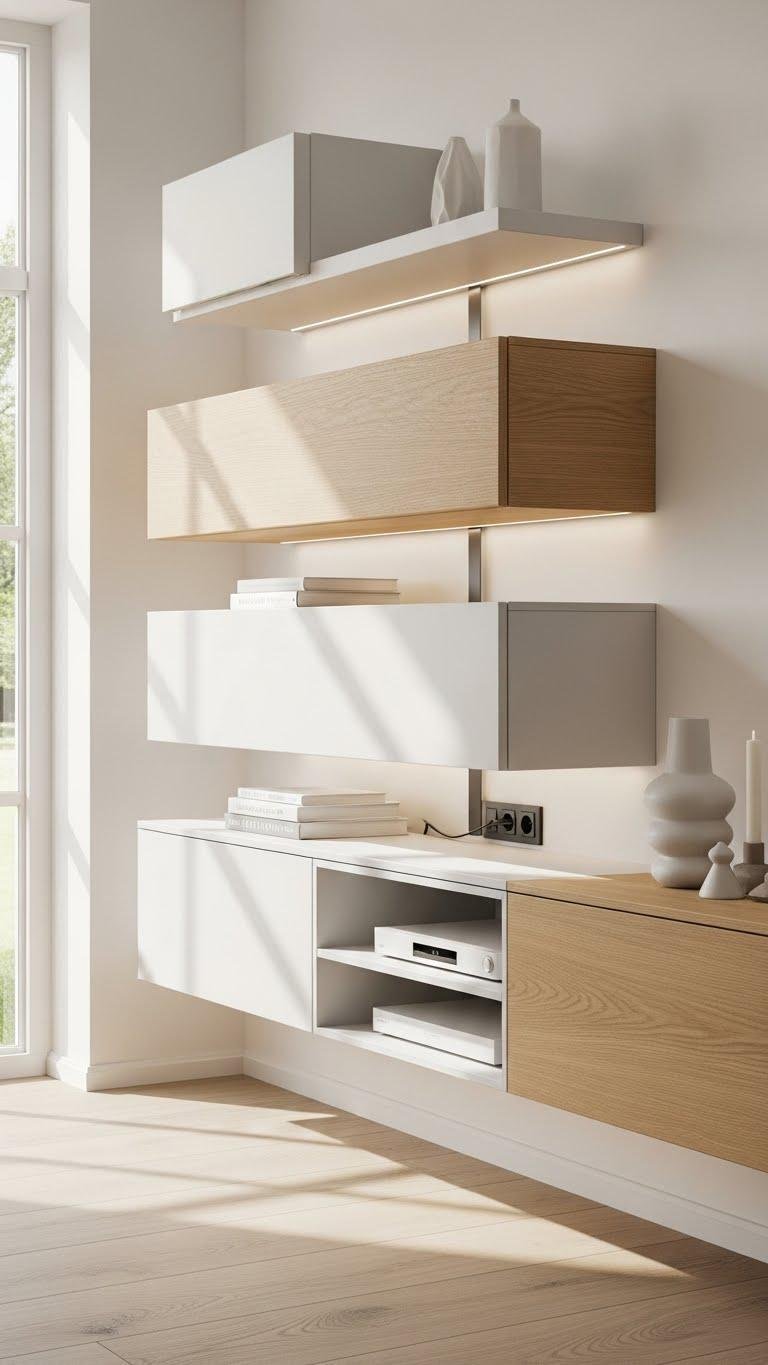
Mount wall-mounted shelves and floating cabinets to open up floor space and create clean, sculptural storage that doubles as display.
You’ll keep the room airy by choosing slim profiles with hidden brackets, minimalist finishes, and staggered heights.
Tuck media devices behind fronts and plan cable management routes so wires vanish.
This modern approach feels freeing, functional, and effortlessly chic.
Use Tall, Slim Bookcases to Draw the Eye Upward

When placed against a narrow wall, tall, slim bookcases draw the eye up and instantly make a small living room feel loftier.
You’ll choose vertical accentbookcases or airy slim ladderbookcases to keep sightlines open, styling a few curated objects and plants.
This creates a clean, liberated vibe, adds storage without bulk, and emphasizes height so your space breathes and feels unconfined.
Create Zones With Rugs Instead of Physical Dividers
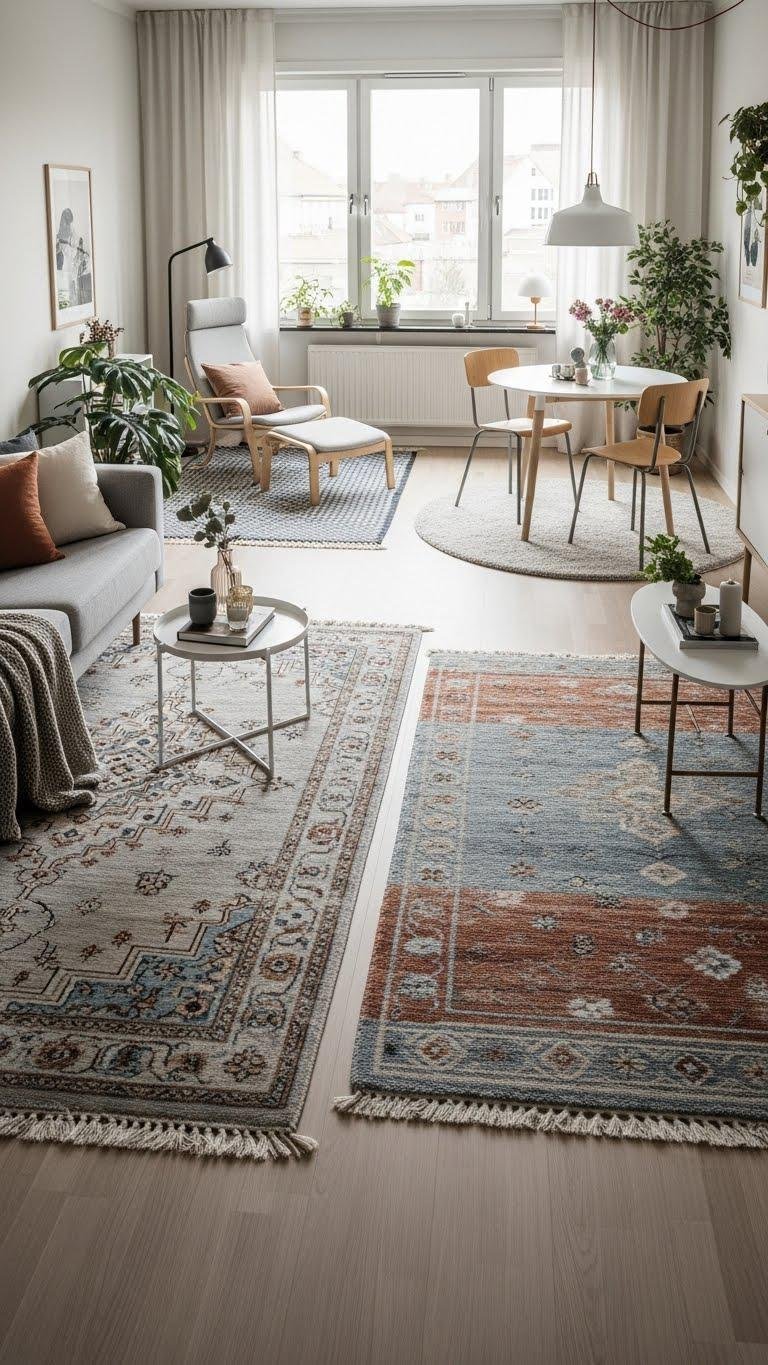
Break your small living room into purposeful areas with layered rugs instead of bulky screens or shelves; they anchor seating, define a reading nook, or carve out a dining spot while keeping sightlines open.
You’ll choose patterned rugs and subtle color shifts, mix layered textiles for texture, and float furniture to preserve flow—modern, airy zoning that feels liberated and intentional without visual clutter.
Anchor the Space Around a Single Focal Point
[IMAGE PROMPT: A serene, photorealistic interior centered on a single focal point — a modern fireplace with a sculptural light or large statement artwork above it. Soft, natural daylight mixes with warm firelight, casting gentle shadows; the palette is restrained neutrals (cream, warm gray, muted taupe) with layered textures like linen, wool, and matte wood. Low-profile seating is arranged in balanced, subtly symmetrical groupings around the focal point, open pathways, and negative space that allow the room to breathe; composition emphasizes calm, intentional layout and curated minimalism.]
Around a single focal point—like a fireplace, statement artwork, or sculptural light—you’ll organize furniture and accents so everything reads as intentional and calm.
You’ll place an accent focal piece, then arrange seating to create balance and subtle symmetry without rigidity.
Choose low-profile furnishings, layered textures, and a restrained palette so the room feels open, curated, and free to breathe.
Maintain Unobstructed Walkways and Clear Path Widths

If you want a small living room to feel effortless and spacious, keep traffic lanes clear and aim for consistent path widths so movement feels natural rather than squeezed.
You’ll define walking zones with low-profile furniture, slim console tables and floating shelves, preserving clear sightlines across the room.
Prioritize unobstructed access to seating and exits so the space breathes and you move freely.
Arrange Symmetrical Pairs for Visual Balance
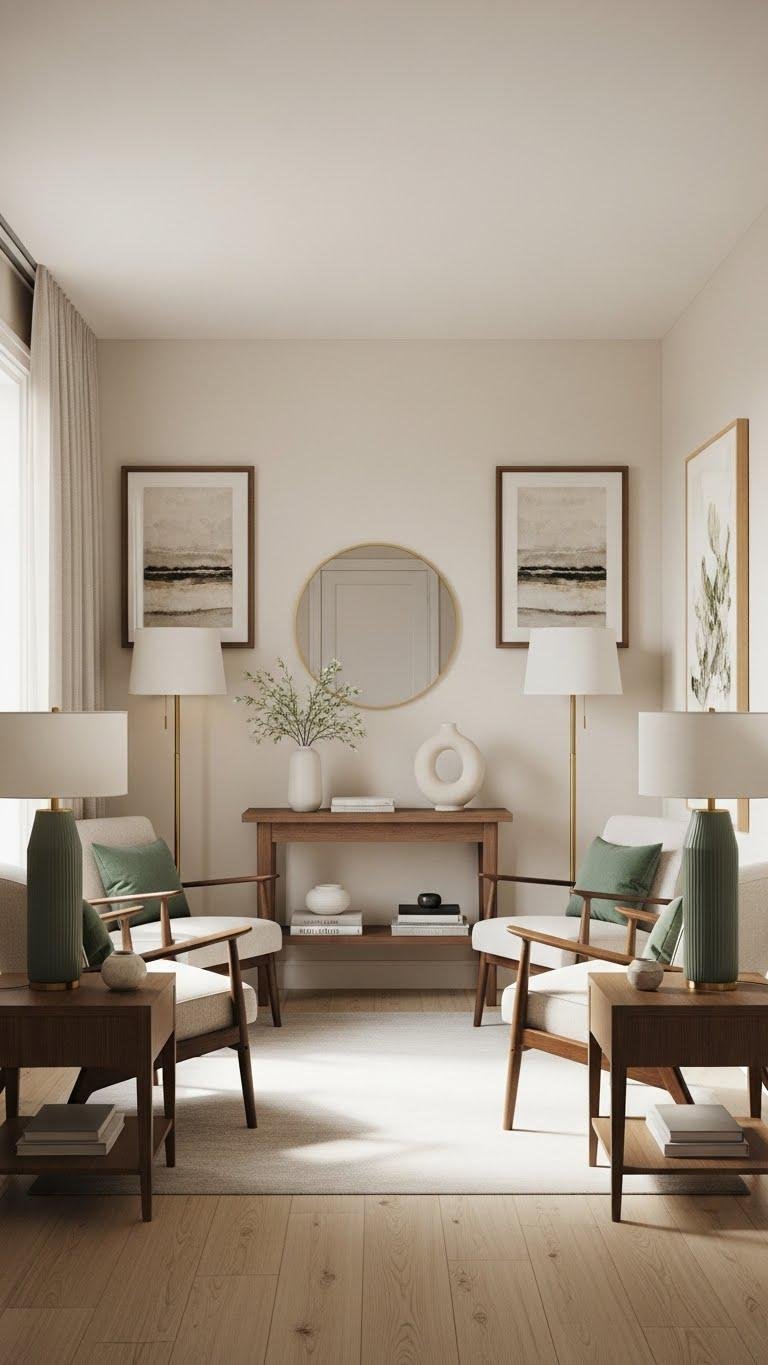
When you pair matching elements—twin armchairs, identical lamps, or mirrored bedside tables—you anchor the room and create instant calm, especially in a small space where balance matters most.
Embrace mirror symmetry with a central focal point, flank it with paired artwork or sculptural lights, and keep proportions light. That deliberate pairing frees visual weight and makes the space feel open, intentional, and effortlessly chic.
Employ a Monochromatic or Color-Drenching Palette

Choose a single hue—or a narrow family of tones—and let it wash the room so every surface, texture, and accent reads as a purposeful layer of the same story. You’ll embrace monochrome textures and play with tonal layering to simplify sightlines, enlarge perceived space, and free your choices. Stick to varied finishes, bold accessories in the same scale, and let calm cohesion feel like permission to roam.
Keep Large Pieces Within the Same Tonal Family

Because large furnishings anchor the eye, keep your sofa, media console, and major built-ins in the same tonal family to create a calm, continuous backdrop that makes the room read larger.
You’ll choose monochrome upholstery and a tonal rug to simplify sightlines, then layer texture and slim silhouettes so the space breathes. This keeps the look modern, flexible, and effortlessly free.
Paint Trim, Walls, and Ceiling in Related Hues
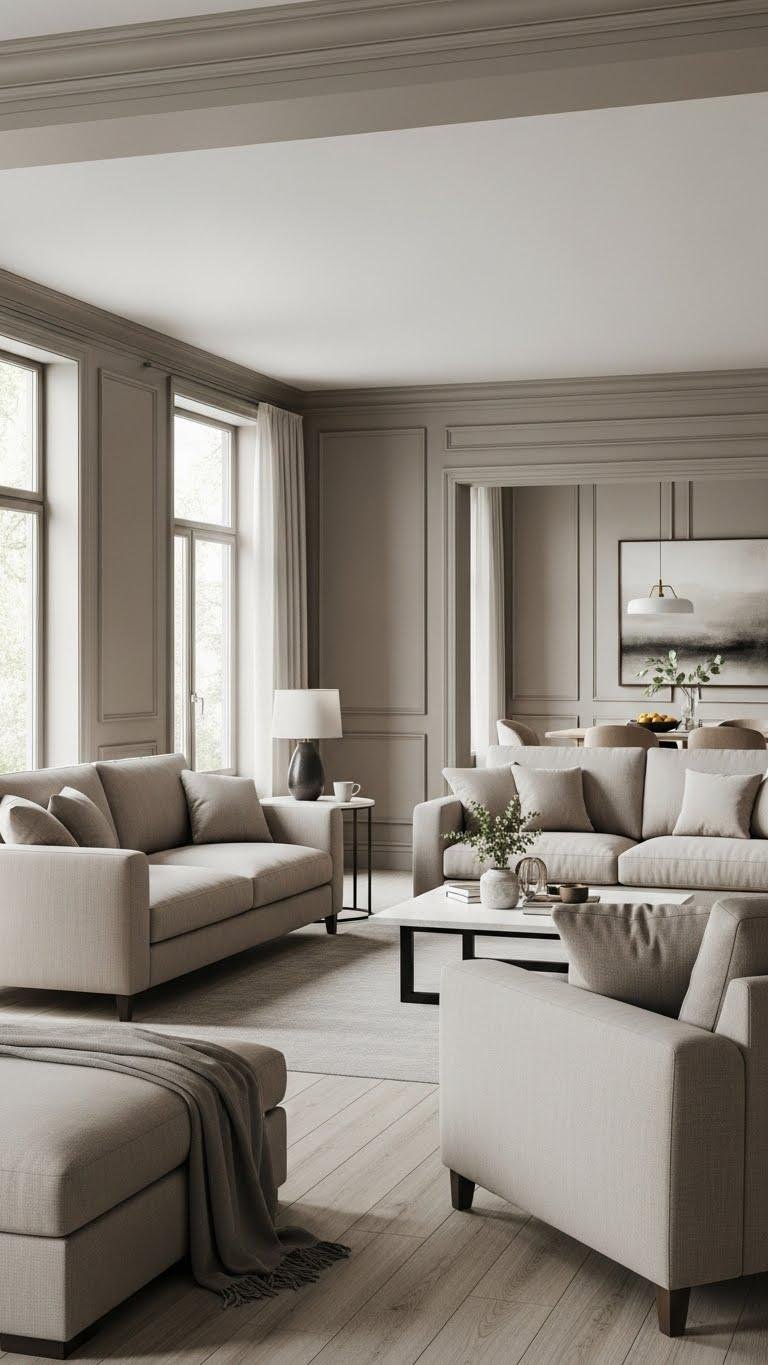
Having your large pieces sit in a unified tonal family sets the stage for a seamless room—carry that idea to trim, walls, and ceiling so edges disappear and the space feels larger.
Paint coordinated trim slightly deeper than walls for subtle definition, or choose a soft contrasting ceiling to lift sightlines. You’ll create airy cohesion that feels modern, open, and freeing.
Use One Large-Scale Pattern Sparingly

If your wall gallery guides the eye, let a single large-scale pattern anchor the rest of the room so it doesn’t compete for attention. Choose one bold wallpaper or an oversized artwork to create a focal pause; keep surrounding surfaces calm, textures light, and furniture low-profile.
You’ll feel liberated — the space reads airy and intentional without visual clutter.
Install Floor-To-Ceiling Curtains or Slim Window Treatments
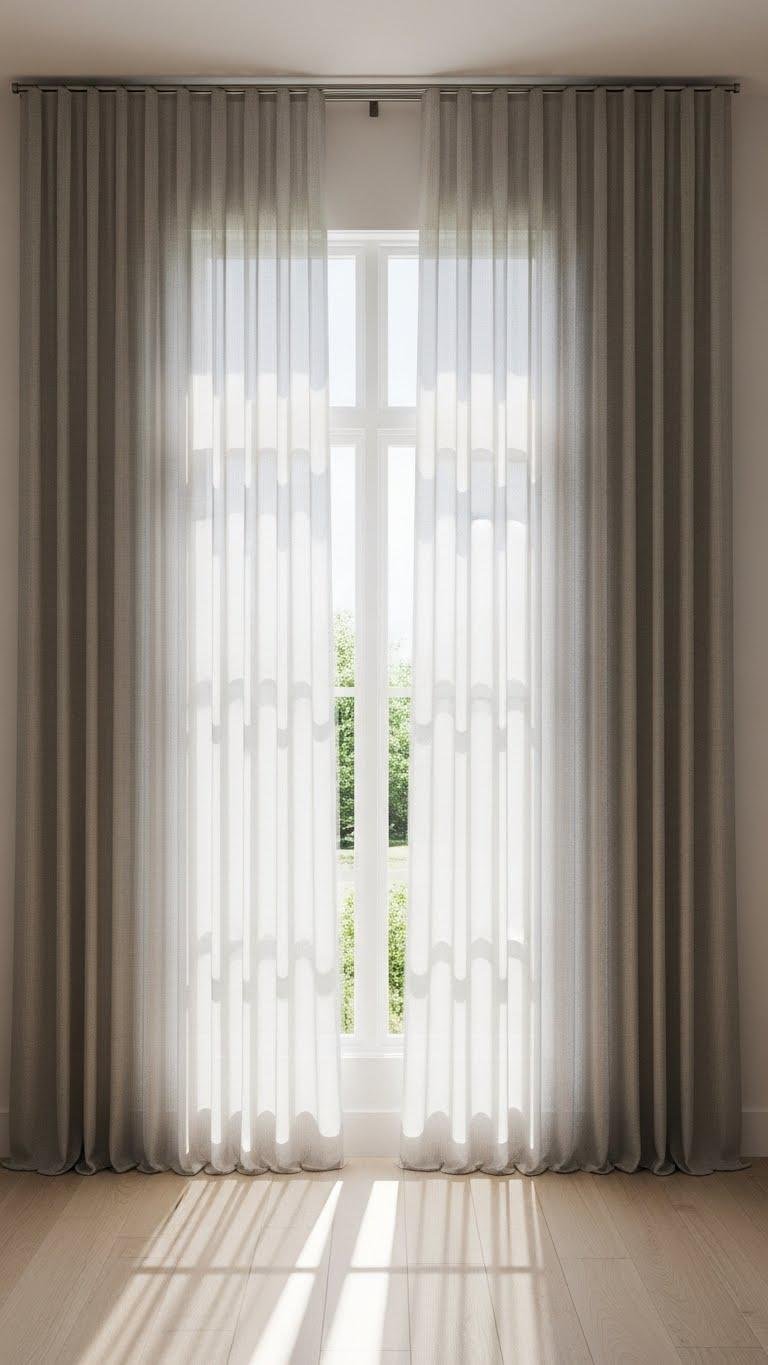
Framing your windows with floor-to-ceiling curtains or slim, tailored treatments instantly stretches the room and adds vertical drama without crowding the space. Choose lightweight linens or sheer blends for airy light, or thermal privacy panels for cozy nights. Use minimal rodless tracks to keep sightlines clean, mount high and wide, and let fabric skim the floor for a liberated, modern feel.
Add Tall Plants and Vertical Décor Elements

Often, a single tall plant can instantly lift a small living room, drawing the eye upward and reinforcing a feeling of height.
Place sculptural palms or fiddle-leaf figs in narrow vertical planters, tuck stem vases on floating shelves, and add slim wall-mounted trellises. You’ll create layered vertical interest that breathes, expands sightlines, and keeps the space feeling open and free.
Choose Transparent or Minimal Lighting Fixtures
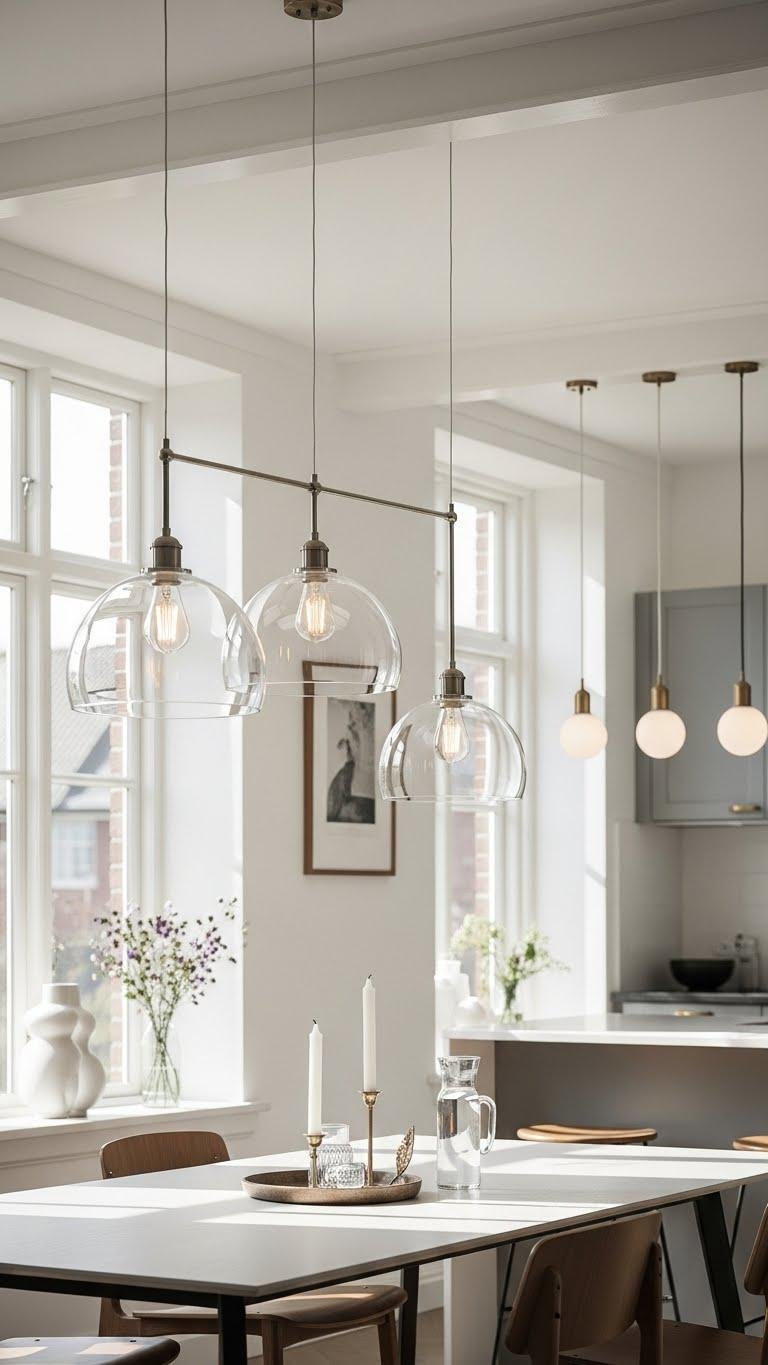
Why not let light itself become part of the décor? Choose transparent or minimal fixtures—clear glass shades, slim arms, recessed pendants—to keep sightlines open and the space airy. You’ll favor fixtures that whisper, not shout: exposed filament bulbs for warm, vintage glow or frosted options for softness. These choices free the room, letting sunlight and structure breathe together.
Prioritize Tactile Textures Over Bold Color Blocks
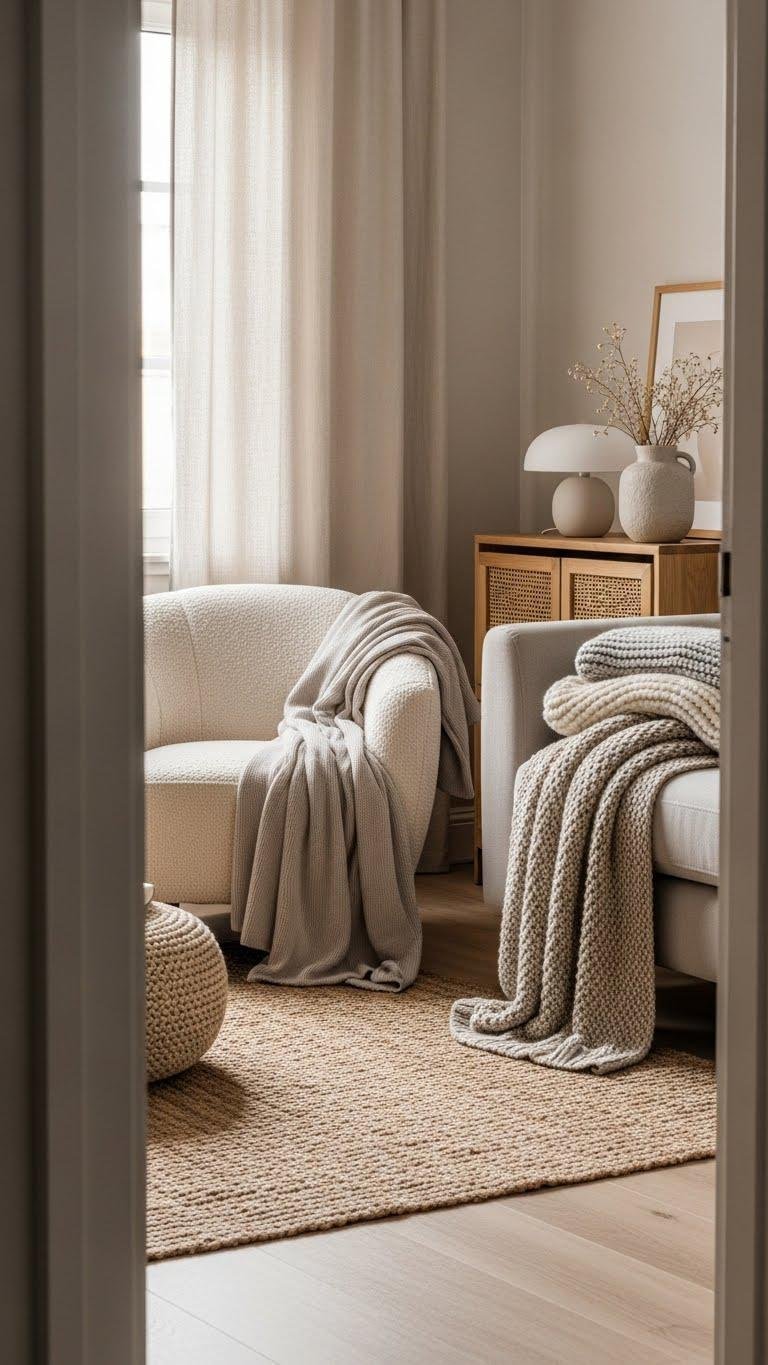
Let the soft glow you’ve chosen pair with surfaces that invite touch: in a small room, tactile textures read richer than blocks of bold color and make the space feel layered without overwhelming it.
You’ll craft airy, liberated interiors by favoring textural layering — boucle, linen, woven rugs — and by using subtle tactile contrasts to guide the eye and keep the room calm, open, intentional.
Curate a Few Larger Accessories Instead of Many Small Items

Scale back and choose a few larger accessories to give your small living room clarity and impact. Let bold statement pieces anchor the room—a sculptural lamp, oversized vase, or art leaner—so you can celebrate negative space and breathe. You’ll keep surfaces tidy, enjoy visual freedom, and make each object count. Fewer, stronger choices feel modern, purposeful, and effortlessly spacious.